
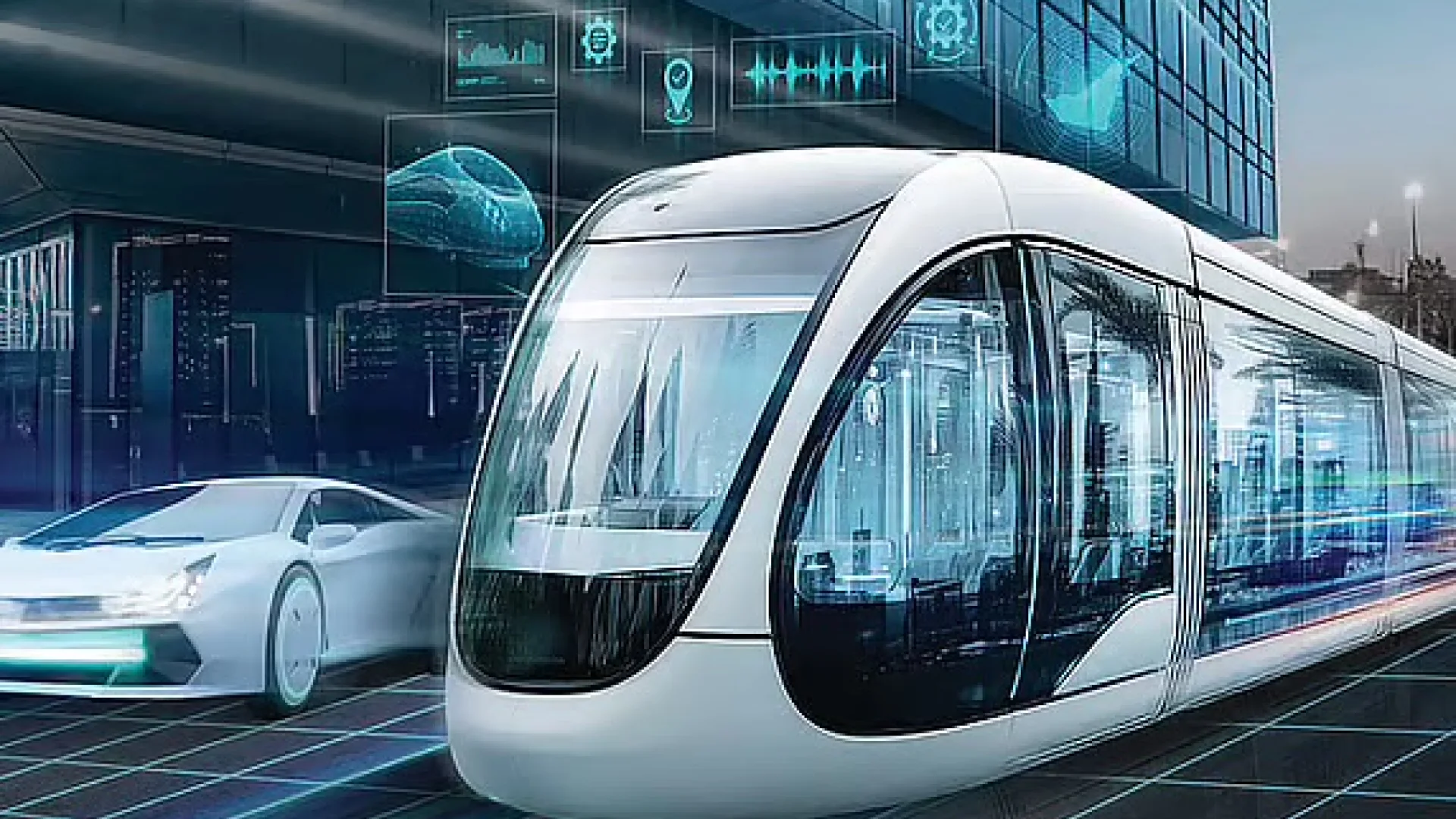

Dubai is pushing urban mobility into its next gear: the city has confirmed plans for a trackless tram at eight locations, alongside an expansion of dedicated bus lanes. The idea is simple but powerful—more capacity, smoother connections, and shorter, more reliable commutes without waiting years for traditional rail construction. For residents and visitors, it means public transport that feels less like a compromise and more like a first-choice way to move. For the city, it’s another step toward a network that matches its pace, scale, and ambition.
The heat rises off the road in a wavering veil, turning the boulevard into a mirage of silver. Cars crawl, then surge, then crawl again—an unspoken choreography of brake lights. You stand at the curb and listen: engines, horns, the soft hiss of an opening bus door. And then you hear the phrase that doesn’t quite belong to this soundtrack—a tram with no tracks.
Dubai has confirmed plans for a trackless tram at eight locations, while also expanding bus lanes across the city. Two announcements, one shared promise: make public transport faster, more dependable, and easier to choose—on a normal Tuesday, not just on paper.
Say “tram” and most people picture steel rails, overhead lines, and that familiar metallic rhythm at junctions. “Trackless,” though, flips the image. The concept is built around guidance technology—systems that help a tram-like vehicle follow a defined route with high precision, but without laying physical rails in the ground.
Close your eyes and imagine the scene a year or two from now. A platform that looks more like a metro stop than a bus shelter. Clean lines. Digital signage. A shaded canopy that feels like mercy. Someone steps closer and asks, half-joking, “So where are the tracks?” Another voice answers, equally surprised: “There aren’t any.”
That moment—small, almost playful—is exactly where cities win hearts. Because the magic isn’t just the vehicle. It’s what it represents: a faster-to-deploy way to add capacity and connectivity, especially in corridors where traditional rail would mean years of digging, diversion, and disruption.
By confirming eight locations, Dubai is signaling that this isn’t merely a flashy prototype. It’s positioning the trackless tram as a practical tool in the city’s mobility kit—something that can be scaled, integrated, and used to stitch neighborhoods closer together.
If the trackless tram is the headline-grabber, expanded bus lanes are the daily-life hero. They don’t look futuristic. They look like paint, signage, and enforcement. But they change everything.
Because every commuter knows the particular frustration of a bus stuck in the same traffic as everyone else. The timetable becomes a suggestion. Your meeting starts without you. The bus becomes a risk.
Dedicated bus lanes rewrite that relationship. They’re an agreement between the city and the passenger: we’ll protect your time. And in a place like Dubai—where time is currency, and distance can be deceptive—that protection is a serious upgrade.
Picture a late afternoon. The sun drops behind glass towers and the city exhales into the evening rush. In the general lanes, cars bunch together like beads. In the bus lane, the driver keeps moving. A passenger glances out the window at the gridlock and says, almost quietly, “We’re actually flying.” Not flying, of course. Just not stuck. In cities, that can feel like flight.
Transport isn’t only about vehicles; it’s about trust. Can you plan your day without adding a buffer of anxiety? Can you choose public transport and still feel in control?
The combined push—trackless tram in multiple locations plus more bus lanes—aims directly at that question. It’s a strategy that favors frequency, predictability, and network effect: the idea that each improvement becomes more valuable when it connects cleanly to others.
When a bus lane cuts ten minutes off a commute, that’s not just time saved. It’s a new habit unlocked. When a tram-like service feels smooth and legible—clear stops, intuitive boarding, consistent travel times—it becomes something people recommend, not endure.
Dubai grows in layers. New districts appear; older ones densify; commuting patterns shift with every business cluster that matures. Traditional rail is transformative, but it’s also heavy: long timelines, major construction, complex interfaces with utilities and roads.
Trackless tram concepts sit in a different space. They can, in principle, be implemented with less invasive civil works—depending on how the corridor is designed—while still offering a premium, tram-like passenger experience. That makes them attractive for expanding coverage, improving links between hubs, or upgrading busy corridors where buses alone may be nearing capacity.
And bus lanes? They’re the pragmatic counterpart: quicker to deliver, highly visible, immediately measurable. If enforced well, they can turn buses into a rapid-transit-lite system—especially when paired with improved stops, priority at intersections, and clear information.
8:12 a.m. You step outside and the air is already warm, the kind of warmth that clings. You could hail a taxi. You don’t. Not today.
8:20 a.m. At the stop, you see a calm line of people—phones in hand, sunglasses on, that shared commuter expression of “let’s get on with it.” The vehicle arrives smoothly. Doors open wide. Cool air rolls out like a curtain.
8:33 a.m. You’re moving through an intersection while the general lanes hesitate. The ride feels steady, deliberate. Someone nearby murmurs, “This is… easy.”
8:47 a.m. You arrive earlier than you used to. Not by an hour. By a margin that matters. By the margin that turns a city from exhausting to livable.
In Dubai, mobility upgrades rarely stay in the transport column—they often translate into micro-market shifts in real estate. Confirming a trackless tram at eight locations and expanding bus lanes can influence values, rents, and development feasibility in ways investors will want to map early.
1) Accessibility premiums and rent resilience: Properties within comfortable walking distance of high-quality, frequent transit tend to command stronger demand. If the trackless tram delivers a “rail-like” experience—clear stations, reliable headways, and priority in traffic—areas around stops may see improved leasing velocity and, over time, a pricing premium. Expanded bus lanes can produce similar effects where they materially reduce travel times to major employment and lifestyle hubs.
2) New opportunity zones for mixed-use: Transit nodes concentrate footfall. Footfall supports retail and F&B. For developers and investors, that can enhance the case for mixed-use formats—street-level convenience, services, and community amenities—particularly in corridors that currently rely heavily on car access.
3) Office location strategy and talent attraction: Companies increasingly evaluate offices through the lens of commute quality. Faster buses in protected lanes can upgrade secondary office districts, making them more competitive versus prime-but-congested areas. Over time, improved transit can widen the effective labor catchment, a factor that supports occupancy and stabilizes cash flow.
4) Timing the infrastructure cycle: Markets often reprice in stages—announcement, visible rollout, operational proof. Early positioning near confirmed corridors can capture upside if delivery milestones are met and service quality is high. Investors should track station placement, integration with existing networks, and whether the corridor includes true priority measures.
5) Due diligence: “trackless” is not the thesis—performance is: The investment impact will hinge on operational realities: right-of-way protection, enforcement, intersection priority, comfort, and frequency. A trackless tram that gets stuck in traffic behaves like a bus; one that moves predictably behaves like rapid transit. The difference is everything for valuation.
Investor takeaway: Treat the eight confirmed locations and the expanding bus lanes as a forward-looking demand map. Where commuting becomes easier and more predictable, expect stronger tenant pools, better retention, and improved prospects for both long-term rentals and selected short-stay strategies—especially where new links connect residential clusters to employment centers and lifestyle destinations.