
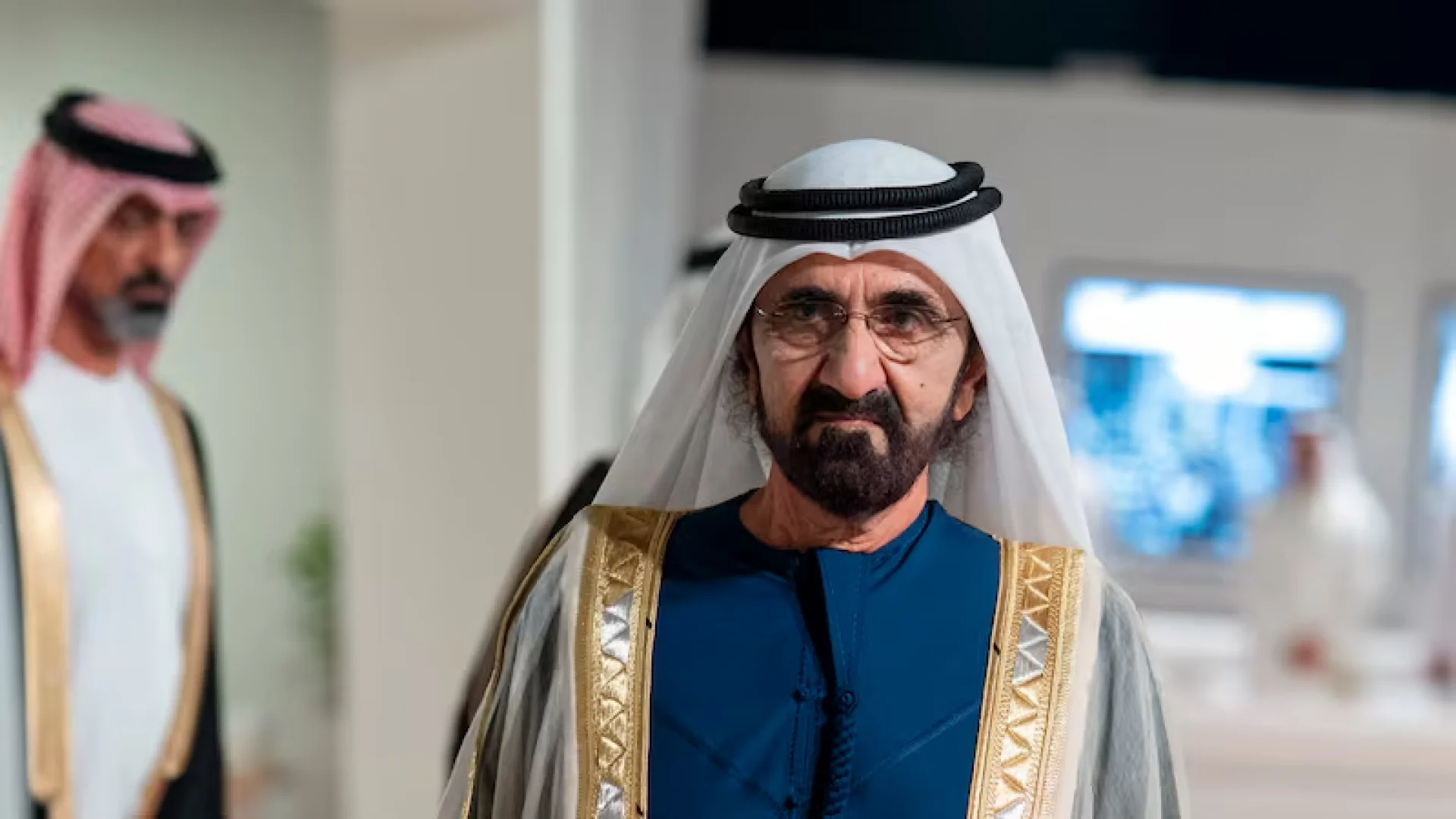
Dubai is marking a milestone: Sheikh Mohammed bin Rashid Al Maktoum reaches 20 years as Ruler of Dubai, a period that has reshaped the emirate’s skyline and its international standing. The National’s report frames the anniversary as both a moment of reflection and a springboard into the next phase—linking landmark development with governance, diversification and a relentless pro-growth tempo. Behind the headline numbers and famous towers sits a broader story about how Dubai sells speed, certainty and connectivity to the world. For residents, businesses and investors alike, the key question now is what the next chapter prioritises: scale, sustainability, livability—or all three at once.
Just before sunrise, Dubai feels like a held breath.
The Creek is still, the air is almost cool, and the city’s glass towers—those sharp strokes against the pale sky—wait for the first clean beam of light. A delivery rider glides past. A security guard checks his phone. Somewhere, an espresso machine hisses like a starting pistol.
“Twenty years,” a taxi driver says, flicking his eyes from the road to the rear-view mirror. “That’s a long time here. And also… nothing.” He laughs, merges into traffic, and Dubai does what it always does: moves.
This week, Sheikh Mohammed bin Rashid Al Maktoum marks 20 years as Ruler of Dubai, an anniversary reported by The National that reads less like a ceremonial date and more like a checkpoint in a race the city refuses to stop running. Two decades is enough time to turn policy into habit, ambition into infrastructure, and brand into identity. In Dubai, it’s also enough time to make the improbable feel routine.
Dubai’s story under Sheikh Mohammed is often told through images you can recognise in a single glance: bold skylines, engineered islands, airports that hum like beehives. But the anniversary invites a wider lens—one that includes what doesn’t photograph as neatly: the machinery of government services, the push for efficiency, the constant tuning of regulations designed to keep capital, companies and talent flowing in.
In a café near Downtown, a woman in workwear taps her card, grabs a takeaway cup and says to no one in particular, “It’s the pace. If you like pace, you stay.” Her colleague shrugs: “And if you don’t… you still end up running.” The exchange lasts three seconds, but it captures the mood of a city built on momentum.
According to The National, Sheikh Mohammed’s 20-year milestone stands over an era defined by rapid transformation and a deliberate effort to position Dubai as a global crossroads—commercially, culturally, logistically. The emirate’s growth has been anchored in connectivity: ports and aviation, trade and tourism, services and finance, the idea that Dubai can be a meeting point for the world.
To walk through parts of the city today is to see that strategy layered into daily life. A metro train slides in, clean and punctual. A stream of people steps out—bankers, designers, families, construction engineers—each with a different reason for being here, all relying on the same infrastructure to hold the day together.
“It works,” a resident says, gesturing at the station escalators, the signage, the crowd moving without friction. “That’s the point. It has to work.”
There’s the Dubai that dazzles. And there’s the Dubai that delivers.
The dazzling city is the one visitors come to photograph: the towers and beach clubs, the headline projects, the sense that the future has been rehearsed here in public. But the delivering city is what keeps people from treating Dubai as a postcard: services that can be done quickly, a business environment that aims to stay competitive, and a governance style that prizes targets, measurement and visible outcomes.
Over 20 years, that combination—spectacle on the surface, system underneath—has become a defining feature of the emirate’s appeal. You can feel it in the way conversations unfold. People rarely speak about “whether” something will be built. They ask “when.”
Anniversaries naturally ask for balance sheets. What worked? What needs tightening? Dubai’s next phase will play out in a world with sharper competition for talent, business headquarters and investment capital. At the same time, expectations around livability and sustainability have moved from optional extras to core performance indicators.
Dubai has proven it can scale. The question now is how it scales without fraying at the edges—how it keeps the city efficient while making it more comfortable, more walkable, more resilient. The National’s framing of the milestone as a moment to reflect—and to look ahead—lands on this tension: a city built on speed must also master steadiness.
Look away from the skyscraper tops for a moment and you’ll find the quieter proof of two decades of direction.
A father lifts his child so she can see the boats on the Creek. “See?” he says softly. “They come from everywhere.” On a residential street, a building caretaker hoses down the pavement before the heat hardens. In a lobby, a receptionist offers water with the practiced grace of someone who knows that comfort is part of the product.
Leadership, in a city like this, isn’t only about announcing the next big thing. It’s about making sure the small things happen—every day, at scale, for a population that keeps changing.
The anniversary is not presented as an end-of-era curtain call. It feels more like a pivot: a chance to restate the Dubai formula—connectivity, ambition, execution—and to hint that the next chapter will demand more sophistication than sheer growth.
Because the world has changed. Capital is more cautious. Talent has more options. And cities are judged not only by what they build, but by how they treat the lives lived inside what they build.
At night, the city lights up like circuitry. Cars stream along Sheikh Zayed Road, and the towers look almost weightless—pure outline and illumination. Somewhere down below, a worker on a late shift adjusts a hard hat, steps into a lift, and disappears upward.
Twenty years at the helm. Dubai, as ever, takes the number and turns it into motion.
For property investors, the significance of the 20-year milestone is less about symbolism and more about what it suggests: strategic continuity in a market that depends heavily on confidence, policy clarity and global inflows. Dubai’s growth model—connectivity, business friendliness, fast execution—has historically supported demand across residential, hospitality and commercial segments, even as cycles remain pronounced.
1) Demand drivers: migration, jobs, and business formation
Dubai real estate is ultimately a demand story built on population growth and economic activity. Leadership stability and a consistent pro-growth narrative tend to reinforce:
2) The central risk: supply expands fast
Dubai can deliver new inventory quickly, which is a strength—and a cyclical risk. Investors should stress-test assumptions against pipeline additions, especially for commoditised apartment stock in crowded districts. Asset selection matters: developer quality, handover record, community maturity, and genuine tenant demand often separate resilient returns from headline-driven purchases.
3) Regulation, transparency, and friction costs
As Dubai competes for institutional and cross-border capital, predictable regulation and digitised processes can reduce risk premiums. Still, net returns depend on real-world frictions: service charges, maintenance quality, owners’ association governance, leasing fees, and vacancy management. Underwrite net, not gross.
4) Infrastructure as a value catalyst
Over time, pricing power tends to follow connectivity—metro access, road upgrades, proximity to employment clusters, and the density of schools and healthcare. Investors looking beyond the current cycle often focus on “daily-life infrastructure” rather than iconic proximity alone.
5) Practical positioning
Bottom line: The anniversary underscores continuity—an ingredient Dubai markets as strongly as ambition. For real estate investors, that can translate into opportunity, but only with disciplined micro-location selection, fee awareness, and a clear view of supply risk in a city that builds at world speed.