
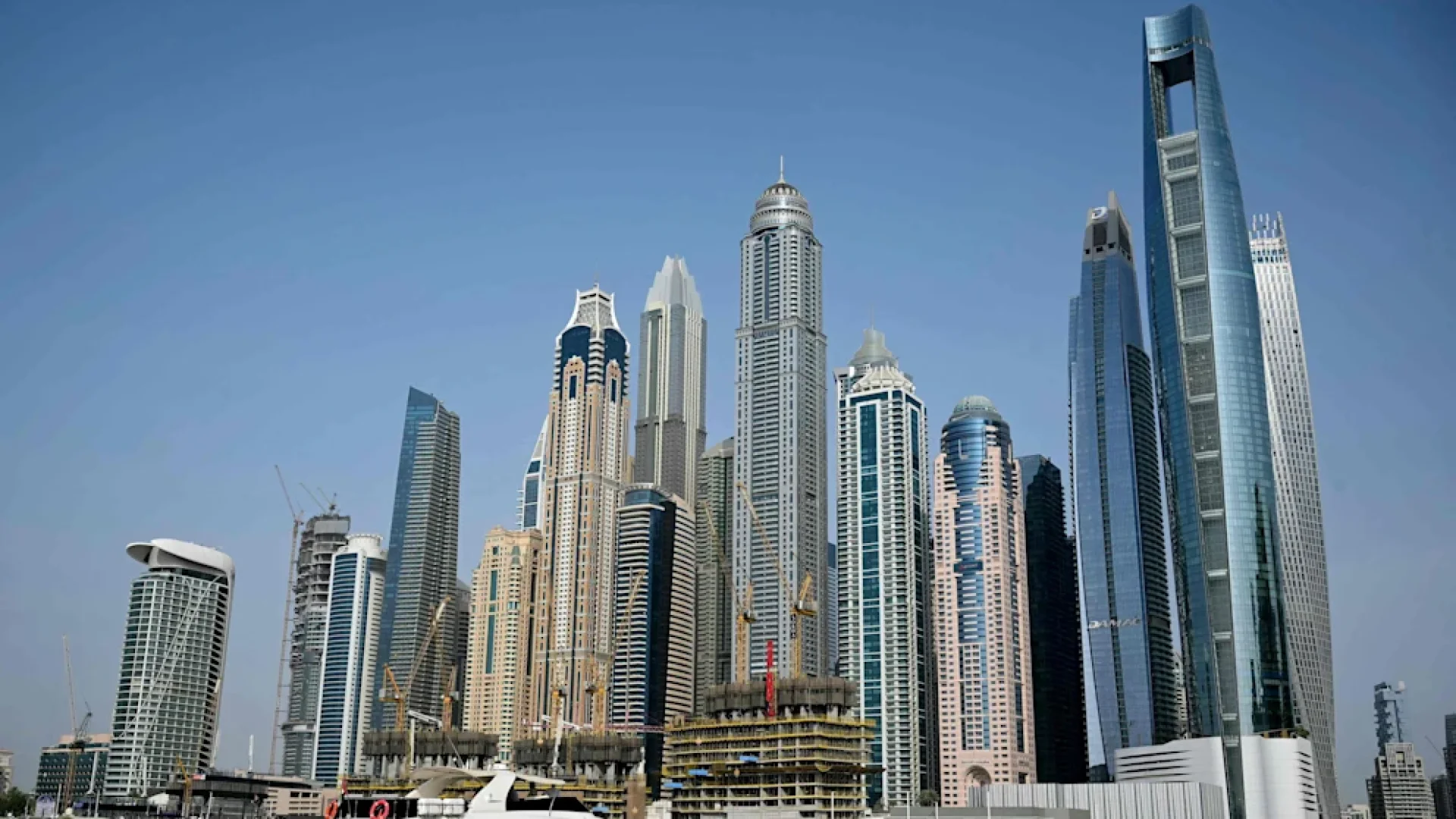

Dubai has crossed a symbolic threshold: for the first time, roughly two million international visitors arrived within a single month. The record reflects more than a strong season—it signals a destination that has learned to run at high speed year-round, powered by global air connectivity, a relentless events calendar, and a hospitality sector built to scale. For airlines, tour operators, and city planners, the figure is both victory lap and stress test, putting transport, hotels, and experiences under real pressure. For investors, it’s a demand signal with implications far beyond the beach.
The airport doesn’t feel like midnight. It feels like a stage change between acts.
At Dubai International, the floor shines under cool white light. Suitcases rattle like percussion. A kid in a hoodie counts planes through the glass, nose almost pressed to it. Near the coffee queue, a couple debates whether they should go straight to the hotel or detour for shawarma first. “Two million in a month,” the man says, scrolling his phone. The woman doesn’t look up. “I believe it,” she replies. “Look around.”
Dubai has done it: two million visitors in a single month, for the first time. In travel circles, that number lands with a satisfying thud. Not because big numbers are new to Dubai—but because this one reads like a turning point. Two million isn’t just a headline. It’s a moving crowd that has to be carried: by planes, hotel elevators, taxis, check-in desks, beach clubs, metro platforms, and hundreds of thousands of small decisions made by staff who keep the city’s welcome running.
Dubai used to be described in neat seasonal phrases: winter sun, quick shopping breaks, a glamorous escape before heading home. But the city has been rewriting that script. The new message isn’t “come in peak season.” It’s “come—there’s always something on.”
The record month fits that story. Dubai’s draw has become layered: leisure travelers chasing weather and spectacle; families looking for easy logistics; business visitors stacking meetings and beach time; event crowds arriving in waves; and the curious group you spot in cafés with laptops open—people who come as tourists and leave thinking like residents.
In Downtown, a concierge taps rapidly on a screen while talking to two guests at once. “Dinner at eight, desert at six tomorrow,” she says, then glances at me as if we’re sharing a joke. “And yes, the hotel is full.” A beat. “No, not just this weekend. It’s been like this.”
A monthly record isn’t merely a trophy. It’s proof that several systems are aligning at the same time:
It’s the last point that makes the number especially telling. Many destinations can attract a record crowd once. Fewer can process it—and still feel effortless.
Step out of the terminal and the night air wraps around you, warm and faintly sweet, like it’s holding the day’s heat for later. Step back inside a lobby and the air-conditioning snaps you awake. Dubai lives in these contrasts: desert and glass, warmth and chill, ancient spice and brand-new steel.
A taxi driver flicks his indicator and merges into the river of headlights. When I mention the visitor record, he nods as though I’ve told him the sky is blue. “Every week busier,” he says. Then he adds, casually, “Not only tourists. People come to see opportunities.” He points with his chin toward the skyline, a jagged line of light. “They look—and then they stay.”
That’s the quiet subplot of Dubai’s tourism boom: it doesn’t just fill hotel rooms. It sells an idea of possibility. The city is a showroom where the product is lifestyle, and the demo version is a week-long trip.
Two million visitors in a month puts hospitality into overdrive. Housekeeping becomes a timed sport. Breakfast turns into choreography. Late check-out requests multiply like souvenirs. Yet Dubai’s advantage is structural: it has spent years expanding accommodation, experimenting with formats, and professionalizing service at scale.
Serviced apartments blur the line between “vacation” and “temporary living.” Resort properties pull families in for longer stays. Business hotels double as event venues. The ecosystem is flexible enough to absorb different traveler types without collapsing into a one-size-fits-all experience.
In other cities, a record month reveals the cracks. In Dubai, it more often reveals a capacity to stretch—sometimes visibly, sometimes with surprising smoothness.
If you want to understand Dubai’s visitor surge, look at the calendar. The city doesn’t just wait for travelers; it gives them reasons to arrive on specific dates. Big trade fairs and conferences bring corporate demand. Sports events generate global imagery. Entertainment and dining keep the city’s social media pulse steady, even when the temperature shifts.
This creates a loop: events boost occupancy, occupancy justifies more investment, investment enables bigger events. A record month is less an accident than a consequence of that loop working exactly as designed.
Dubai isn’t alone in the region’s destination race. Across the Gulf, cities are pouring capital into culture, infrastructure, and hospitality. But Dubai’s combination—hub connectivity, established brand, broad inventory, and relentless execution speed—makes a two-million-visitor month feel like a statement: the city can handle volume, not just vision.
For airlines and tour operators, the signal is obvious: keep capacity strong, build packages, plan for continued demand. For planners, it’s a prompt: mobility, wayfinding, public space quality, and crowd management all need to evolve alongside the headline numbers. For the city itself, it’s a reminder that growth is only impressive if the experience stays pleasant.
For real estate investors, a first-ever two million visitors in a month isn’t a fun trivia fact—it’s a demand indicator with direct consequences for occupancy, rents, and underwriting assumptions. Tourism volume that looks increasingly year-round tends to support three clusters of assets: hospitality (hotels, branded residences, resort concepts), short- to mid-term rental housing (holiday homes, corporate stays, serviced apartments), and retail/leisure in high-footfall districts.
1) Serviced apartments & flexible living: As trip purposes diversify—stopovers, exhibitions, family breaks, hybrid “workations”—demand rises for units that behave like homes but operate like hotels. Professionally managed inventory can capture longer average stays and smoother seasonality. Investors should focus on micro-location (metro access, proximity to business nodes and major attractions) and on operating partners with measurable track records.
2) Hotel performance and pricing power: Record months typically lift ADR and RevPAR, improving cash flow and enabling repositioning capex. The key investment question is sustainability: how much new supply is scheduled, in which submarkets, and in what category (midscale vs. upper-upscale/luxury)? In Dubai, the ability to add rooms quickly is both an advantage and a competitive risk—pipeline analysis matters as much as last quarter’s performance.
3) Residential spillover via jobs and relocation: Tourism booms create employment across hospitality, aviation, events, retail, logistics, and services. That supports rental demand in well-connected, value-oriented neighborhoods and family-friendly communities. Just as important: visibility converts visitors into residents. Many buyers first arrive as tourists, then return to explore longer-term living or investment—especially in markets where lifestyle and business opportunity are part of the same pitch.
4) Infrastructure effects on land value: Sustained visitor growth pressures transport systems and accelerates upgrades—roads, metro extensions, last-mile solutions, public realm improvements. These shifts can re-rate adjacent districts. For investors, the opportunity often sits one step before the spotlight: neighborhoods that benefit from improved connectivity but haven’t fully priced it in yet.
5) Risks: regulation, competition, and cycle sensitivity: Expanding short-term rentals can attract tighter oversight. Rapid supply growth can compress yields. A disciplined approach means conservative occupancy assumptions, differentiated product positioning, and close monitoring of submarket pipelines.
Investor checklist:
Bottom line: the two-million-visitor month makes visible a deeper shift—Dubai’s evolution from seasonal hotspot to high-frequency, all-year destination. In real estate terms, that’s the difference between volatile peaks and underwritable demand. And underwritable demand is what turns a skyline into a strategy.