Under Meydan’s floodlights, Dubai doesn’t just host a race—it stages a spectacle with global reach, and in 2026 that spectacle turns 30. The Dubai World Cup’s milestone edition is set to bring heightened attention, VIP travel and brand firepower to one of the city’s most iconic venues. Beyond the track, the anniversary amplifies tourism demand, premium hospitality and the broader investment narrative around Dubai’s event economy—where big nights often translate into long-term value shifts.
The first thing you notice at Meydan isn’t the noise. It’s the shine.
Glass catching the night like a mirror. Polished shoes moving in quiet, expensive rhythm. A ribbon of light running along the grandstand as if someone has drawn a line with a laser. Then the sound arrives—late, but absolute: a low, rolling drum of hooves that seems to travel through your ribs before it reaches your ears.
“That’s them,” a man beside me murmurs, leaning forward as if he can pull the horses closer by will alone. “Wait for the turn.”
In 2026, this scene is set to carry a special weight. Dubai has confirmed that the Dubai World Cup will mark its 30th edition at Meydan—a milestone that reads like a celebration, but behaves like a signal. Round numbers in Dubai are never just numbers. They are an excuse to go bigger, brighter, and more unforgettable.
On paper, the Dubai World Cup is elite horse racing. In reality, it’s a city-wide mood.
People don’t arrive only to watch a finish line. They arrive to be part of a photograph—one that will be shared from private boxes, hotel terraces and late-night dinners where the phrase “So what brings you to Dubai?” is asked like a ritual. You can hear it in the corridors behind the seating: the soft clink of ice in a glass, the quick calculations of odds, the tiny bursts of laughter that belong to people who have flown a long way and intend to make the night count.
The 30th edition in 2026 adds an extra layer: legacy. Thirty editions mean a story that has matured—years of champions, rivalries, global coverage, and a brand that has learned how to hold attention. For Dubai, attention is an asset class.
Meydan is not a “track” in the modest sense of the word. It’s a statement in steel and glass—an arena designed to make scale feel effortless. The grandstand stretches with the confidence of a skyline. The lighting is cinematic. Even the walkways feel choreographed, guiding you past faces you half-recognize from business pages and sports headlines.
And it’s strategically placed. Close enough to the city’s core to feel connected to Downtown and Business Bay, yet open enough to breathe—space that gives the event its dramatic horizon. That geography matters. Because when the Dubai World Cup draws international visitors, the demand doesn’t stop at the gates. It radiates outward: hotel suites, chauffeured transfers, last-minute reservations at restaurants where the tables are “somehow” always available for the right name.
There’s a specific hush right before the start, a collective breath that makes thousands of people feel like one body. Conversations pause mid-sentence. Phones are raised, then lowered—because the real moment can’t be captured, only witnessed.
“If he breaks clean, it’s over,” someone says behind me. Another voice answers, playful and sharp: “Nothing is over in Dubai.”
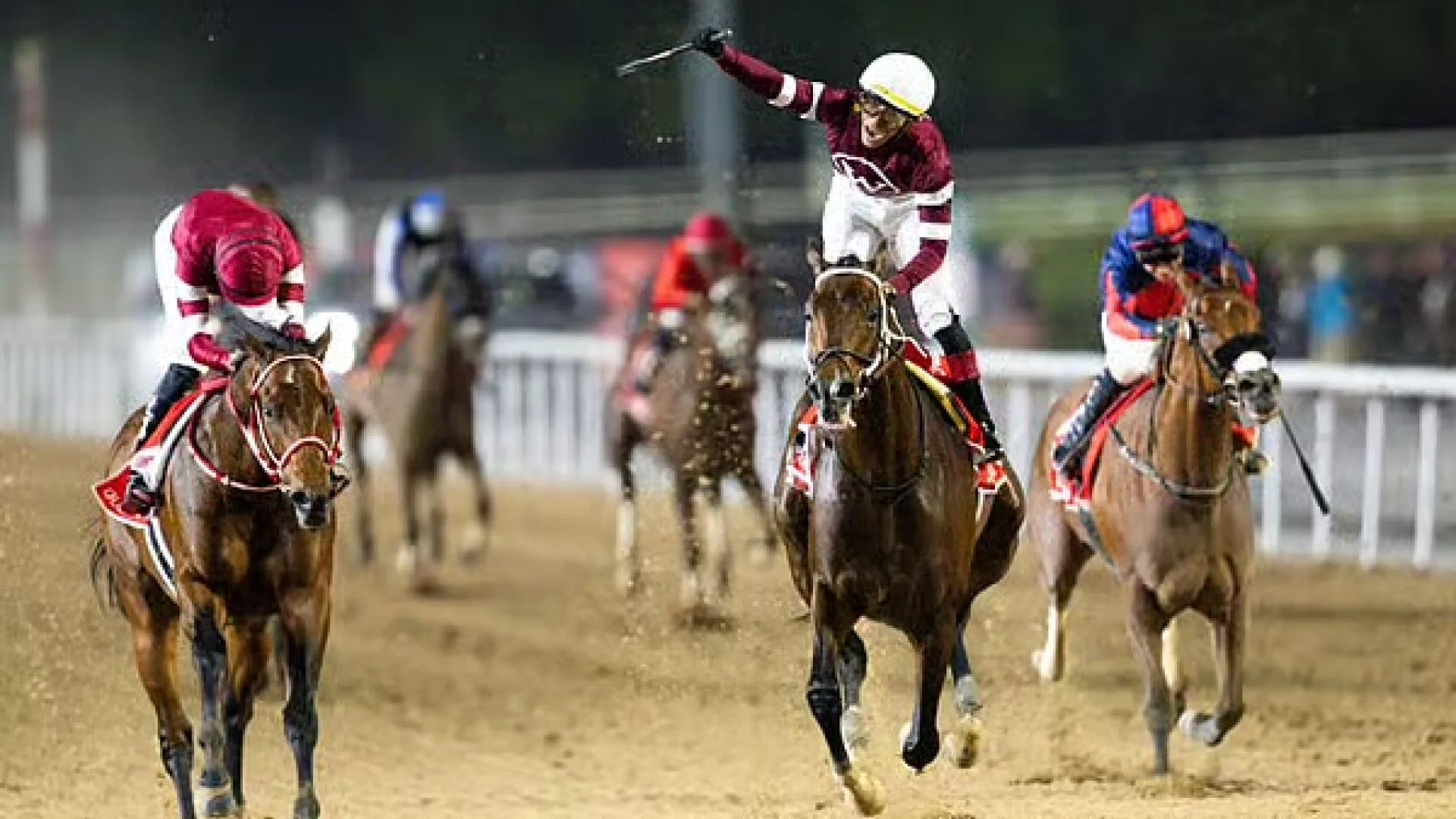
Then they’re off. The horses surge like a tide you didn’t see coming. For a second, the world reduces to motion: muscle, speed, the snap of air. The crowd reacts in waves—first the gasp, then the roar, then the quick return to calculated calm as if everyone is trying to look composed while their heartbeat has other plans.
This is why the Dubai World Cup matters beyond sport. It compresses Dubai’s promise into a single night: world-class organization, world-class hospitality, and a world-class ability to turn a venue into a destination.
Anniversary editions have a different gravity. They attract not only regular fans and industry insiders, but also the “I want to be there for that one” crowd—collectors of experiences, status, and stories. That tends to lengthen stays and widen itineraries: a pre-race business meeting, a day of shopping, a post-race brunch, a property viewing “just out of curiosity.” In Dubai, curiosity is often the first step in commitment.
For the city’s event calendar, the Dubai World Cup sits in a category of its own: an internationally recognized fixture with premium demographics. When that fixture hits a milestone, it becomes a megaphone—broadcasting the city’s lifestyle offer to markets that matter for tourism, trade and investment.
The beauty of it, Dubai-style, is that nothing feels like a seminar. It feels like a night out. Yet behind the champagne and flashbulbs, the mechanics are precise: occupancy, spend per visitor, brand impressions, repeat travel. An event economy with receipts.
For property investors, the significance of the Dubai World Cup is not limited to one Saturday night at Meydan. It’s about repeatable demand spikes, global brand exposure and the way major events anchor Dubai’s positioning as a premium, experience-led city. The 30th edition in 2026 is likely to intensify these dynamics by attracting extra media attention and milestone-driven travel.
1) Hospitality yields and peak-season pricing: Event weeks can lift hotel performance indicators—occupancy and ADR—particularly in well-connected areas such as Downtown Dubai, Business Bay and locations with efficient access to Meydan. Investors in hotel apartments and professionally managed short-term rental units often model cashflow around these peak windows. A milestone edition can widen the peak and push rates higher, provided supply and regulation are navigated with strong management.
2) Location branding around Meydan and nearby districts: Meydan’s global visibility functions as soft marketing for its wider surroundings. When broadcast images repeatedly associate an area with prestige and high-spend visitors, it can support long-term demand for lifestyle residential products—especially where infrastructure, retail and community amenities keep improving. Investors should watch for upgrades to connectivity, placemaking and mixed-use activation that convert “event proximity” into daily livability.
3) Luxury residential demand and second-home behavior: The Dubai World Cup draws high-net-worth individuals who travel with a lifestyle agenda: suites, private hospitality, curated experiences. This demographic is naturally aligned with branded residences, signature penthouses and villa communities that offer privacy plus services. Milestone years are a marketing moment: developers and sellers who time launches and viewings around these periods can benefit from higher-quality international leads.
4) Retail and mixed-use performance: High-spend event tourism supports premium dining, luxury retail and experiential concepts. For investors in mixed-use assets or prime retail units, the key is alignment with event-driven mobility patterns: where people stay, dine and socialize before and after the race. Assets in established hubs often capture the clearest uplift, while emerging lifestyle clusters can outperform if they deliver a distinctive, curated offer.
5) Investor takeaway: Treat the 30th Dubai World Cup edition as an indicator of Dubai’s broader strengths: execution, visibility and premium demand. The best-positioned real estate plays typically combine strong access, top-tier building operations, proven rental liquidity during peak periods, and a neighborhood story that keeps strengthening even when the grandstand lights go dark.