Under the floodlights of Meydan, racing stops being a sport and becomes a pulse you can hear—hoofbeats, crowd breath, the click of decisions made in half-seconds. Dubai World Cup 2026 is set to again draw an international cast of elite horses, owners, trainers and jockeys, propelled by one of the world’s richest purses and the meeting’s outsized prestige. Behind the glamour, it’s a finely tuned industry: analytics, veterinary science, logistics and wagering markets all converging on a few minutes of controlled chaos. Win here, and reputations—and valuations—change overnight.
The first thing you notice at Meydan isn’t the crowd. It’s the light.
It pours down in clean white sheets, turning the track into a runway and every horse into a moving sculpture—muscle, sheen, tension. In the parade ring, a groom keeps one hand flat against a neck that quivers like a drawn bow. “Easy,” he whispers, not for show, but because the animal is listening.
This is the Dubai World Cup 2026, and it never feels like “just a race.” It feels like an evening where the city’s favorite language—scale—gets translated into speed. A few minutes on a dirt track, and suddenly you understand the headline idea that millions ride on every stride.
Meydan doesn’t merely host the World Cup; it frames it. Glass, steel, terraces, lounges, the sweep of the grandstand like a wave held in place. You can watch the track like a chessboard from above, or feel it at rail level where the sand kicks up and sticks to your shoes.
People arrive in different uniforms: owners in understated tailoring, racing fans in hats that look like small pieces of architecture, media crews gliding with cameras, and analysts staring at screens as if the horses are numbers first and living creatures second. A man beside me taps his phone and says to no one in particular, “The market’s drifting.”
Not the stock market. The odds.
The Dubai World Cup’s reputation rests on two pillars: prize money and prestige. The purse is among the biggest in global racing, and the wider race night programme carries its own gravitational pull. The result is predictable and still astonishing: stables and connections from the Middle East, the US, Europe and Asia converge on one venue, all believing—quietly, fiercely—that this is their year.
Because winning in Dubai doesn’t end at the finish line. A major victory can reprice a stallion prospect, elevate a trainer’s bargaining power, secure future invitations, and reshape sponsorship conversations. The trophy is polished silver; the aftershocks are economic.
Walk away from the champagne flutes and you find the real engine room: stable yards humming with routine. The modern elite racing operation is part tradition, part science. Training has always been about feel—how a horse breathes, how it recovers, how it looks you in the eye. Now feel is paired with data: split times, heart-rate monitoring, workload management, motion analysis.
Late at night, the atmosphere changes. The grandstand is distant, the music gone. You hear straw shift, water buckets clink, a low nicker that sounds almost conversational. Someone says, softly, “He ate up.” It’s spoken like relief, because it is.
Racing has always had a second storyline: what people think will happen. In the days leading into the World Cup, the betting conversation becomes its own weather system. A training rumor lifts a horse. A travel note sinks another. One sharp workout clip circulates, and suddenly everybody “has a feeling.”
But the gate doesn’t care about feelings.
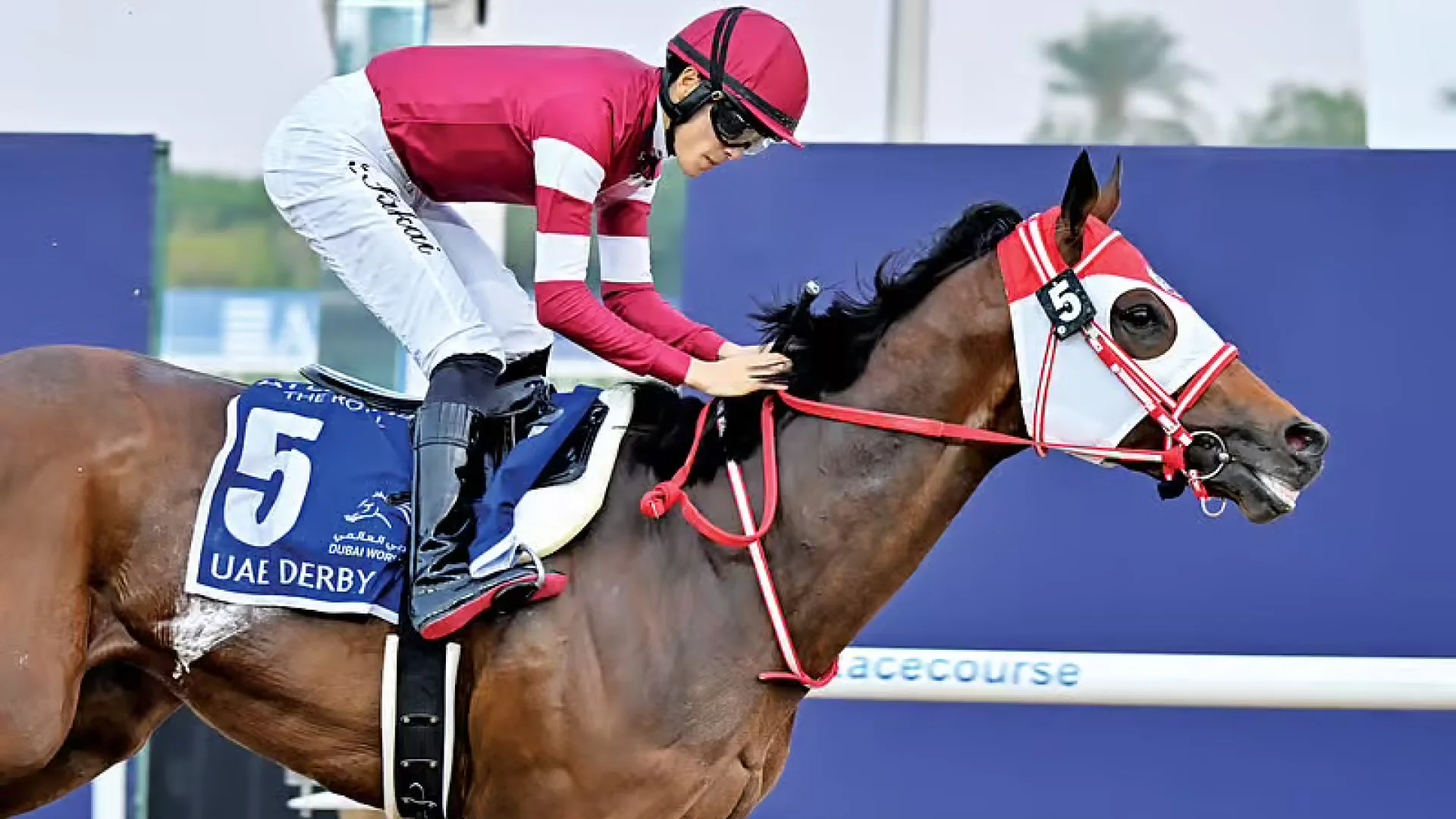
When the stalls spring, the noise arrives all at once—an intake of breath, then the roar. The field surges forward, sand thrown back like spray from a speedboat. A jockey crouches low, hands still, eyes fixed. There’s a moment on the first bend when the whole race seems to hinge on a choice so small it’s almost invisible: go three wide, or wait. Push now, or trust the closing kick.
And this is where the World Cup earns its myth. The glamour is real, but the truth is simpler: a powerful animal running at full capacity, guided by a human making decisions under pressure, watched by a crowd that can’t help moving with them.
In Dubai, globally televised events don’t just fill seats—they reinforce the city’s positioning as a premium lifestyle and business destination. That halo can translate into tangible momentum for certain real estate segments.
One race night won’t move the market alone. But as part of Dubai’s steady calendar of global spectacles, the World Cup keeps the city’s premium story loud, clear, and investable.