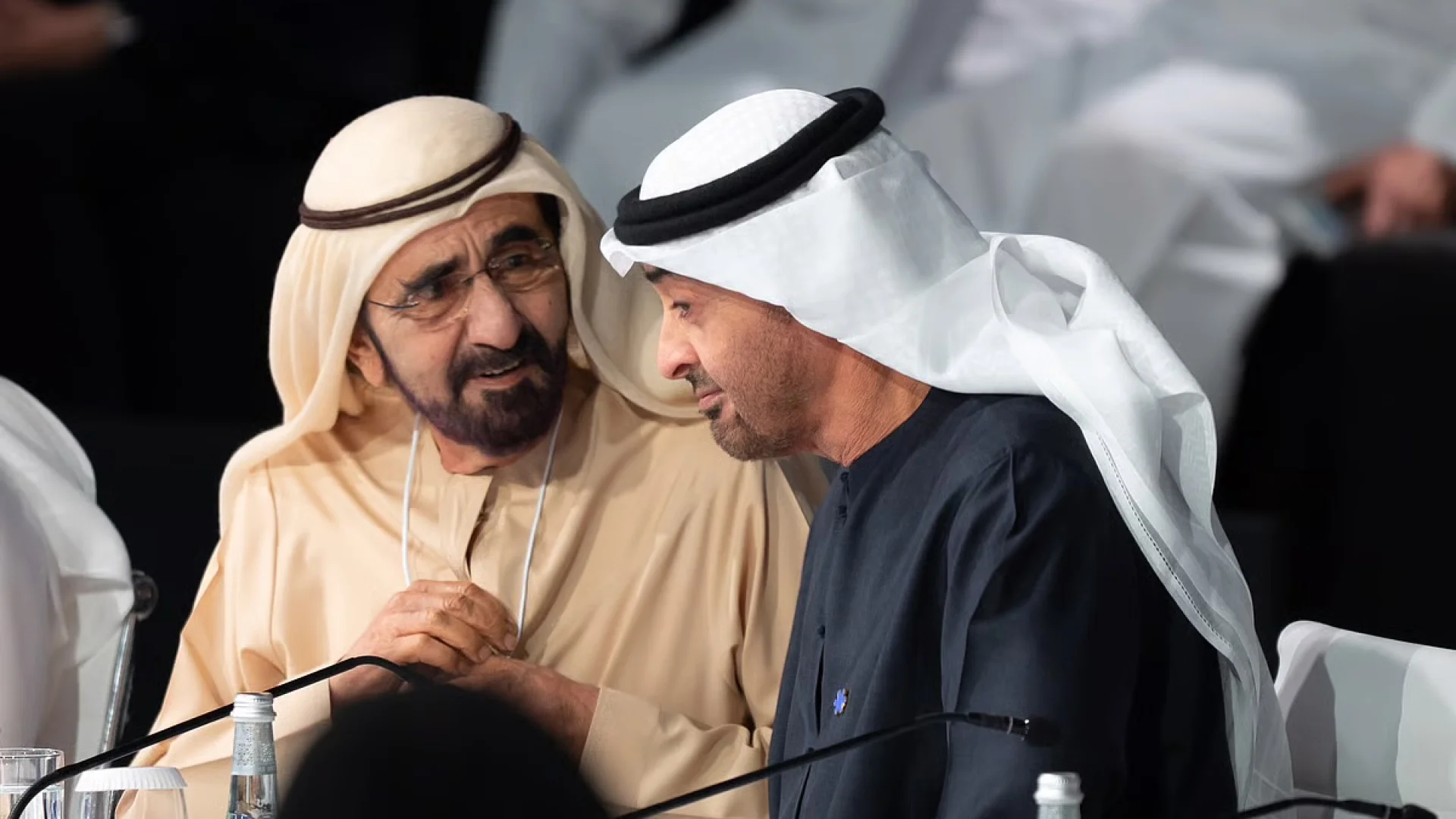
The room brightened, the cameras lifted, and Dubai leaned into its favorite role: the global convenor. With UAE President Sheikh Mohamed bin Zayed Al Nahyan and Dubai Ruler Sheikh Mohammed bin Rashid Al Maktoum in attendance, the World Laureates Summit opened as a high-profile gathering of Nobel laureates and international award-winning thinkers. Beyond the ceremony, the message was unmistakable—Dubai wants to be known not only for skyline and speed, but for ideas, research, education, and the kind of international collaboration that shapes what comes next.
You can hear it first: the soft, restless hush that lives in a room full of people who are used to being listened to. A chair slides back. A translator checks a headset. Somewhere behind you, a journalist whispers, “They’re here.”
Then the atmosphere tightens—polite, precise, almost cinematic. UAE President Sheikh Mohamed bin Zayed Al Nahyan arrives, alongside Sheikh Mohammed bin Rashid Al Maktoum, Vice President and Prime Minister of the UAE and Ruler of Dubai. The opening of Dubai’s World Laureates Summit isn’t just another date on the conference calendar. It’s a statement delivered in the language this city speaks fluently: presence, scale, and ambition.
Dubai has a talent for making big moments feel inevitable. The glass, the light, the choreography—everything says, this was meant to happen here. Yet the most striking detail is not the stage or the screens. It’s the faces in the audience: Nobel laureates and other internationally honored minds, scientists and thinkers, people who have spent decades arguing with nature, numbers, and uncertainty—and occasionally winning.
In the corridors and coffee lines, conversations don’t start with small talk. They start mid-thought.
“If you change the model…” one voice says, fingers drawing an invisible curve in the air.
“Yes—but the assumptions,” another replies, smiling like the debate itself is a kind of friendship.
This is the energy Dubai is importing and amplifying: credibility, intellectual weight, and the quiet confidence of people who have been proven right often enough to keep questioning everything.
On paper, the World Laureates Summit is a gathering—an event that brings Nobel laureates and other celebrated global figures together to discuss issues that matter. In practice, it’s also a strategic mirror held up to the world. Dubai isn’t only asking, “How do we host the future?” It’s asking, “How do we own a piece of it?”
The presence of the UAE’s top leadership elevates the summit from a prestigious conference to a national-level priority. It suggests that the themes discussed inside—education, research, innovation, the big systems that hold societies together—are not abstract topics. They are levers. They are investments. They are how countries compete now.
Dubai has already mastered the art of building quickly. The new frontier is building ecosystems: networks of talent, universities, labs, entrepreneurs, and decision-makers that keep feeding each other long after the applause fades.
Laureates bring a particular kind of gravity. Their work has been tested, replicated, debated, and recognized at the highest level. When they speak, people lean in—not because the room is quiet, but because the stakes are loud.
The summit’s discussions, as framed around the event, revolve around the major questions shaping the coming decades: how education evolves, how research can accelerate responsibly, how innovation translates into better lives, and how global cooperation can survive an era of fast change.
Dubai is an interesting backdrop for these conversations because it’s a city that looks like tomorrow—but runs on today’s deadlines. Here, the future is not a distant concept. It’s a project plan.
When leaders attend openings like this, the moment that matters is often not the speech. It’s the handshake, the pause for a photo, the short exchange that makes everyone around them adjust their posture. Soft power is built in seconds.
For international guests, the message is simple: you are being taken seriously here. And in global science and innovation, that matters. Talent goes where it feels welcomed, funded, connected—and safe enough to focus.
Dubai’s pitch, increasingly, is that it can be that place: a bridge between regions, a hub for dialogue, a platform where ideas can meet implementation.
Every summit ends the same way: lanyards go into drawers, business cards into pockets, flights into calendars. The real question is what remains.
Events like the World Laureates Summit matter when they become repeatable—when they create routines of cooperation. A visiting professor who returns. A research partnership that turns into a lab. A conversation that becomes a grant. A student who chooses a city because they saw, once, that serious people gather there.
Dubai understands momentum. It also understands optics. But the two don’t have to be enemies. Sometimes, a well-lit stage is simply a way to bring the right people into the same room—and let the quiet, stubborn work of collaboration begin.
High-profile knowledge events are not “just branding” for a city like Dubai—they are demand signals. When leadership visibly backs forums that attract Nobel-level talent and global decision-makers, it supports a broader shift toward a knowledge-driven economy. For real estate investors, that shift tends to show up in three practical places: who moves in, what they rent, and what companies build next.
1) Talent inflows and premium residential demand: Ecosystems anchored in research, education, and innovation attract highly skilled professionals and internationally mobile families. These groups typically favor:
2) Office and “innovation space” absorption: As cities compete for R&D teams, venture-backed startups, and corporate innovation units, demand often shifts toward Grade-A offices, flexible floorplates, and managed workspace. Investors should watch for micro-markets where transport access, ecosystem proximity, and tenant quality align—because those submarkets tend to hold up better across cycles.
3) Hospitality, MICE, and long-stay products: Summits reinforce Dubai’s role as a meetings-and-exhibitions hub. That can support hotel performance and spill over into branded residences and long-stay aparthotels that capture business travel and visiting academics. In underwriting, the key is to separate event-driven peaks from sustainable base demand.
4) Supply remains the main counterweight: Dubai can add inventory quickly. For investors, the “Dubai story” is not enough—asset selection is. Buildings that differentiate via layout, sustainability specs, services, and professional property management are more resilient when new supply arrives.
5) Practical investor takeaways:
In short: a laureates summit won’t move prices overnight, but it strengthens the narrative—and networks—behind durable demand. Cities that can host ideas, fund them, and house the people who produce them tend to win the long game in real estate.