
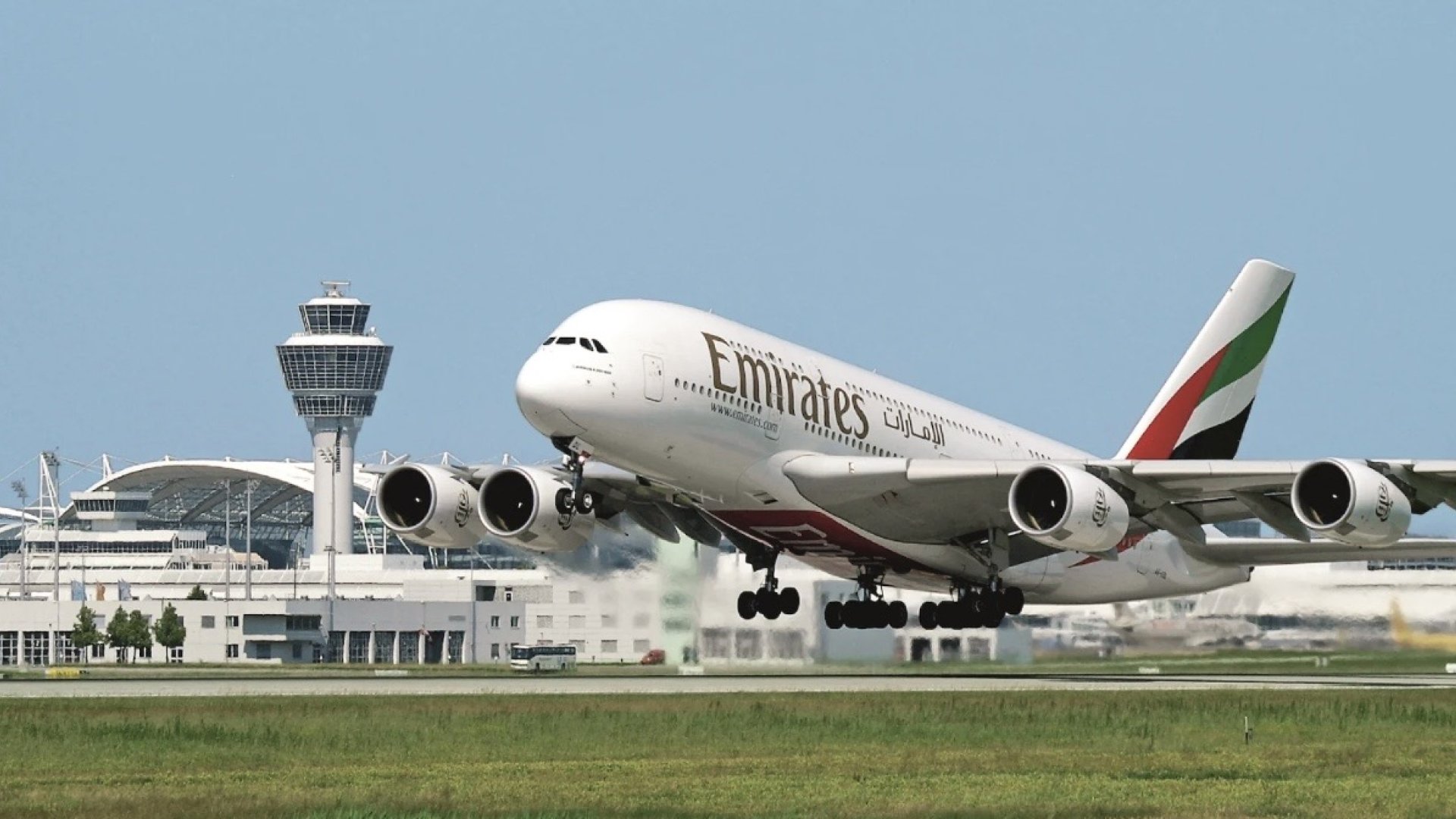

It sounds like a simple addition to the departure board—until you look behind the glass. Emirates wants to (re)connect Berlin with Dubai, a move that could plug the capital back into one of the world’s most powerful hub networks. But at BER, the real runway is the timetable: scarce takeoff and landing slots, banked connection times, operational capacity, and political expectations collide. Berlin’s appetite for long-haul is real; whether it becomes a sustainable route depends on minutes, not headlines.
The BER morning doesn’t begin with roaring engines. It begins with rhythm. The click of suitcase wheels. The soft beep of boarding passes. A barista calling out a name that gets swallowed by the terminal’s acoustics. And then, in the middle of this practiced choreography, a rumor lands with the weight of a wide-body jet:
Emirates wants Berlin.
For passengers, it’s a daydream—Dubai without detours. For the city, it’s a statement—Berlin back on the long-haul map. For the airport ecosystem, it’s something else entirely: a puzzle made of minutes, permissions, and pressure.
Ask frequent travelers in Berlin what they miss, and you’ll hear the same sigh dressed in different sentences. “Why do I always have to connect?” “How is it that the capital still feels like a regional airport on some days?” “If I miss my connection in Frankfurt, my whole week collapses.”
A nonstop BER–Dubai service would cut straight through that frustration. Not just because Dubai is a destination, but because it’s a switchboard—a hub that routes people onward to Asia, Africa, Australia. In aviation, hubs are magnets. If you can reach one efficiently, the world suddenly feels closer.
That’s why this isn’t merely about adding a flight number. It’s about adding reach. And reach, in the life of a city, changes things.
On paper, launching a new route looks like a corporate decision: aircraft, crew, marketing, sales. In practice, it hinges on something more brutally mundane—slots. Tiny windows in which a plane is allowed to take off or land. At a busy airport, good slots are like prime real estate: scarce, defended, negotiated, and never “just available” because someone asked nicely.
At BER, the tension is amplified by expectations. Berlin is hungry for more intercontinental flights, and every long-haul announcement feels like the city taking a deeper breath. But the airport also has to protect the integrity of its operations—stand availability, passenger flows, security lanes, ground handling, noise rules, late-night restrictions, turnaround capacity.
So the question becomes less romantic and more surgical: At what time can Emirates land—and at what time should it? A Dubai flight that arrives too late or leaves too early can miss the hub’s connection banks. And if connections don’t line up, demand leaks away—quietly, ruthlessly—into other routings.
Stand by a window at BER and watch the planes taxi. Everything looks smooth. But beneath the surface, schedules interlock like gears. If you change one cog, the whole clock can complain.
That’s where the “airport drama” comes in. Because slots aren’t handed out in a vacuum. They’re coordinated. They’re contested. And they can become political, especially when a flagship carrier and a capital city enter the same sentence.
“We need a time that works,” says someone from the industry, and it sounds like they’re booking a table at a fully reserved restaurant. That’s essentially what they’re doing—except the restaurant is the sky, and the reservation is a legal right to move metal at a specific minute.
Berlin is not Frankfurt. It doesn’t have the same long-haul density, the same established transfer ecosystem, the same global airline gravity. But it has something else: a large metropolitan region, a growing international business scene, embassies, research, media, tech—and a brand that travels well.
An Emirates connection can serve multiple audiences at once:
But that only happens if the product is built right: competitive departure times, reliable operations, a schedule that respects Dubai’s connection waves, and enough frequency to become habitual rather than occasional.
Clear: Emirates wants access to Berlin, and Berlin wants more long-haul. Clear: without workable slots, there is no workable route. Clear: the market is watching, because one strong long-haul link can trigger a chain reaction—more competition, more capacity planning, more attention.
Less clear: the exact timeline, the precise slot solution, and how quickly the operational and regulatory pieces can align. In aviation, enthusiasm travels fast; implementation travels on timetables.
Still, the idea has a certain cinematic inevitability. The capital city, the global hub, the glass terminal, the blinking board. Somewhere in the background, a ground handler points at a stand and says, half-joking, half-serious: “If they get that window, everything shifts.”
And that’s the story of modern airports in one sentence. Not dreams, but dominoes.
For investors, a potential Emirates BER–Dubai connection is best read as a connectivity upgrade—and connectivity is one of the quiet variables that shapes tenant demand, hotel performance, and corporate location decisions. The impact won’t come from the announcement itself, but from whether the service becomes stable, frequent, and hub-aligned (i.e., timed to Dubai’s connection banks).
Office markets: Direct hub access strengthens Berlin’s pitch to internationally operated firms—especially those with Middle East, South Asia, and Asia-Pacific ties. If the route is timed well, it reduces travel friction for executive mobility and project teams. That can support demand for flexible office formats and high-quality space in well-connected submarkets, with a secondary benefit for retail and food & beverage around business nodes.
Hospitality and serviced living: Long-haul connectivity typically lifts higher-spending inbound segments and can increase average length of stay, particularly when paired with stopover dynamics. Hotels, aparthotels, and premium serviced apartments stand to benefit—provided Berlin converts improved accessibility into conferences, events, and sustained tourism flows.
Logistics / airport corridor: Even if the service is passenger-led, incremental long-haul capacity can support time-sensitive air-cargo spillover and strengthen the case for modern light-industrial and logistics space near the airport and along key arterials. Investors should focus on assets with flexible use cases and strong compliance profiles (noise, emissions, operating hours).
Residential demand: Better global access can marginally reinforce international tenant pools—expats, corporate relocations, visiting professors, and project-based staff—supporting furnished and mid-to-upper rental segments in central and transit-connected locations. The effect is usually qualitative (tenant quality, stability) more than an immediate pricing spike.
How to underwrite the headline: Treat this as a thesis that needs confirmation. Watch for published schedules, frequency commitments, slot stability across seasons, load factors, and competitive responses. If the route locks into attractive times and persists, it becomes a durable location advantage—and those are the advantages that real estate can monetize.