
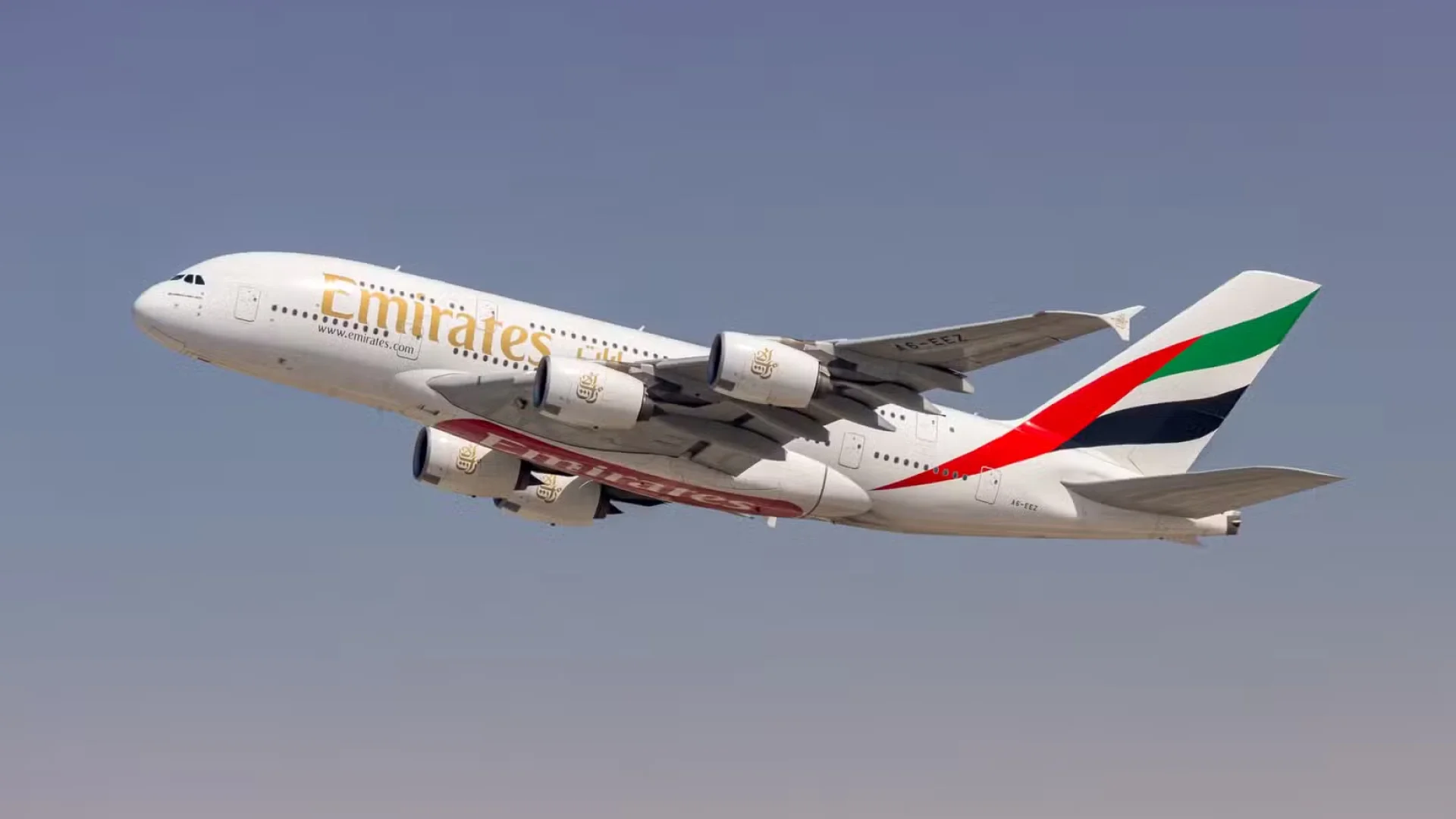

This is the breakthrough Berlin, Brandenburg and Emirates have awaited for years: Germany has expanded the traffic rights, clearing the way for up to seven weekly Emirates flights between BER and Dubai. The daily nonstop service is now politically approved, although its launch date, flight numbers and booking opening have yet to be announced. It is a leap in comfort for travellers, a location signal for eastern Germany and a highly relevant new link for the real-estate markets of Berlin and Dubai.
It is now official: the biggest political obstacle to Emirates serving Germany’s capital airport has been removed. During the state visit of UAE President His Highness Sheikh Mohamed bin Zayed Al Nahyan, Germany expanded the bilateral aviation framework. One UAE national carrier may now serve a fifth German airport. That point is Berlin Brandenburg, clearing Emirates for a maximum of seven weekly services between BER and Dubai.
The short answer to the question everyone is asking is therefore: yes, Emirates is allowed to connect Berlin and Dubai nonstop every day. The equally important qualification is that, as of 13 September 2026, Emirates has not published a final schedule. Political approval is in place and the airline has clearly stated its intention, but the launch date, flight numbers, timings, fares and opening of reservations remain unconfirmed.
The door is no longer merely ajar – it has been unlocked. Emirates can now turn years of planning into an actual daily air bridge.
Emirates’ absence from the German capital was never primarily about demand or airport infrastructure. It resulted from the bilateral traffic-rights framework. The carrier already used its permitted German points at Frankfurt, Munich, Düsseldorf and Hamburg. To add Berlin, it effectively needed either to surrender another city or persuade the two governments to expand the agreement.
The 22-year campaign referenced by Simple Flying dates back to 2004, while Emirates itself says its ambition to serve Berlin stretches back more than three decades. Berlin and Brandenburg, airports, chambers of commerce and tourism bodies repeatedly supported access. Lufthansa and German aviation groups opposed broader Gulf-carrier rights, warning about competitive distortion and the transfer of connecting traffic away from German hubs.
The deadlock ended on 10 September 2026. The Germany–UAE joint declaration added a fifth point for one UAE national carrier. Transport Minister Steffen Bilger specified a maximum of seven weekly flights, while Emirates’ frequencies at its four current German airports remain capped. It is a carefully balanced compromise: Berlin is added without opening the entire bilateral market.
In June 2026, Emirates said it was ready to launch daily Berlin and Stuttgart services. For Berlin it presented the case for a four-cabin Boeing 777-300ER, including Premium Economy and First Class. Compared with seasonal narrow-body operations, that would represent a substantial increase in comfort, consistency and capacity.
The cargo hold matters just as much. Emirates estimated that a daily 777-300ER service could provide more than 280 tonnes of weekly belly-hold capacity for pharmaceuticals, medical technology, electronics, machinery and other time-sensitive goods. The final aircraft assignment is not yet official, however, and there is currently no basis for promising an Airbus A380 service.
The route is about far more than holidays, property viewings or business trips in Dubai. DXB is Emirates’ global hub. The airline says Berlin passengers could reach 83 onward destinations with one stop: 42 in Asia, 22 in Africa, 12 in the Middle East and seven in Australasia. This creates more convenient access from Berlin and eastern Germany to Australia, Southeast Asia, the Indian subcontinent, the Indian Ocean and Africa.
Emirates’ 2025 German traffic illustrates the hub effect. Of 2.36 million passengers, 40 percent travelled between Germany and Dubai, while 60 percent continued beyond Dubai. Berlin is therefore gaining not only a line to one city but a gateway into a broad intercontinental network.
Berlin has almost 3.9 million residents and combines the functions of national capital, research centre, trade-fair city, start-up hub and major tourism destination. Yet, according to OAG schedule data cited by Emirates, more than 85 percent of BER’s international connectivity remained concentrated within Europe. The city’s global role and its long-haul network were badly out of balance.
Regional businesses made the same point. In a 2023 survey published by the Berlin and Brandenburg chambers of commerce, 75 percent of respondents rated long-haul connectivity as deficient or insufficient. Dubai was identified as an urgent priority, both as a destination and a transfer hub.
An older German Aerospace Center study cited by Emirates estimated that a daily Berlin operation could support about 500 direct and indirect jobs, attract roughly 140,000 additional passengers and generate 55,000 extra overnight stays each year. These are forecasts, not guaranteed outcomes, but they indicate the potential scale of benefits for airports, hotels, restaurants, retail, logistics and business services.
Real-estate markets depend on trust, information and accessibility. A daily nonstop flight does not replace a strong location, sound financing or proper due diligence. It does, however, remove a very practical barrier: time. Buyers and owners from Berlin, Brandenburg and the eastern German states would no longer be forced to connect through Frankfurt, Munich, Istanbul, Doha or another hub whenever they want to view, purchase, hand over or use a Dubai property.
That can turn an abstract online opportunity into a manageable short trip. Buyers can compare several developments, inspect construction progress and attend handovers with less friction. For second-home owners and landlords, Dubai feels closer. In premium and off-plan real estate, where confidence and advice matter greatly, easier personal access can make a meaningful difference.
The flow also works in reverse. Berlin becomes easier to reach for Gulf-based travellers, executives and investors. Hotels, serviced apartments, premium rentals, congress venues, luxury retail and international corporate relocations may all benefit. Berlin’s Senate explicitly links the route with shorter journeys, stronger convention traffic and greater attractiveness to international investors.
Dubai demand will not be confined to one district. Depending on the buyer’s strategy, established locations such as Downtown Dubai, Business Bay, Dubai Marina and Palm Jumeirah may be relevant alongside newer master-planned communities. Price, fees, completion date, rental demand, developer quality, legal checks and personal use remain decisive. The flight is a catalyst for contact – not a substitute for due diligence and not a guarantee of higher property values.
The decision has also drawn criticism. Lufthansa, Germany’s airline association and labour representatives argue that additional Emirates rights could move connecting traffic, value creation and jobs from German hubs to the Gulf. Supporters respond that Berlin and eastern Germany have long been structurally underserved and that direct global links strengthen competition, tourism and foreign trade.
Passengers will gain more choice. Condor and Eurowings have also announced BER–Dubai services for winter 2026/27. Emirates’ differentiator is its proposed year-round daily widebody product and dense connection bank at DXB. Actual fares and market shares will only become clear once the final schedule goes on sale.
Traffic rights are the decisive breakthrough, but they are not yet a boarding pass. The exact launch date, airport slots, flight numbers, departure times, initial aircraft and start of sales are still outstanding. Whether the route operates daily from day one or ramps up in stages should only be stated after an official Emirates announcement.
Our assessment is precise: the daily nonstop service is authorised and clearly prepared, but it is not yet operating. After decades, politics is no longer the obstacle. Implementation now moves to the airline and airports.
Berlin and Dubai both thrive on international talent, capital, tourism, technology and ambitious future projects. Permission for Emirates to connect them daily is more than aviation news. It is a new piece of infrastructure between Germany and the United Arab Emirates.
Travellers gain a simpler journey. Businesses gain faster access to customers and markets. Real estate gains more face-to-face meetings, easier viewings and a closer relationship between two dynamic cities. The runway is clear; now Berlin and Dubai await the first regular Emirates departure.
Editorial status: 13 September 2026. Emirates had not announced a firm launch date at that time.