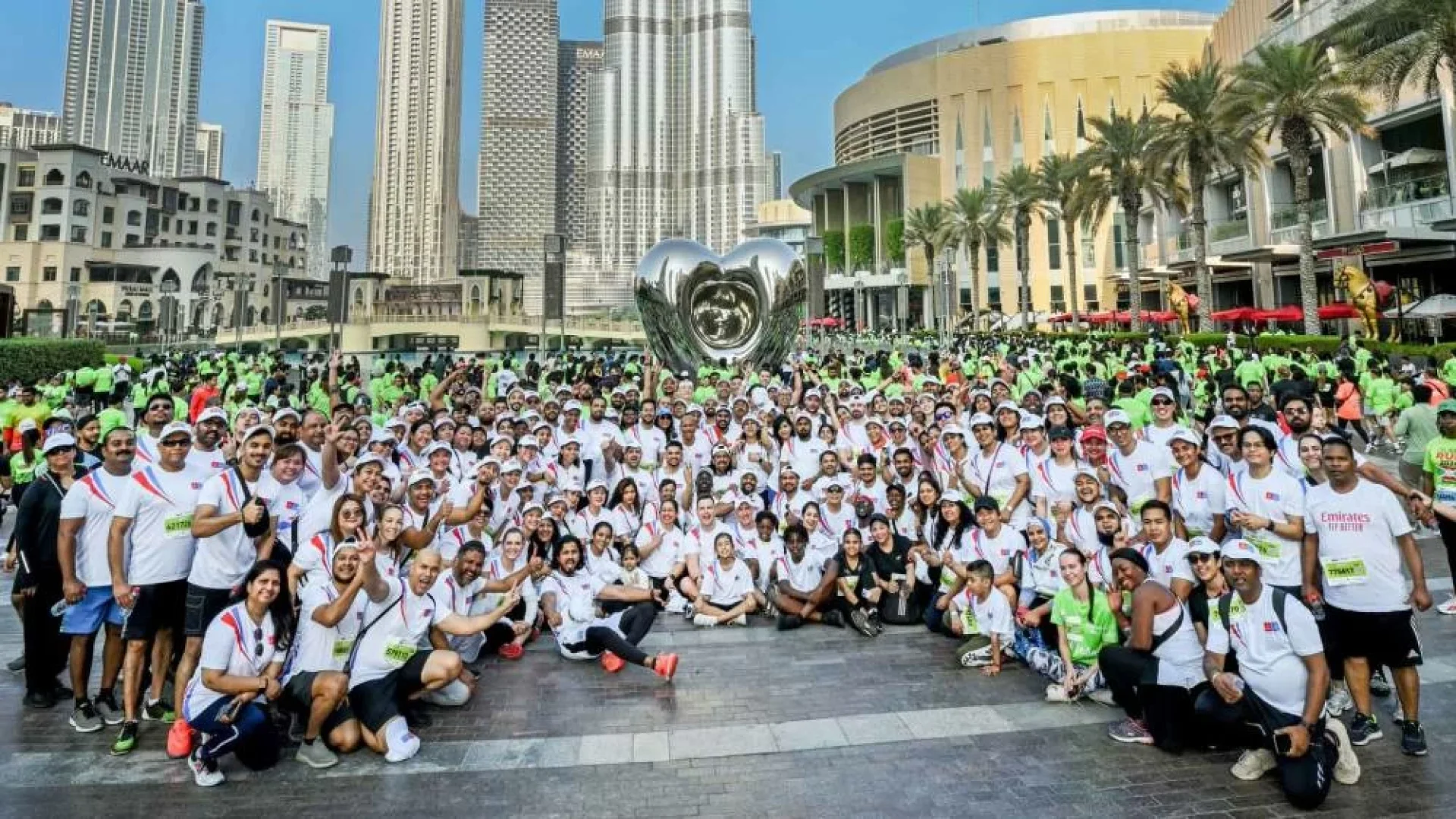
At sunrise, Dubai’s promenades begin to fill with runners, cyclists and families heading outdoors. For the tenth time, the Emirates Group is supporting the Dubai Fitness Challenge, the citywide initiative that asks people to move for 30 minutes every day over 30 days. The anniversary shows how a simple fitness goal has grown into a shared urban ritual – one that brings employees, residents and visitors together across parks, waterfronts, gyms and public spaces.
The first thing you hear is counting. One, two, three. A coach calls out the rhythm while the skyline catches the morning light. Shoes tap against the pavement. A cyclist glides past. For a few minutes, Dubai’s towers become a backdrop to a very human scene: people breathing hard, laughing and moving together.
This is the spirit of the Dubai Fitness Challenge. For its tenth edition, the city once again invites residents and visitors to commit to 30 minutes of activity every day for 30 days. The idea is deliberately simple. No single sport is required. A run, a swim, a yoga class, a bike ride, a team game or a brisk walk can all become part of the challenge.
The Emirates Group is supporting the anniversary edition as a long-standing partner. Its involvement reflects the campaign’s broad reach: the challenge is not just about elite athletes or one-off events. It is about making movement visible, accessible and social – including inside one of Dubai’s largest and most internationally connected organisations.
Ten editions have changed the character of the campaign. What began as a fitness initiative has become part of Dubai’s annual rhythm. During the challenge, parks turn into meeting points. Waterfront paths become running routes. Workplaces form teams, families plan active weekends and colleagues swap suggestions for the next session.
At Emirates, that collective spirit has a natural fit. An airline connects people across borders; the fitness challenge connects them on the ground. Staff members can take part in group activities, encourage one another and build movement into a demanding working day. Sometimes the invitation is as ordinary as it is effective: “Are you joining us?”
The answer does not have to come from a seasoned athlete. The campaign’s appeal lies in its low barrier to entry. Thirty minutes can be divided into a walk before work, a session after a shift or a family outing at the weekend. Progress is measured in consistency, not in personal records.
During the challenge, the city itself feels like a giant open-air gym. Public parks, waterfronts, sports facilities and community spaces host activities and informal meet-ups. Dubai’s architecture provides the drama, but the details are intimate: a water bottle beside a bench, a child trying to keep pace with a parent, a group stretching beneath a palm.
For international visitors, this offers a different way to experience the emirate. Instead of moving only between airport, hotel and attraction, they can discover the city at walking speed. A shaded path becomes a route. A public square becomes a class. The skyline is no longer something to photograph from a distance; it becomes the view at the end of a workout.
That openness matters to the Emirates Group. Its workforce and customer base are international, but activity needs no translation. A starting signal works everywhere. So does encouragement. The campaign creates a shared language made of steps, smiles and the occasional cheerful complaint about the heat.
Corporate participation can turn a public campaign into a workplace culture. When a major employer forms teams and supports activities, healthy choices become easier to see and easier to share. The office conversation shifts. People discuss routes, classes and weekend plans instead of treating fitness as a private obligation.
These targets work because they are concrete. They can be placed in a calendar and repeated until they feel familiar. Today, a walk. Tomorrow, a swim. On Friday, a longer outing with friends. Small decisions accumulate, and eventually the city’s movement becomes part of the background.
The values of sport also echo the demands of aviation. Precision, endurance and teamwork matter on the ground as much as in the air. A flight depends on many people working together, and so does a successful fitness session. One person sets the pace, another brings energy, and someone else makes sure the group does not give up too soon.
The lasting effect of the challenge may appear after the official programme ends. The paths remain. The parks remain. So do the memories of a first run, a new walking route or a colleague who became a training partner. A seasonal campaign can leave behind a permanent habit.
The tenth edition also demonstrates what happens when public infrastructure, community initiatives and private partners move in the same direction. The city provides the spaces. Organisations create opportunities. Employers mobilise their people. Residents bring the energy. Without that final ingredient, the campaign would be nothing more than a slogan.
Instead, it becomes a scene. A group finishes a circuit and stands beneath the towers, flushed and smiling. Someone checks the time. “Same place tomorrow?” The question sounds casual, but it carries the real achievement of the challenge: movement has become something people want to return to.
For Dubai’s property market, the fitness challenge highlights an increasingly important value driver: liveability. Residential and mixed-use districts with safe walking routes, greenery, waterfront access, cycling infrastructure and nearby sports facilities can appeal strongly to residents, visitors and employers. Wellness is becoming part of the location equation, alongside transport, schools and retail.
Developers and investors can read public participation as a signal of how spaces perform. A neighbourhood that attracts runners in the morning, families in the afternoon and community groups in the evening has social momentum. That activity can strengthen the appeal of nearby homes, hotels, offices and retail. The long-term opportunity lies in designing places that do not merely accommodate exercise, but make active urban life feel natural.