
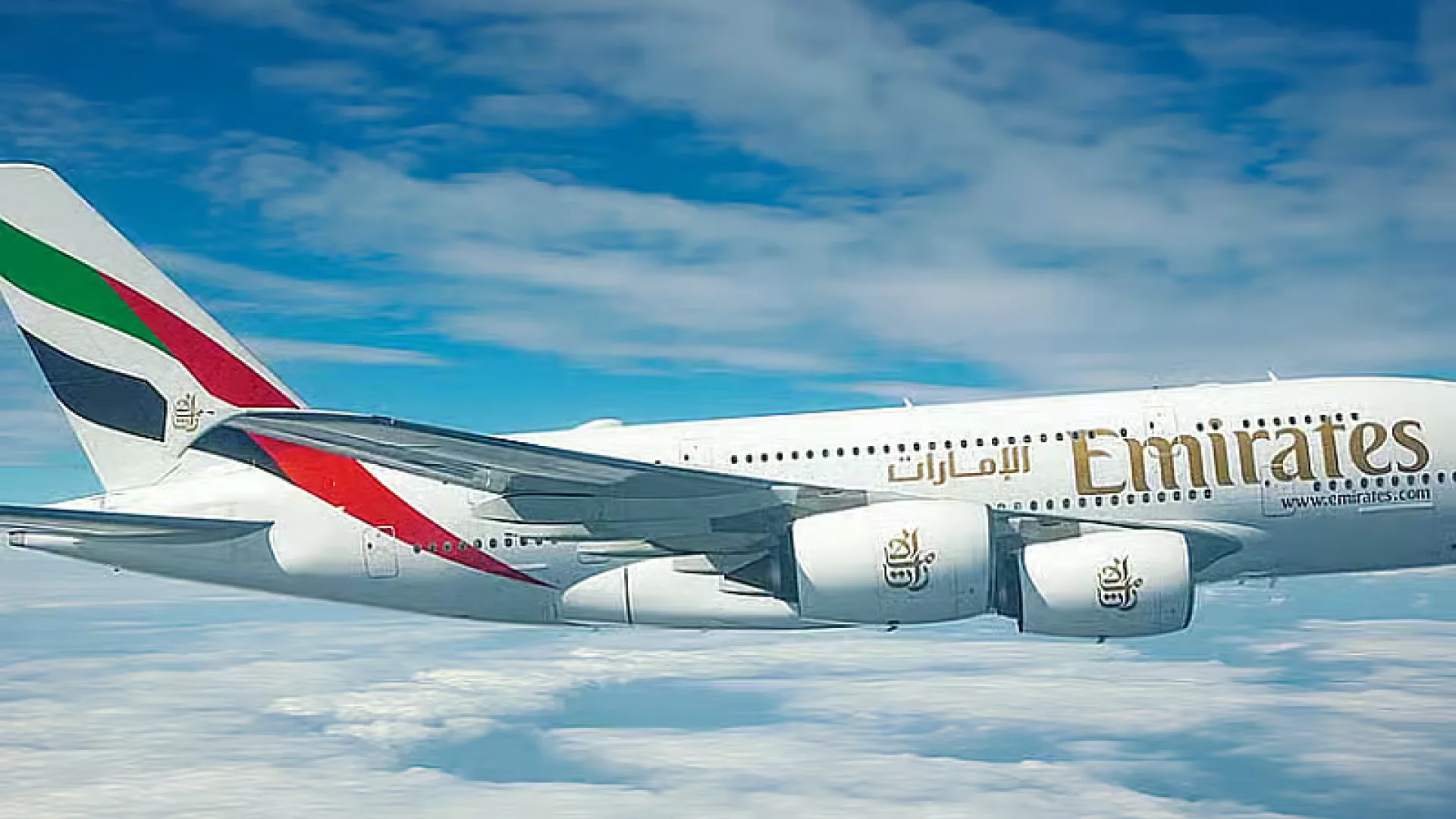

The journey starts before the aircraft reaches cruising altitude. On Emirates, a long-haul flight can become a film night, a children’s adventure or a quiet premium-economy retreat in the sky. In a recent international airline ranking, Emirates was named the world’s leading carrier for inflight entertainment. It also placed second in the family-friendly and premium-economy categories, highlighting a broader focus on comfort, choice and the details that shape the passenger experience.
The cabin lights fade. Screens brighten row by row. A child presses play before the aircraft has even reached its cruising altitude, while a business traveller two seats away scrolls through documentaries. Outside, the runway lights slide past in a silver blur. Inside, the flight has already become something else: a cinema, a playroom and a private pause above the clouds.
This is where Emirates has made its strongest mark. The airline was ranked number one in the world for inflight entertainment. Its ice system gives passengers access to a broad catalogue of films, television programmes, music, games and other content. The achievement is easy to understand in a single glance around the cabin. Every screen tells a different story. One passenger chooses a new release. Another listens to a live concert. A child settles into an animated film with the intensity only children can bring to a journey.
“Can I watch this one?” a young passenger asks. The answer is almost beside the point. The choice itself matters. On long flights, entertainment gives the hours a rhythm. It can soften the boredom of waiting, help families manage restless moments and give solo travellers a familiar way to switch off. A carefully selected film can make a six-hour journey feel shorter. A playlist can turn the view from the window into a personal soundtrack.
Emirates also ranked second for families. That result reaches beyond the catalogue on the seatback screen. Family-friendly travel is made of practical details: an easier boarding experience, attentive cabin crew, suitable meals, space for children and the reassurance that small disruptions will be handled with patience. Parents notice these details immediately. They know that a smooth flight is rarely created by one grand gesture. It is built from many small moments.
A child’s favourite programme can be one of them. So can a crew member who kneels briefly beside a seat, a meal that arrives at the right moment or a quiet stretch of cabin in which everyone finally rests. These moments may never appear in a timetable. Yet they often decide how a family remembers the journey.
Emirates was also placed second in the premium-economy category. The cabin is designed for travellers who want more comfort on long routes without moving all the way into business class. More room, a wider seat and a more relaxed environment can change the character of a flight. The laptop sits more comfortably on the table. Legs have room to move. Getting up no longer feels like negotiating a narrow corridor.
The recognition arrives as airlines compete over the complete journey rather than a single feature. Travellers compare fares, but they also compare what happens after the ticket is booked. Is the entertainment system easy to use? Is there enough choice for different ages and interests? Does the seat remain comfortable after several hours? Can a family find a sense of calm in a busy cabin?
Those questions explain why inflight entertainment has become such a visible part of airline identity. A large library is useful only when passengers can navigate it easily. Recommendations, categories and clear design help turn abundance into a personal experience. On a night flight, that experience can become a ritual: a film after dinner, music before sleep and one last glance through the window at the darkness below.
Premium economy reflects another shift in the way people travel. Passengers increasingly want to understand the value of every ticket. They may not need a fully private business-class suite, but they do want to arrive rested. A more generous seat and additional space can be especially important on routes linking Europe, Asia, Africa and the Gulf.
For families, the same principle takes a different form. Comfort means predictability. It means keeping children occupied, giving adults a brief break and making the aircraft feel welcoming rather than intimidating. A family may forget the flight number years later. It may remember the movie watched together, the meal shared at altitude or the first glimpse of Dubai through the clouds.
The ranking therefore captures three connected strengths. Emirates leads the world in the entertainment experience, while its second-place results for families and premium economy show a wider ambition. The airline is not relying on a single screen or a single cabin. It is building an experience that can speak to a child, a parent, a frequent flyer and a long-haul professional at the same time.
Late in the flight, the cabin grows quieter. A few screens remain illuminated. Someone laughs softly at a comedy. A child sleeps beneath a blanket. Beyond the glass, the clouds reflect the last light of day. For a few hours, the aircraft has been a moving theatre and a temporary home. That ability to shape time in the air is what has carried Emirates to the top of the latest inflight-entertainment ranking.
For Dubai and the wider United Arab Emirates, airline performance has a direct connection to the property story. Strong global connectivity supports tourism, business travel, international recruitment and the movement of capital. Those flows feed demand for hotels, serviced apartments, branded residences and well-connected homes.
Investors often watch locations linked to airports, business districts and visitor attractions. A globally recognised airline strengthens the perception of the city as an accessible international base. That can support short-stay accommodation as well as longer-term residential demand, particularly among professionals and entrepreneurs who need reliable links to multiple markets.