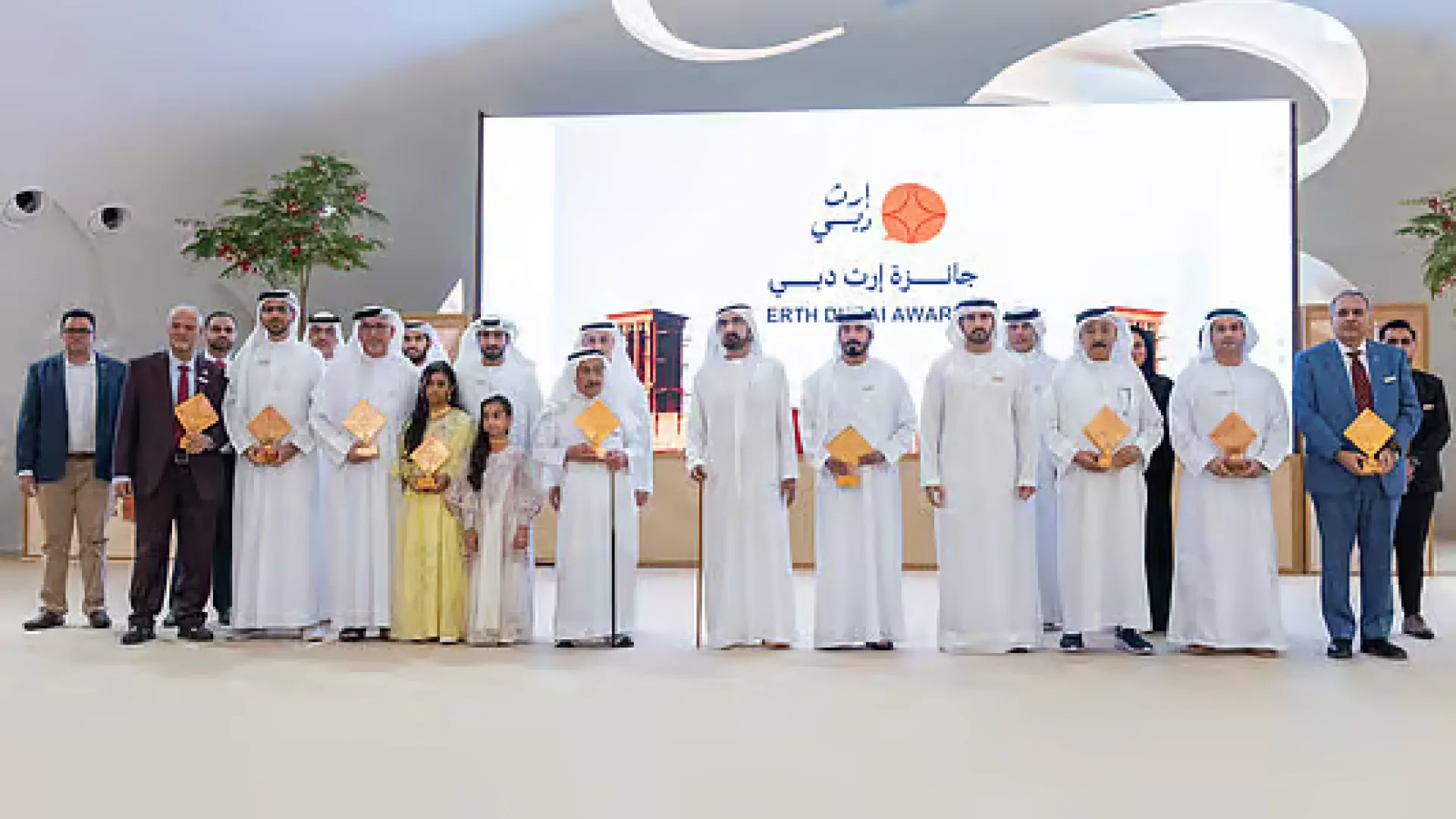
“Dubai will not be forgotten.” With that line, Sheikh Mohammed bin Rashid Al Maktoum turned the Erth Dubai Awards into more than a ceremony—it became a statement about identity in a city famous for reinvention. The awards recognise initiatives and individuals preserving and promoting Dubai’s cultural heritage, from safeguarding places and traditions to sharing stories with new generations. In a skyline built for the future, the evening insisted that roots still matter—and can be celebrated loudly.
The room doesn’t roar at first. It hums. A soft, anticipatory sound—like a city holding its breath. Fabric brushes against fabric. A phone screen glows, then goes dark. Somewhere, the scent of oud rises and lingers, warm and resinous, as if an old wooden door has just swung open.
Outside, Dubai is doing what Dubai does: moving fast, shining hard, chasing tomorrow. Inside, the tempo changes. Tonight, the spotlight turns backward—toward beginnings, toward names and places that don’t compete for height, but for meaning.
Then the words land: “Dubai will not be forgotten.” Sheikh Mohammed bin Rashid Al Maktoum is honouring the winners of the Erth Dubai Awards, and the phrase feels less like a slogan than a promise. Not to slow the city down—but to make sure it remembers what it’s made of.
“Erth” evokes earth, origin, ground—the thing you stand on before you build anything at all. The awards, as framed in the reporting, celebrate contributions to preserving and promoting Dubai’s cultural heritage. That can mean protecting historic places, documenting traditions, telling stories, restoring details, mentoring crafts, opening doors for the public to understand what came before the glass and steel.
In other words: keeping Dubai’s identity tangible. Not trapped behind velvet ropes. Alive enough to be walked through, listened to, argued over, passed down.
From the audience, you notice the micro-scenes. A quick glance between colleagues: Is this really happening? A hand smoothing an abaya sleeve before stepping forward. The tiniest pause at the microphone—where nerves and pride share the same breath.
Someone whispers, almost to themselves, “This is for my team.” A reply comes from a nearby row, soft but certain: “For the city.” It’s not theatre. It’s the kind of exchange you only hear when people feel their work has been seen.
And that is the quiet power of awards like these: they turn behind-the-scenes labour into a public signal. They say: this matters here.
As the awards are described, the focus is on cultural heritage—Dubai’s memory, made practical. The honourees represent a wider ecosystem of people who keep heritage present in daily life and future planning.
The list reads clean on paper, but it looks different in real life. It looks like sunlight falling across a restored facade, the shadows of wooden screens shifting with the afternoon. It sounds like an elder explaining a word that doesn’t translate neatly. It feels like a child standing in front of an old photograph and suddenly recognising a street name from their own commute.
Dubai’s global brand is speed—new districts, new attractions, new infrastructure, new arrivals. But speed has a side effect: it can blur the edges of what came first. A city can become so good at the next thing that it risks losing the thread of the first thing.
That’s why the phrase “Dubai will not be forgotten” resonates beyond the room. It speaks to long-time residents who have watched the city change in chapters, and to newcomers who want to belong to more than a postcode. It suggests that heritage isn’t a private archive; it’s a public language.
And it positions culture not as a decorative add-on, but as infrastructure—emotional infrastructure, the kind that makes a place feel like home.
There’s a way to look at Dubai that reduces it to silhouettes: towers, highways, angles, ambition. But there’s another way—more intimate, more human. You notice the spaces between the landmarks. The places where people slow down. The corners where a city reveals its texture instead of its scale.
Heritage lives in those spaces. In repeated gestures. In the decision to repair rather than replace. In the insistence that a neighbourhood’s personality is worth keeping, even when the market would happily flatten it into something generic.
In that sense, the Erth Dubai Awards do something subtly radical: they reward continuity in a place famous for change.
The most important audience may not be in the front row. It may be the student scrolling the news later, thinking: So cultural work has prestige. It has backing. It has a future.
Because the people who preserve heritage aren’t always the loudest. They are archivists, researchers, restorers, educators, curators, community organisers—professionals whose impact can be enormous, even if their names don’t end up on billboards.
When leadership publicly honours that work, it does two things at once: it thanks the present—and it recruits the next generation.
By the time the night winds down, Dubai outside is still Dubai: bright, restless, forward. But something has shifted. The city feels, for a moment, like it’s looking at itself in an older mirror and nodding. Not out of nostalgia—out of confidence.
Because a city that remembers is a city that can last.
For real estate investors, the Erth Dubai Awards are more than cultural symbolism—they hint at a market-supportive emphasis on heritage, identity, and place-making. When a city’s leadership elevates cultural preservation, it typically strengthens the long-term desirability of districts that offer authenticity and narrative—attributes that translate into pricing power, resilience, and tenant demand.
1) Heritage districts as demand anchors: Globally, areas with protected character and curated cultural programming tend to enjoy steadier footfall and stronger leisure-driven economies. In Dubai, any continued push to celebrate and activate heritage can bolster micro-locations tied to historic fabric and waterfront memory (think walkable, experience-led environments). That can support retail rents, hospitality performance, and the absorption of nearby residential stock.
2) Place-making premiums in a competitive market: Dubai’s development pipeline is sophisticated and fast. Projects that feel “interchangeable” compete on amenities and views; projects with credible local identity compete on emotional differentiation. Investors should watch for masterplans and refurbishments that integrate cultural assets—museums, restored streetscapes, artisan retail, community programming—because these can justify premiums and improve resale liquidity.
3) Tourism spillover and mixed-use stability: Heritage activation tends to boost daytime and evening activity, benefiting mixed-use assets (F&B, boutique retail, serviced living). The more consistent the cultural calendar, the more stable the trading environment—an important factor for underwriting cashflows in high-street retail and lifestyle hospitality.
4) ESG and reputational upside: Cultural preservation and community engagement increasingly sit within the “S” of ESG. Developers and landlords who support local identity—through programming, partnerships, or sensitive restoration—can strengthen stakeholder trust and brand value. For institutional capital, that can improve investability and broaden exit options.
5) Underwriting considerations: Heritage-oriented locations may come with design controls, conservation rules, or stricter tenant-mix expectations. These constraints can be an advantage when they protect long-term character and limit low-quality competition. Investors should incorporate a “cultural infrastructure” check into due diligence: walkability, visitor volumes, programming intensity, and proximity to established heritage attractions.
Investor takeaway: The awards reinforce a simple thesis: Dubai’s next phase isn’t only about building higher—it’s about building deeper. Assets aligned with authenticity and cultural gravity are well-positioned to capture that shift.