
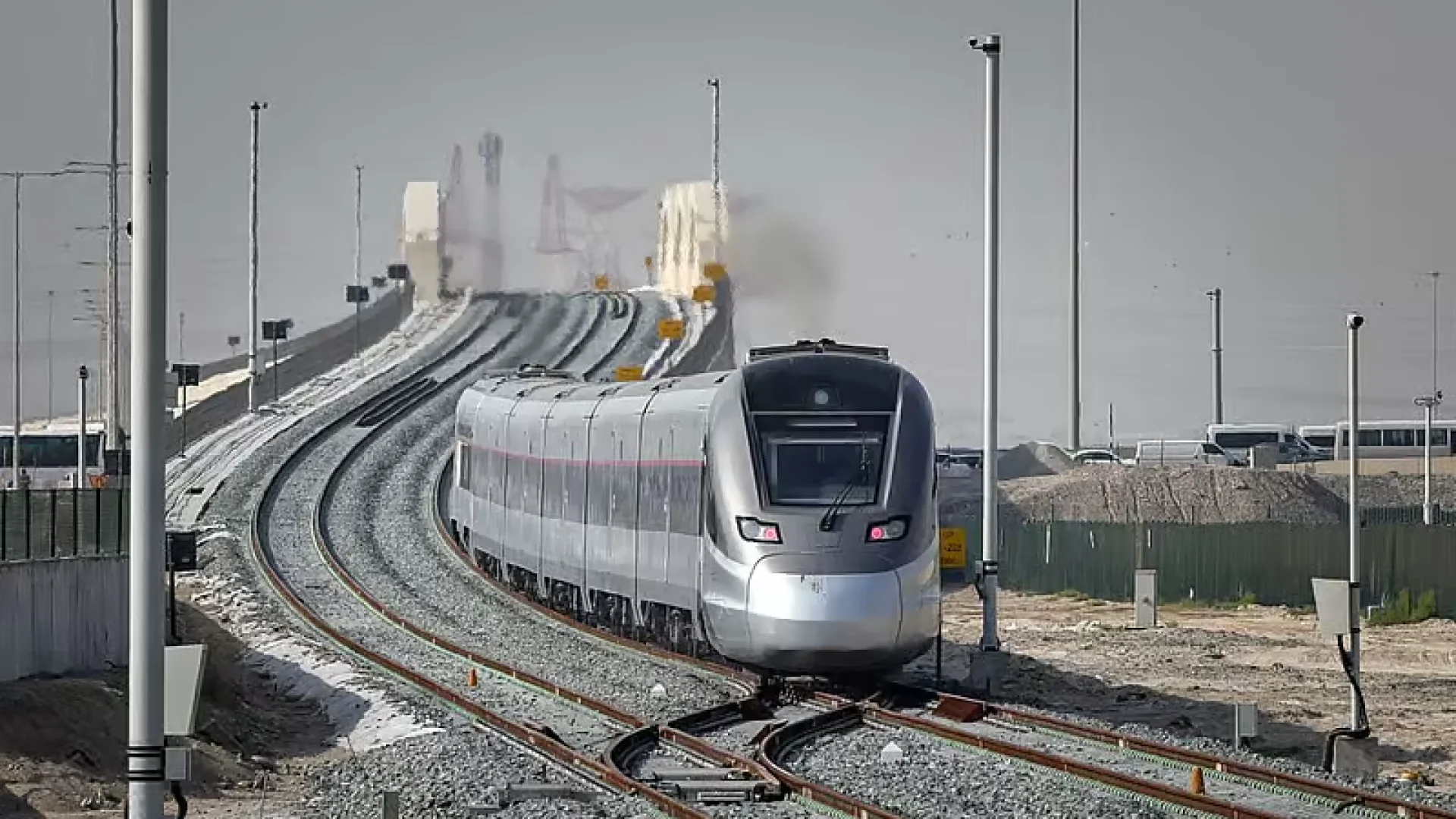

The familiar highway panorama is changing. Beyond the windscreen, the desert now moves past the window as Etihad Rail creates a more comfortable alternative to inter-emirate driving. The essential travel guide is simple: check the latest timetable, book ahead, allow time for arrival and understand the parking arrangements at your station before setting off.
The first surprise is the silence. No traffic horns. No impatient lane changes. No driver checking the fuel gauge while the road stretches toward the horizon. Inside the Etihad Rail passenger train, there is the soft hum of air conditioning, the click of a suitcase and a child whispering, “Are we moving yet?” Then the platform slips away and the UAE begins to unfold outside the window.
Etihad Rail is adding a new rhythm to travel between the emirates. Journeys that once meant planning around traffic now become a sequence of simple steps: reach the station, park or arrive by taxi, scan a ticket and take a seat. The train turns the road trip into a calmer experience, with time to read, work, talk or simply watch the desert change colour.
The most important piece of advice is also the easiest to overlook: check the current timetable before every journey. Departure times and available services may vary according to the day of the week, demand, seasonal travel and operational updates. The official Etihad Rail website, app or booking platform should be treated as the definitive source.
Advance booking is especially sensible around weekends, public holidays and major events. A service that looks spacious midweek can fill quickly on a Friday evening. Travellers should also check the selected station carefully. Journey times and departure patterns depend on the route, the train and the origin-destination combination.
For drivers, the journey starts at the station entrance. Etihad Rail stations are designed to be accessible by road, with parking facilities intended to support passengers arriving by car. The details can differ from one location to another, including capacity, charges, access roads and walking distance to the terminal.
First-time passengers should enter the full station address into their navigation app rather than relying only on a city name. After parking, take a quick photograph of the zone or row. It sounds almost comically practical, but returning to a large car park after a long day is not the moment to depend on memory.
Taxi and ride-hailing services may be useful alternatives, particularly for visitors, families with heavy luggage and passengers travelling from hotels. Groups should compare the cost of parking and fuel with a shared transfer. The best option depends on the station, the size of the party and the length of the trip.
Once the doors close, the pace changes. A businessman opens his laptop. A family shares snacks. Outside, construction sites give way to open sand, then darker ridges and distant mountains. The journey becomes part of the experience rather than an obstacle between two appointments.
Passenger services are built around comfort, with air-conditioned coaches, dedicated seating and space for luggage. Travellers should still check the latest baggage guidance before departure, especially when carrying large cases, sports equipment or specialist items. Bags should never block aisles, doors or emergency access.
Families, older passengers and people requiring assistance should review available support when booking. Arriving early is particularly helpful when travelling with children or when the station layout is unfamiliar. The few extra minutes remove pressure and leave time to find the platform, use facilities and settle in.
A smooth journey depends on small preparations. Download the ticket before reaching the station. Charge the phone. Carry identification if required. Bring headphones if the train ride will be used for work. Do not assume that every part of the route will offer uninterrupted mobile coverage or onboard connectivity.
Passengers should follow staff instructions and the conditions of carriage. Food and drinks need to be transported securely, and consideration for fellow travellers matters in a shared cabin. The train is not merely a faster room on wheels; it is a communal space where quiet conversation and a little courtesy go a long way.
Etihad Rail forms part of a wider UAE infrastructure strategy designed to connect communities, support freight movement and reduce dependence on road travel. For residents, the passenger network makes inter-emirate trips easier to imagine. For visitors, it offers a different way to understand the country: not as a chain of highways and airport terminals, but as a connected landscape.
The practical lesson from the travel guide is clear. Check the route, confirm the timing, reserve the ticket and plan the final kilometre. Once those details are handled, the experience is remarkably straightforward. The highway can keep rushing past. From the train window, there is finally time to look up.
Rail access can reshape the appeal of surrounding districts. Homes near stations may attract commuters who want access to employment centres without driving every day. Retail, hospitality, offices, logistics facilities and serviced residences can also benefit from a reliable flow of passengers.
Investors should look beyond a simple distance-to-station calculation. The meaningful questions include actual journey times, last-mile connections, parking capacity, planned development, population growth and the quality of the public realm. Etihad Rail creates the infrastructure framework; lasting property value will depend on whether well-planned, walkable and useful places grow around it.