
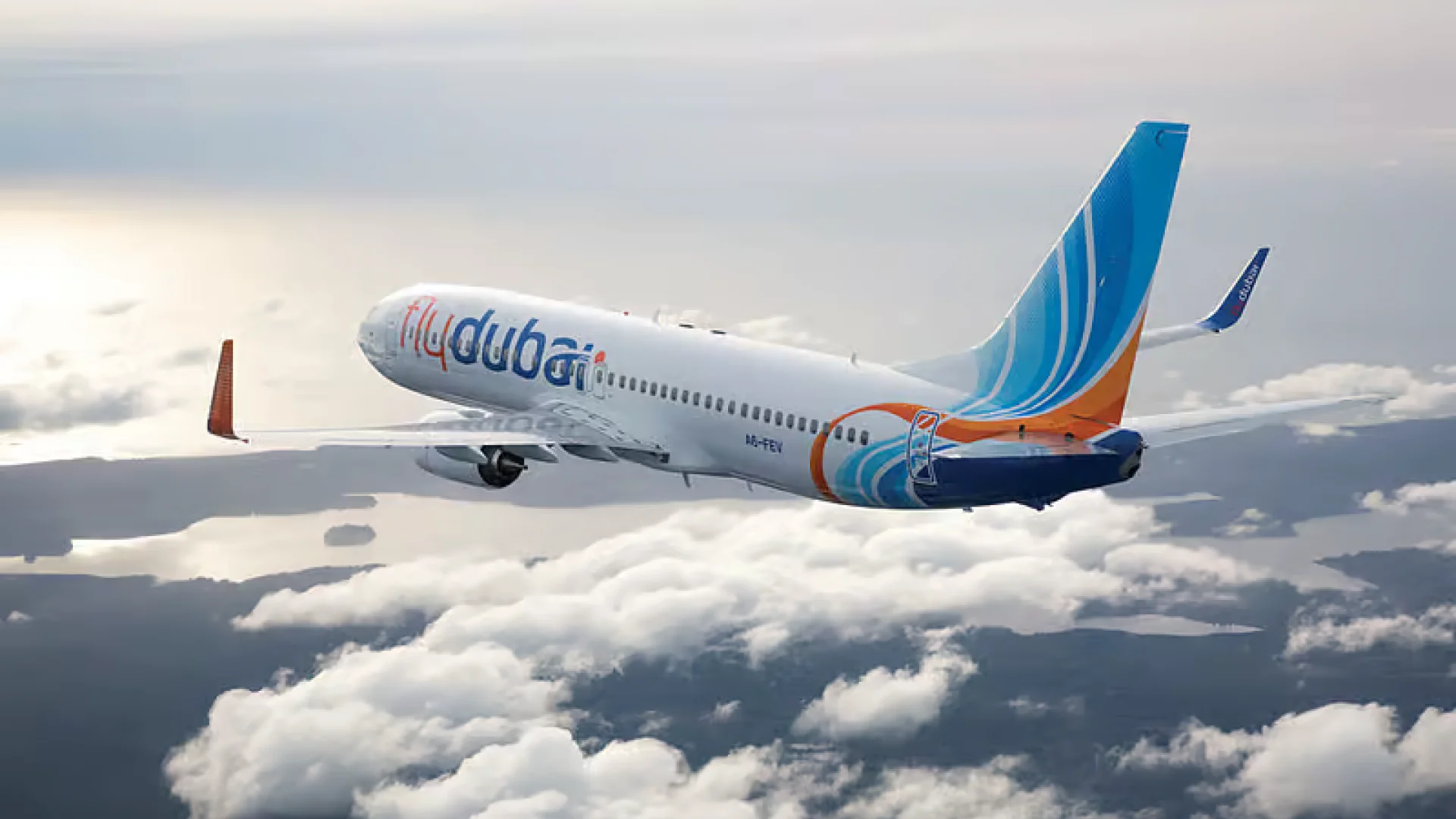

A new line on the departures board is doing more than selling seats: flydubai is launching flights to Aleppo, expanding Syria to a second destination after Damascus. For passengers, it can mean simpler journeys—fewer detours, clearer plans, more dependable visits. For business, it’s another hinge point between Dubai’s hub and northern Syria’s commercial heartbeat. And for a city long defined by distance, the return of regular air links reads like a quiet, practical kind of hope.
The terminal hums the way it always does—air-conditioning, espresso, the soft percussion of suitcase wheels. But then you see it. A destination that makes people stop mid-step, as if the screen might change its mind: Aleppo.
Someone behind me leans in. “Is that… Aleppo?” they say, half question, half disbelief. The letters are crisp, undeniable. And suddenly a routine morning at the airport feels like a scene with a heartbeat.
flydubai is launching flights to Aleppo, turning it into the carrier’s second destination in Syria after Damascus. It’s the kind of headline that looks neat on a news page—route added, schedule updated. On the ground, it lands differently. A flight is a piece of infrastructure you can feel: it shortens distances, changes decisions, brings back the idea of “next week” instead of “someday.”
Aleppo isn’t just a dot on a map; it’s a word loaded with memory. For some travelers, it’s family—an aunt who kept saying “come when you can,” a grandfather whose stories smelled of soap and spice, cousins who grew up in phone calls and photos. For others, it’s commerce—workshops, traders, textiles, a city that historically moved goods and ideas with the stubborn rhythm of daily life.
For years, reaching Aleppo has often meant complicated planning: multiple legs, long waits, uncertain connections. The return of a regular route matters precisely because it isn’t poetic. It’s practical. It’s a timetable you can trust.
Until now, Damascus has been flydubai’s Syrian anchor. Adding Aleppo creates a second point of entry—geographically and economically—and that changes the texture of travel. One destination can feel like a single narrow gate. Two begins to look like a corridor.
For passengers, it can mean fewer hours lost to overland transfers and fewer compromises in planning. For companies, it can mean faster site visits, smoother coordination, and a clearer way to reconnect with partners and suppliers. And for Dubai—already a global connector—it’s another strand in a network built on frequency and reliability.
Near the counters, a man holds a slim folder tight against his chest, as if the papers inside are fragile. Contract documents? Certificates? A carefully folded letter? He doesn’t look like someone chasing a “trip.” He looks like someone completing a long-delayed task.
A woman nearby types a message, deletes it, types again. She settles on something simple: “We’re on our way.” That’s the language of new air links—not policy, not strategy. Just arrival, made possible.
A route from Dubai doesn’t only serve Dubai. It serves the people who pass through it—travelers coming from South Asia, Europe, Africa, the wider Gulf. When a city like Aleppo appears as a bookable endpoint in a major hub’s system, it becomes easier to reach from many directions at once. The impact is multiplied: one new destination, many new itineraries.
That’s why aviation announcements ripple beyond the runway. They reorganize options. They turn “too complicated” into “actually, yes.”
New services are always discussed in airline terms—routes, capacity, operations. Travelers measure them differently: by weddings attended, appointments kept, family tables revisited. The Aleppo addition will likely be felt in the small logistics of life: choosing dates, syncing holidays, making plans that don’t require heroic patience.
Boarding begins, and the crowd tightens into a purposeful line. Jackets are adjusted. Passports appear like a synchronized gesture. A child is lifted onto a hip. A man ends a phone call with a calm voice that doesn’t quite match his hands: “We’re boarding now.” His fingers tremble slightly as the screen goes dark.
This is what a new route looks like in real life. Not just an aircraft pushing back from the gate, but a series of reunions, errands, negotiations, and beginnings—stitched together by a departure time.
Airlines tend to be pragmatic. They add routes when demand, operational feasibility, and network logic align. A second Syrian destination suggests more than curiosity; it suggests a market that can support regular movement. And regular movement—more than any single flight—changes how places are perceived.
Aleppo on the board is, in its own understated way, a signal: this city is re-entering the realm of the doable. The reachable. The planned.
Air connectivity rarely transforms property markets overnight, but it often acts as a confidence multiplier. When a destination becomes easier to reach—especially through a major hub like Dubai—several real estate-adjacent dynamics can start to move in parallel.
1) Hospitality and short-stay demand
More predictable travel can lift demand for hotels, guesthouses, and serviced apartments, particularly from business travelers, visiting families, and professionals working on short-term projects. Even modest increases in flight frequency can improve occupancy planning and revenue stability.
2) Retail corridors and neighborhood services
In many cities, renewed mobility strengthens everyday commercial real estate: convenience retail, pharmacies, telecom shops, money transfer services, cafés—especially along transport corridors and in areas that naturally become meeting points for visitors.
3) Light industrial and logistics-adjacent space
While passenger flights are not the same as freight capacity, a denser flight schedule can still support faster business cycles: quicker site inspections, supplier visits, and coordination. That can, over time, translate into demand for warehouses, workshops, and flexible industrial units.
4) Investment discipline: risk, structure, time horizon
In complex markets, due diligence becomes the asset: clear title, realistic cashflow assumptions, strong local operating partners, and conservative exit scenarios. Connectivity is a positive indicator—but it should be weighed alongside regulatory, financing, and execution realities.
Bottom line: flydubai’s move is aviation news first. Yet for investors and developers, it’s also a data point—one that suggests growing movement between Dubai’s business ecosystem and northern Syria, with potential downstream effects on hospitality, retail, and commercial space.