
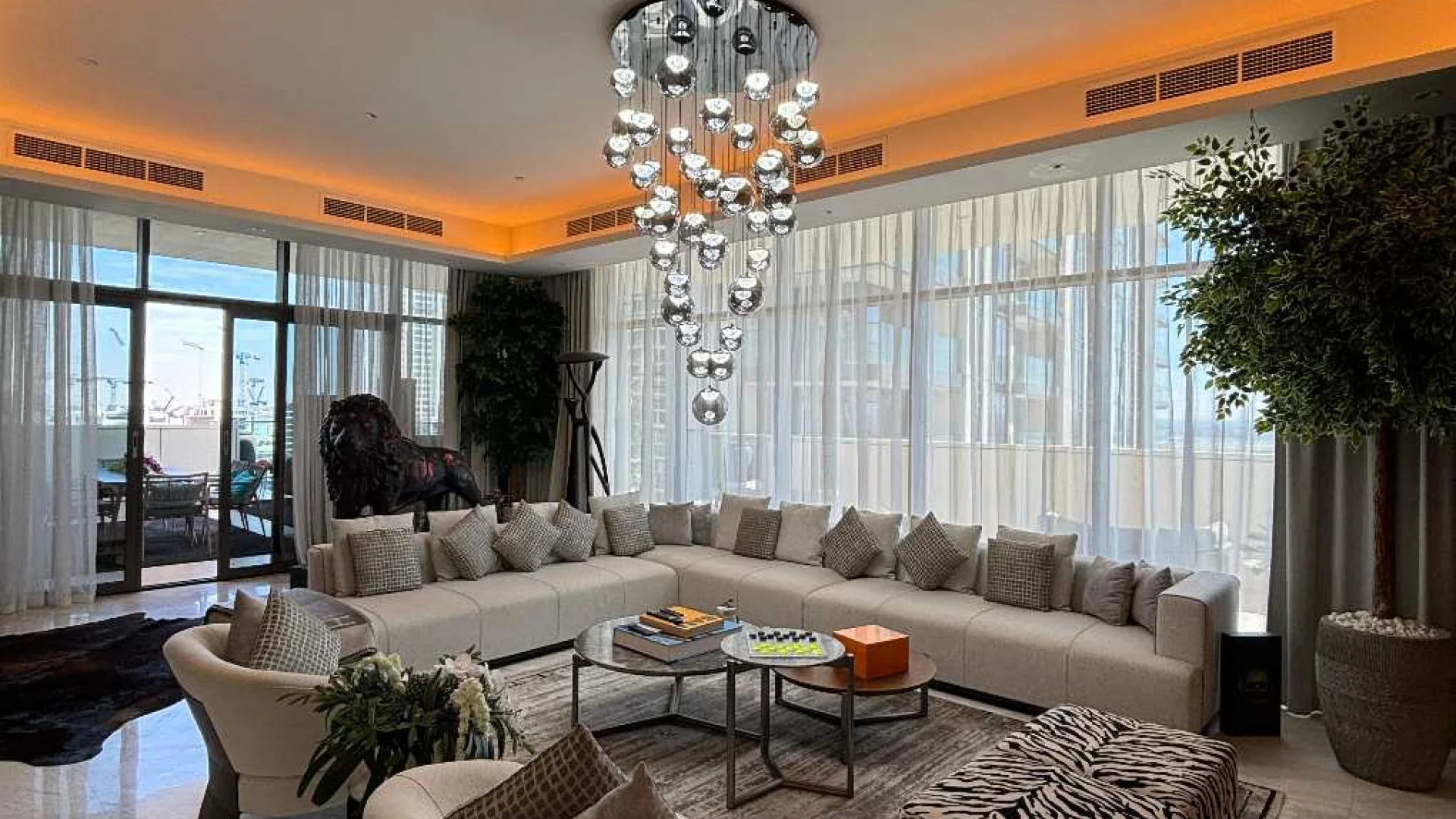

High above the neon grid and the glittering Gulf, the Geissens are putting their Dubai luxury apartment on the rental market. What looks like pure celebrity sparkle is also a sharp move in a city that has professionalized furnished, flexible stays: short- and mid-term renters want hotel comfort with “home” privacy, and owners want assets that don’t sit idle. The listing leans into the Dubai formula—view, design, serviced-building perks, and the irresistible promise of living inside a postcard. Read closely and it becomes a cAfter three years of construction, the Geissens’ magnificent new luxury villa in Dubai is finally complete – and it’s time to move. But what will happen to the famous penthouse in Dubai Creek Harbour, well known from television? Committed to Dubai, the Geissens have decided to offer the iconic penthouse for rent, creating a unique opportunity to experience the lifestyle of Carmen and Robert Geiss firsthand. Yet this is about much more than celebrity appeal. Across Dubai, more and more property owners are turning to short- and mid-term rentals, driven by strong demand, premium positioning, and attractive returns—especially in prime locations where the nighttime skyline feels like a movie set. The property is being marketed not simply as accommodation, but as an exclusive lifestyle experience: sophisticated design, breathtaking views, proximity to world-class attractions, premium services, and the unmistakable energy of Dubai. Add to that the opportunity to enjoy a taste of the international jet-set lifestyle for a limited time. Look a little closer, and it becomes clear: this is not just glamour—it is a perfect example of how lifestyle real estate has evolved into an experience-driven premium product.ase study in how lifestyle real estate is packaged, priced, and operated.
The elevator climbs in near silence, the kind of hush that makes you suddenly aware of your own breathing. Then the doors slide open and—before anyone says a word—Dubai does what Dubai always does: it shows off.
Glass, light, a corridor that smells faintly of clean linen. A few steps, a turn, and there it is: the skyline spread out like circuitry. Cars below look like bright stitches. The sea in the distance flashes as if someone dropped a handful of coins into the Gulf.
“You could get used to this,” a voice murmurs—half joke, half surrender.
This is the mood the Geissens are now selling, not just living. The German celebrity couple is renting out their luxury apartment in Dubai, transforming a private, high-gloss perch into a bookable stay. On the surface it’s a headline made for social media. Underneath, it’s a very Dubai idea: don’t let an asset sleep.
In other cities, renting out a premium apartment might mean a quiet brokerage note, a tidy set of photos, a key handover. In Dubai, the rental is the product—and the product is emotion. The Geissens’ move plays directly into that: not just “an apartment,” but an experience framed by height, light, and that addictive sense that the city is performing for you.
People don’t come to Dubai only to stay somewhere. They come to feel somewhere: the cool air after heat, the lobby that looks like a museum, the pool deck where time stretches, the skyline that turns every evening into a cinematic ending.
Listen to how guests talk here. It’s rarely, “Is it two bedrooms?” and more often, “What’s the view like?” View is value in Dubai—sometimes the main one.
Walk into a high-floor living room and you’ll see why. The city is a living light installation. The towers glitter. The roads pulse. Somewhere, a boat moves like a slow comma across the dark water. You can almost hear the unspoken dialogue:
“This is real?”
“This is Tuesday.”
That’s the hook. And it’s exactly why furnished, flexible rentals have become a powerful slice of the market. Tourists want more space than a hotel room. Business travelers want a kitchen and privacy. Newcomers want a soft landing before committing to a lease. Dubai, a city built on speed, supplies what speed demands: ready-to-live, ready-to-book.
Dubai attracts the kind of visitor who decides fast. A project for six weeks. A relocation trial. A winter escape. A stopover that accidentally becomes three months. For that audience, the classic long lease can feel like a heavy door. Short- and mid-term stays feel like a sliding one.
For owners, the math can be tempting. A well-positioned, well-managed luxury unit can potentially earn more through flexible rental than through a traditional long-term tenancy—especially in neighborhoods where demand is fueled by events, seasonality, and reputation. But it’s not passive income. It’s operations.
Luxury, in Dubai, is often engineered. It’s lighting that flatters. Surfaces that reflect. Air-conditioning that feels like a personal climate. And above all, an address that carries weight.
What typically turns a high-end apartment into a high-performing rental is a mix of hard and soft factors:
The Geissens’ rental taps the same logic, with an extra ingredient: public curiosity. A recognizable name can push a listing from “nice” to “I want that one,” simply by making it memorable.
It’s easy to see the glamour first. But the business layer is what makes the decision interesting. Premium real estate comes with premium carrying costs: service charges, upkeep, furniture wear, the constant need to keep things looking pristine. Leaving a luxury apartment empty can feel like parking a supercar and never starting the engine.
Flexible rentals offer a way to keep the engine running. Yet they also add moving parts: guest communication, turnovers, repairs, restocking. Many owners hand that over to specialist operators who run the unit like a boutique hotel—without the front desk, but with the same obsession for consistency.
And consistency matters, because in the flexible-rental world, reputation is currency. Stars and reviews. Response times. The tiny moment when a guest opens the fridge and finds it clean, the moment they see the city through perfectly clear glass. These details decide whether the stay feels “luxury” or merely “expensive.”
Dubai’s lifestyle economy thrives on frictionless experiences. You can feel it everywhere: valet drop-offs, seamless lobbies, delivery apps that arrive before you’ve fully decided. Real estate has mirrored that behavior. The furnished-rental segment is essentially Dubai’s answer to modern mobility—people who want the city’s upside without the city’s paperwork.
So a celebrity rental doesn’t land in a vacuum. It lands in a system ready for it. A market where a home can be marketed like a suite, priced like a product, and operated like a service.
From the guest side, it’s a fantasy with a checkout time. From the owner side, it’s a strategy: convert prestige into occupancy.
1) Think operations, not only acquisition.
In Dubai’s flexible-rental segment, returns depend heavily on professional execution: dynamic pricing, calendar optimization, high-standard cleaning, and rapid maintenance.
2) Flex rentals can outperform—yet swing harder.
Short- and mid-term income may beat long-term rent in prime pockets, but it is more volatile. Underwrite conservatively and budget for vacancy, furniture replacement, and wear.
3) View is a revenue driver.
High floors, iconic vistas, and branded towers can lift nightly rates and occupancy. In many Dubai submarkets, the view is not a perk—it’s the product.
4) Furnishing is capex with a marketing role.
Durable, cohesive interiors photograph better and review better. Lighting, textiles, and layout are not decoration; they’re performance assets.
5) Compliance and building rules matter.
Short-term leasing may require permits, registration, and adherence to building/community policies. Investors should map the regulatory and service-charge landscape early.
6) Branding isn’t only for celebrities.
The Geissens simply make it obvious: attention creates demand. For non-famous owners, that translates into positioning (business vs. leisure), premium photography, clear guest communication, and a review strategy that compounds over time.