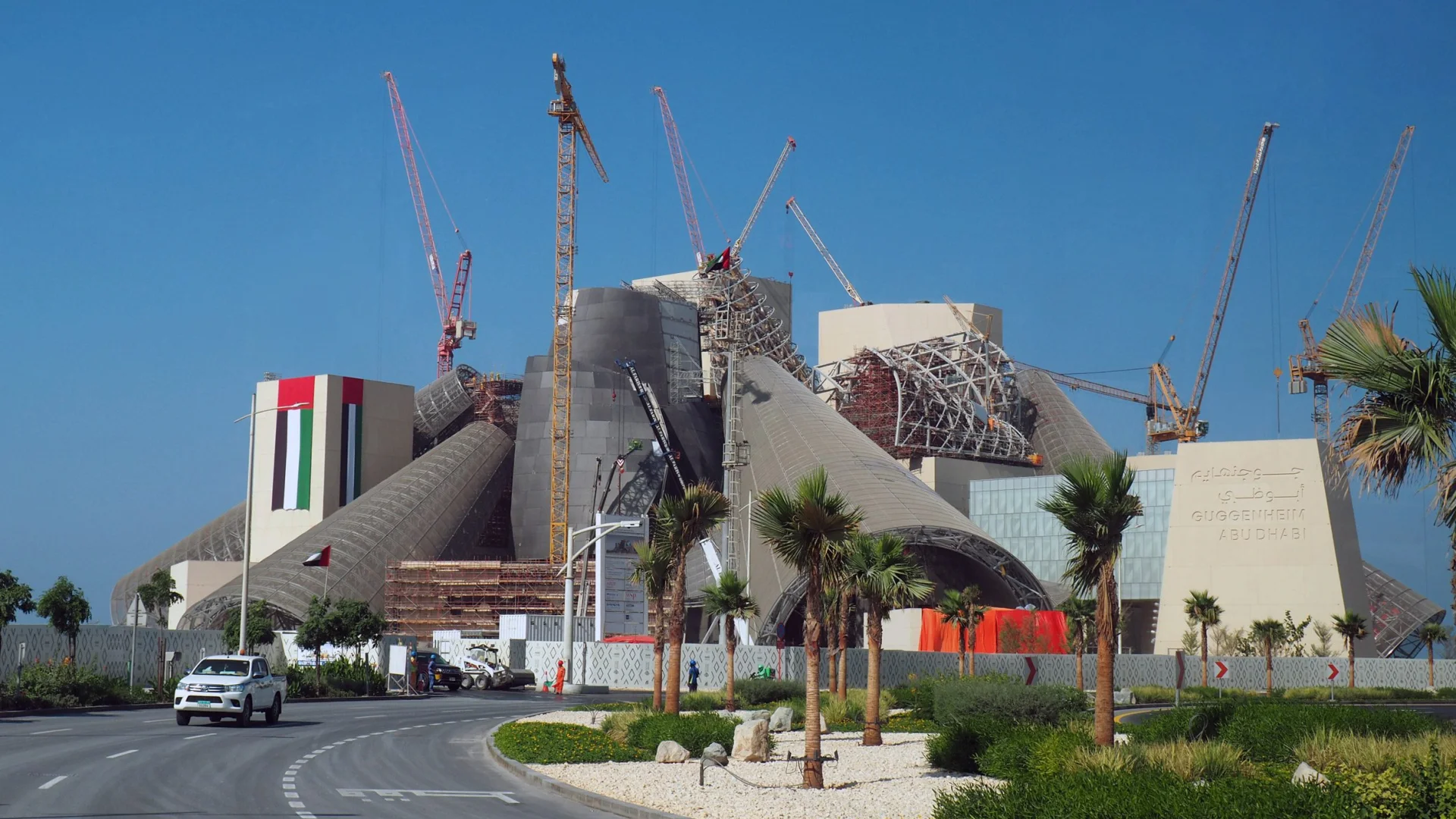
The switch has flipped: tickets for Guggenheim Abu Dhabi are now on sale ahead of the December 11 debut on Saadiyat Island. Frank Gehry’s design—stacked volumes and wind-tower cones in sand-toned skins—plants a new cultural marker beside Louvre Abu Dhabi and the coming Zayed National Museum. The inaugural program signals global modern and contemporary art with a strong West Asia, North Africa and South Asia lens, family experiences, and outdoor moments on breezy terraces. Timed-entry slots, resident discounts, and free admission for People of Determination make planning simple for the city’s most anticipated cultural opening of the year.
Golden hour leans across the plaza. The cones cast long, cool shadows, like islands of shade stitched into the afternoon. “Is it a castle?” a boy asks, tugging at his mother’s sleeve. “A museum,” she smiles, and they freeze as a sea breeze flutters the banners. In front of them, Guggenheim Abu Dhabi rises in sandy hues and crisp edges—familiar like a memory of wind towers, startling like a first word in a new language.
Inside, the city falls to a hush. Footsteps glide; voices soften. A gallery attendant nods: “Tickets? Online. Busy with early birds today.” The starting gun has fired: sales are live, the opening is set for December 11. Precision meets appetite. Saadiyat Island inhales culture—Louvre Abu Dhabi to the right, the future neighbors Zayed National Museum and Natural History Museum warming up—and now this long-awaited anchor drops.
Gehry plays with scale. Volumes stacking like a pile of well-thumbed books. Cones that sip the light and pour out shade. Terraces cracking open the view: water, sand, sky—the eternal three. “It feels like the building breathes,” someone whispers as a cool draft slips from a cone into the gallery. A school group crowds an architectural model. “How many rooms?” one student asks. “Enough for a world tour,” the teacher quips.
The opening program reads like a passport. Modern and contemporary art from multiple geographies, a strong throughline from West Asia, North Africa, and South Asia, and plenty of conversations across eras and media. Big, sinewy installations lean into intimate drawings; video darkrooms give way to sculptural quiet. Heat shimmers on the terraces; inside, rooms pulse with a calm current.
Practicalities click into place. Timed entry smooths the flow, family friendliness has teeth, and logistics feel human-scale: taxi drop-offs out front, shaded parking, short strolls to the shore. “Booked online—easy,” a father says, raising his phone as the gate scanner blinks green. A soft chime—and the first gallery door swings open.
On a bench beneath the atrium, a visitor tilts her head back. Light fields drift above like brushstrokes of sun. “What do you see?” her friend asks. “Motion,” she says. “And stillness.” That’s the trick here: slow your pulse, quicken your senses. One barista-gray espresso later and the city outside feels pleasantly distant, even though it sits just beyond the door.
Walk along the cones and you catch snippets of language: Arabic, English, French, German. A child counts steps. A couple photographs shadow lines. A guide explains how wind-tower logic pulls cool air through the building. Art here isn’t a whisper behind velvet ropes; it’s conversation, footfall, glance—always moving. Outside, waves press a light rhythm against the quay. Inside, the city’s heartbeat skips forward.
Now comes the fun part: curation by feet. Which show first? How long per room? Trust your curiosity. Follow the color calling you from across the floor. Sit on a step. Listen for a minute. Move again. This museum keeps the door open for the way you like to look.
At the exit, we pause. Two teens point at an installation, mid-argument. “Do you get it?” one asks. “I don’t need to,” the other shrugs. “I feel it.” That, in a line, is the point. A building that sounds like the desert: quiet, vast, full of echo. A place that gathers shades of light and returns them as stories.
Landmark culture shifts cities—and markets. Guggenheim Abu Dhabi tightens Saadiyat Island’s pull as a global cultural district. For buyers and investors, that means three things: more people, more prestige, more staying power.
Translating this to numbers, prime Abu Dhabi neighborhoods typically see gross yields around 6–8% for apartments and 4–5% for villas; Saadiyat often layers a cultural brand premium on top. In established micro-locations—Mamsha Al Saadiyat, Hidd Al Saadiyat, Saadiyat Grove—lifestyle demand dovetails with steady leasing pipelines. The smart thesis here bakes in higher footfall, stronger retail performance, and the draw of headline exhibitions.
Forward view: as the Cultural District fills in (with the Zayed National Museum and Natural History Museum Abu Dhabi on the horizon), Saadiyat’s narrative compounds. That underpins resilience in softer cycles when purely resort-led submarkets wobble. Our playbook: target well-planned 1–2 bedroom units near the promenade for short-to-midterm leasing; for villas, double down on light, orientation, and outdoor living—terraces and shaded courtyards are not just comfort, they’re part of the architectural DNA.
Bottom line: where art leads, people follow—and value accrues. Guggenheim Abu Dhabi is more than an opening date; it’s a location argument.