
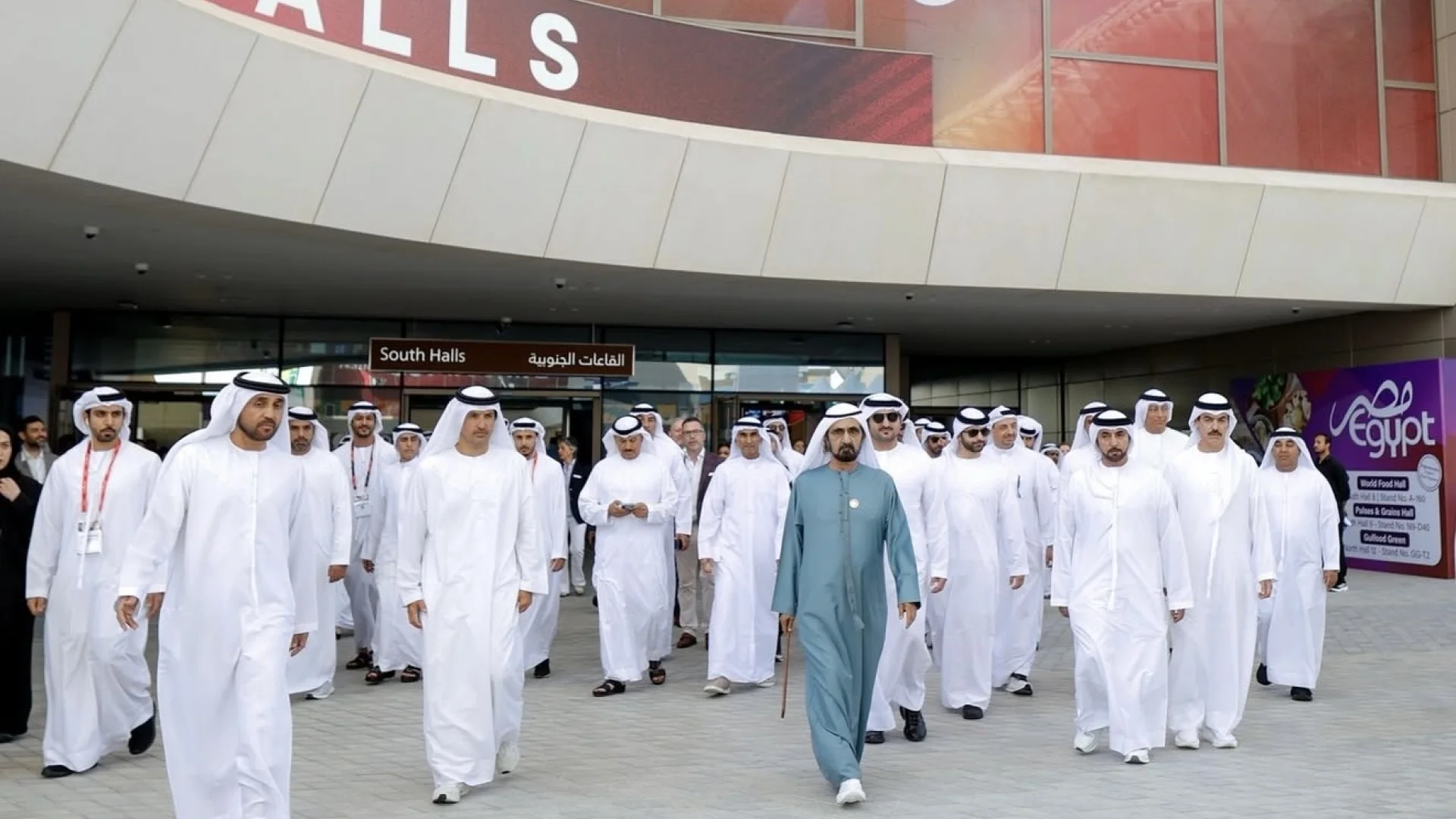

At Gulfood’s Startup Platform, Dubai’s food future doesn’t arrive as a slogan—it arrives as meetings booked in ten-minute bursts, samples passed hand to hand, and pilots negotiated on the spot. Startups building everything from smarter cold chains and traceability tools to alternative proteins, fermentation-based ingredients and sustainable packaging are using the event as a springboard into the region’s buyers and capital. The UAE’s push for food security and resilient supply lines gives the momentum a strategic edge, while Dubai’s logistics muscle and global connectivity make it a natural launchpad. The result is a showfloor that feels less like an exhibition and more like an operating system for scaling food innovation.
The first thing you notice isn’t the branding. It’s the cold.
Not the desert kind—this is a clean, mechanical chill rolling out of refrigeration units and sample coolers, the kind that says freshness has a price. Somewhere behind a booth wall, a compressor hums like a steady bassline. In front of it, a founder twists open a small jar, holds it up to the light, and says to a skeptical onlooker: “Smell it first. Then judge.”
This is Gulfood in Dubai, but not the Gulfood most people imagine—the towering stacks of products, the endless aisles of brands. Tucked into the larger spectacle is something sharper, more electric: the Gulfood Startup Platform, where food is treated like technology, and technology is treated like a race.
Walk a few steps and the rhythm changes. Here, conversations aren’t meandering. They’re timed. A pitch starts, a demo runs, a QR code appears, a calendar invite is fired off. You can almost hear the silent question behind every handshake: Can this scale?
It’s not that the founders don’t care about storytelling—they do. But the story has to survive contact with operations. A procurement manager wants specs. A hotel group wants consistency. A distributor wants margins and shelf-life. And an investor, hovering just behind the second row, wants the one thing that separates a nice prototype from a real business: a pilot.
“Applause is easy,” a startup mentor says as he watches a team reset their demo station. “A purchase order is harder.”
Dubai’s ambition to be a global foodtech hub is not built on vibes alone. It’s powered by a regional reality: food security matters. Supply chains can wobble. Climate pressure is real. Costs rise, routes shift, demand keeps moving.
On the Startup Platform, those big forces become very small, very practical questions. A founder points at a dashboard showing temperature deviations across a delivery route. “Two degrees,” he says, almost whispering. “Two degrees is the difference between a return and a repeat customer.”
That’s why the platform feels so pointed. It’s a marketplace for solutions that make food systems tougher—more predictable, more local where possible, less wasteful, more transparent.
Yes, alternative proteins show up—inevitably. They draw crowds because they’re tangible and controversial and easy to taste-test. But the platform’s real breadth is wider and, in many ways, more consequential.
Because the biggest wins in food often happen where consumers never look: in cold rooms, in packaging lines, in software layers, in quality-control routines, in forecasting models that stop over-ordering before it becomes landfill.
In one corner, a startup is serving bite-sized samples. The founder—shirt sleeves rolled up, voice slightly hoarse—keeps repeating the same line like a mantra: “We can deliver consistent texture.” He says it to a chef first. Then to a buyer. Then to an investor. Each time, the listener’s face changes by a millimeter, the tiniest signal that this might be moving from curiosity to consideration.
A buyer picks up the packaging, squints at the ingredient list. “Heat stability?” he asks.
“Tested in a high-volume kitchen,” the founder replies. “Four hundred covers. Three hours. Same mouthfeel.”
The buyer nods once—small, decisive. “Send the technical sheet.”
That sentence is the real product launch.
A hub isn’t a label you print on a brochure. It’s a system that connects talent, capital, customers and infrastructure—fast.
Dubai has advantages that show up in the subtext of every conversation: global logistics connectivity, a proven ability to convene industries at scale, a regional market that buys premium food and experiments quickly, and a growing policy focus across the UAE on innovation and food resilience.
For startups, that combination matters. The path from demo to deployment is often blocked elsewhere by slow procurement cycles or fragmented distribution. Here, founders talk about running trials with major buyers, getting feedback quickly, iterating, and—if they’re lucky—landing a rollout that doesn’t take years.
Stay on the platform long enough and you’ll see the conversation shift. People start with “What do you make?” and end with “Where can you produce?”
Because scaling foodtech isn’t only about IP. It’s about food-grade space, utilities, approvals, and reliability. Fermentation needs bioreactors and QA protocols. Packaging needs machinery and stable inputs. Cold-chain optimization needs real cold-chain assets—warehouses, vehicles, last-mile nodes that can hold temperature in brutal summer heat.
One founder says it plainly, smiling like it’s a joke and then not smiling because it isn’t: “I don’t need a fancy address. I need power, water, permits—and room.”
As the day stretches on, the platform doesn’t calm down. It narrows. Less browsing, more follow-ups. Founders tap notes into phones. Buyers step aside to call colleagues. Investors ask questions that sound simple and aren’t: “What’s your unit economics at scale?” “Who owns the offtake?” “What happens when you double volume?”
Gulfood’s Startup Platform, at its best, acts like a pipeline: discovery, validation, partnership, financing. It’s the difference between being seen and being used.
And that’s the point of Dubai’s play here. Not to host innovation like a museum—but to turn it into infrastructure.
For real estate investors, Dubai’s foodtech acceleration is not just a tech story—it’s a specialized industrial and logistics demand story. The startups and scale-ups showcased at Gulfood ultimately need physical capacity: cold rooms, food-grade storage, light manufacturing units, and lab-enabled R&D space. That translates into investable asset themes with different risk/return profiles than generic warehouses.
Investment takeaway: The winners are likely to be assets that are operationally specific—not just square footage. Priorities include robust MEP specs, energy-efficient cooling, redundancy (backup power), strong transport links, and ESG-aligned upgrades that reduce operating costs. As Dubai pushes further into food resilience and local capability, specialized logistics and industrial real estate should see structurally stronger demand than generic supply.