
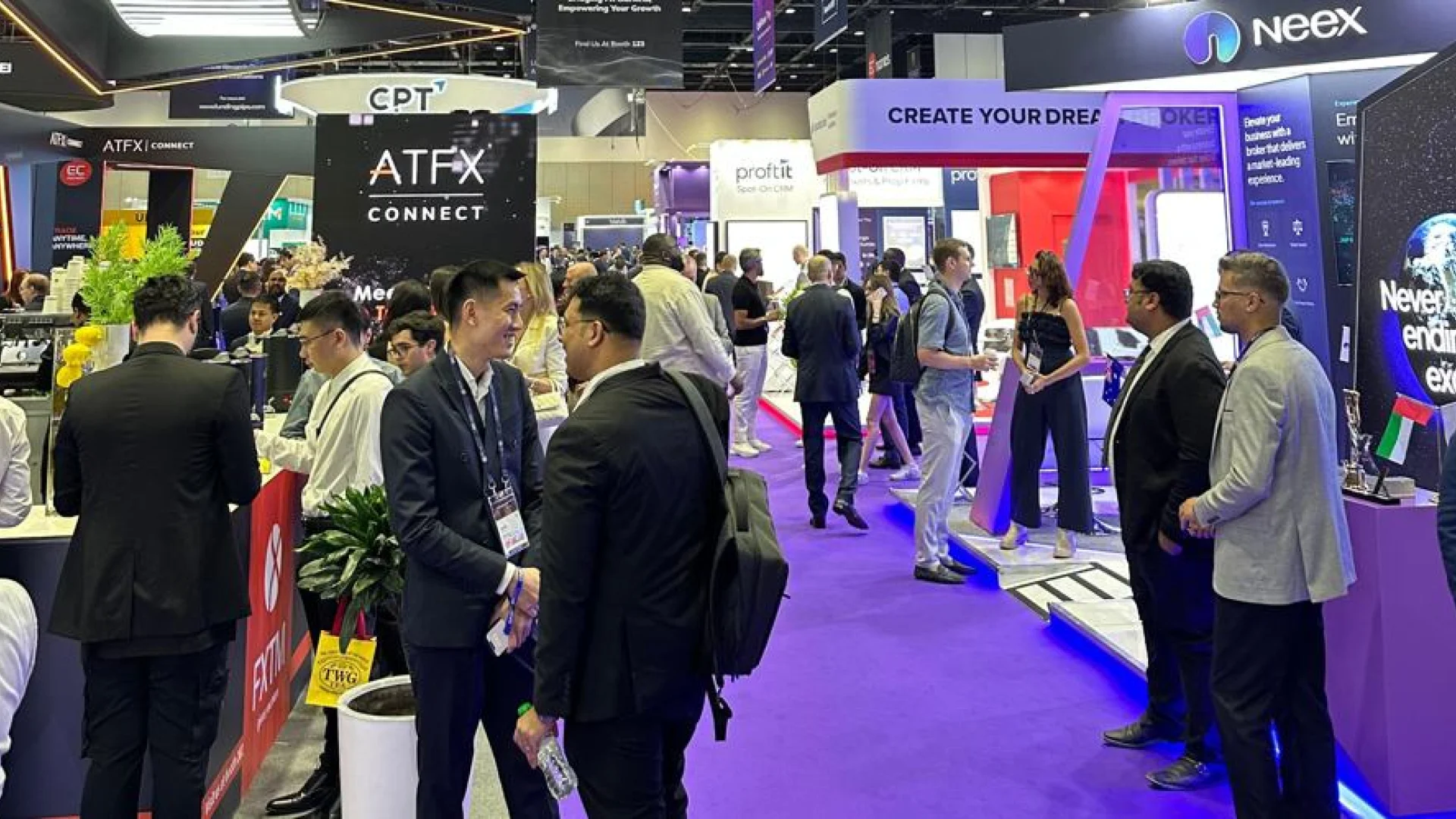
The doors open and the hall fills with the particular electricity of markets: sharp suits, faster handshakes, screens flashing charts, and the steady hum of introductions turning into partnerships. iFX EXPO Dubai 2026 starts today in Dubai, bringing together brokers, fintechs, payment providers, liquidity and tech firms, affiliates and regulators for a packed, two-day agenda of networking and business-making. The event spotlights the region’s growing role as a hub for online trading, digital finance and cross-border payments—where trust, compliance and infrastructure matter as much as product. On the show floor and in sessions, the big themes orbit around regulation, client protection, platform technology, payments innovation and the next wave of growth across MENA and beyond.
The first thing you notice is the sound.
Not music—something more restless. A layered murmur of voices in English, Arabic, Russian, Hindi. The soft click of leather shoes on polished floors. The ping of a phone calendar invite landing like a tiny bell. Screens glow in neat rows. Candles of green and red on chart windows. A booth staffer leans in and says, half-joking, half-serious: “If you want a meeting today, you don’t ask for it—you catch it.”
Welcome to iFX EXPO Dubai 2026, opening today in Dubai. Two days where the global trading and fintech industry compresses itself into a walkable city of stands, stages and coffee lines. A place built for one purpose: to turn conversations into contracts, and ideas into infrastructure.
In the aisles, it feels like stepping inside a live order book. Brokers and prop firms. Fintech startups carrying prototypes like talismans. Liquidity providers speaking in calm, measured sentences that hide enormous numbers. Payment processors talking about rails, routing and risk as if they were describing weather patterns. Affiliates with notebooks full of conversion rates. CRM and platform vendors demonstrating dashboards with the confidence of magicians.
A man in a crisp jacket pauses at a stand where a screen shows a client onboarding flow. “How fast from sign-up to first deposit?” he asks. The product lead smiles. “Under two minutes—if you do it right.” The man nods once, as if that single statistic is a hinge on which a whole strategy might swing.
Dubai is a fitting stage for this kind of gathering. The city’s energy rewards ambition and speed—but today, the talk on the floor isn’t only about growth. It’s about sturdiness. About doing it right. About regulation and resilience.
The trading world has learned, sometimes the hard way, that reputation can evaporate faster than a market rally. So the conversations here are grounded in a few big themes—repeated across booths like a chorus.
It’s not just what’s being said, but how it’s said. Less hype, more architecture. Less “next big thing,” more “how do we make this system durable?”
There’s a particular kind of confidence in the conversations when Dubai comes up. People talk about the city the way logistics professionals talk about ports: as a node where flows meet—talent, capital, data, regulation, ambition.
On one side of the hall, a European executive gestures toward a map on a brochure. “MENA isn’t a side project anymore,” she says. “It’s a core region.” Across the aisle, a founder from a payments startup replies with a grin: “Dubai is where the clients are, but also where the partners are. It’s the shortcut.”
That’s the subtext of iFX EXPO Dubai 2026 opening today: the industry is not merely visiting the region—it is building in it. And when an industry builds, it starts to demand the same things a city demands: reliability, clear rules, talent pipelines, and space.
Near the coffee station, two people talk in the shorthand of veterans.
“Your conversion dropped?”
“Payment friction. We fixed it. Now retention is the problem.”
They laugh—because the laughter is easier than admitting how hard it is to win trust when users have choices everywhere. In another corner, a tech vendor is demoing a risk dashboard. A prospective client watches a graph spike. The vendor says softly, “This is where firms blow up—here. We built alerts for that.” The client’s expression doesn’t change, but his eyes narrow in focus. This is the kind of moment that becomes a purchase order.
The expo is full of these micro-turns: a raised eyebrow, a quick calculation, a shared “let’s talk later” that’s actually a promise.
While the show floor is the heartbeat, the sessions provide the brain: discussions that put structure around what everyone is feeling. Panels and talks at iFX EXPO Dubai 2026 focus on where the industry is heading and what it must fix to get there—regulation, client expectations, technology, payments, and sustainable growth.
Even in the quieter corners, you can sense an industry taking a breath and assessing itself. What does the next cycle look like? Which markets will be growth engines? How do firms win without overpromising? How do they scale while staying compliant? And—never far from any discussion—how do they keep the user experience smooth when the world is anything but?
Events like this can look like inside baseball: a niche gathering for people who love spreads, liquidity and APIs. But they are also signals of something broader. When fintech and online trading infrastructure grows, it brings a whole ecosystem with it—legal services, compliance consultancies, data centers, marketing agencies, recruitment firms, hospitality, logistics. It is economic gravity.
Dubai understands gravity. It builds towers that catch it, roads that channel it, districts that monetize it. When an expo like iFX is in town, the ripple effect is visible in hotel lobbies, taxi queues, meeting rooms booked at odd hours, and restaurants suddenly full of people speaking in the language of global business.
And the city’s proposition is simple: if you want to do cross-border business, come to a place that is built for crossing borders.
Not everyone comes here to buy software or sign a liquidity agreement. Some come to buy reassurance: that their roadmap makes sense, that their compliance posture is defensible, that their payments stack won’t buckle when volumes rise.
Others come to buy time. A single introduction can shave months off a market-entry plan. A well-timed partnership can solve a regulatory puzzle. A new vendor can remove a choke point in onboarding. The expo is a time machine in that way—two days that can advance a company’s calendar by a quarter.
Late in the afternoon, a young founder stands slightly apart from the crowd, eyes scanning the hall like a pilot checking weather. “It’s intense,” she says, smiling. “But it’s the good kind of intense.” Then her phone buzzes. Another meeting. Another chance.
For real estate investors, iFX EXPO Dubai 2026 is more than a calendar event—it’s a proxy for demand. When trading, fintech, payments and compliance firms cluster in a city, they create predictable pressure on office space, high-quality residential rentals, and the hospitality segment. The key is to translate expo energy into long-term absorption.
1) Office demand: smaller footprints, higher quality. Many fintech and brokerage firms no longer chase massive HQ floors; they prefer flexible, premium-grade space with strong connectivity, meeting facilities and proximity to talent. This tends to benefit Grade A towers, managed offices, and mixed-use districts with walkable amenities. Investors should watch leasing activity in established business hubs and newer, transit-connected zones that cater to international teams and client-facing operations.
2) Residential rentals: international talent and short-to-mid stays. Expo-driven business travel is short-term, but the bigger effect is hiring. As firms expand regional operations, they relocate executives, sales teams, compliance specialists, data engineers and product staff—profiles that typically seek well-managed apartments, strong building amenities, and easy commutes. This supports demand for mid- to high-tier rental stock, particularly in neighborhoods that balance lifestyle (restaurants, gyms, waterfronts) with access to business districts.
3) Hospitality and serviced apartments: steady corporate throughput. Conferences and deal cycles drive occupancy spikes, but the more durable opportunity often sits in serviced apartments and aparthotels—formats favored by consultants, implementation teams and relocating employees. Investors looking at hospitality-linked assets should consider properties positioned for weekday corporate demand rather than purely leisure-driven seasonality.
4) Infrastructure and the “trust premium.” Fintech and trading firms are unusually sensitive to reliability: power continuity, connectivity, data handling, and regulatory clarity. Locations that can credibly market resilience—modern building systems, strong property management, and proximity to secure digital infrastructure—can command a “trust premium” in rents and tenant retention.
5) What to monitor next. As the sector grows, watch for (a) new licensing and regulatory announcements that attract more firms, (b) office-to-residential shifts in certain districts, (c) co-working and managed office expansion, and (d) sustained inbound corporate migration. These indicators matter because they convert event hype into structural demand—exactly what long-horizon property investors seek.
In short: iFX EXPO Dubai 2026 is a snapshot of a larger movement—Dubai’s continuing pull as a financial and fintech hub. Where that pull intensifies, real estate fundamentals often follow.