
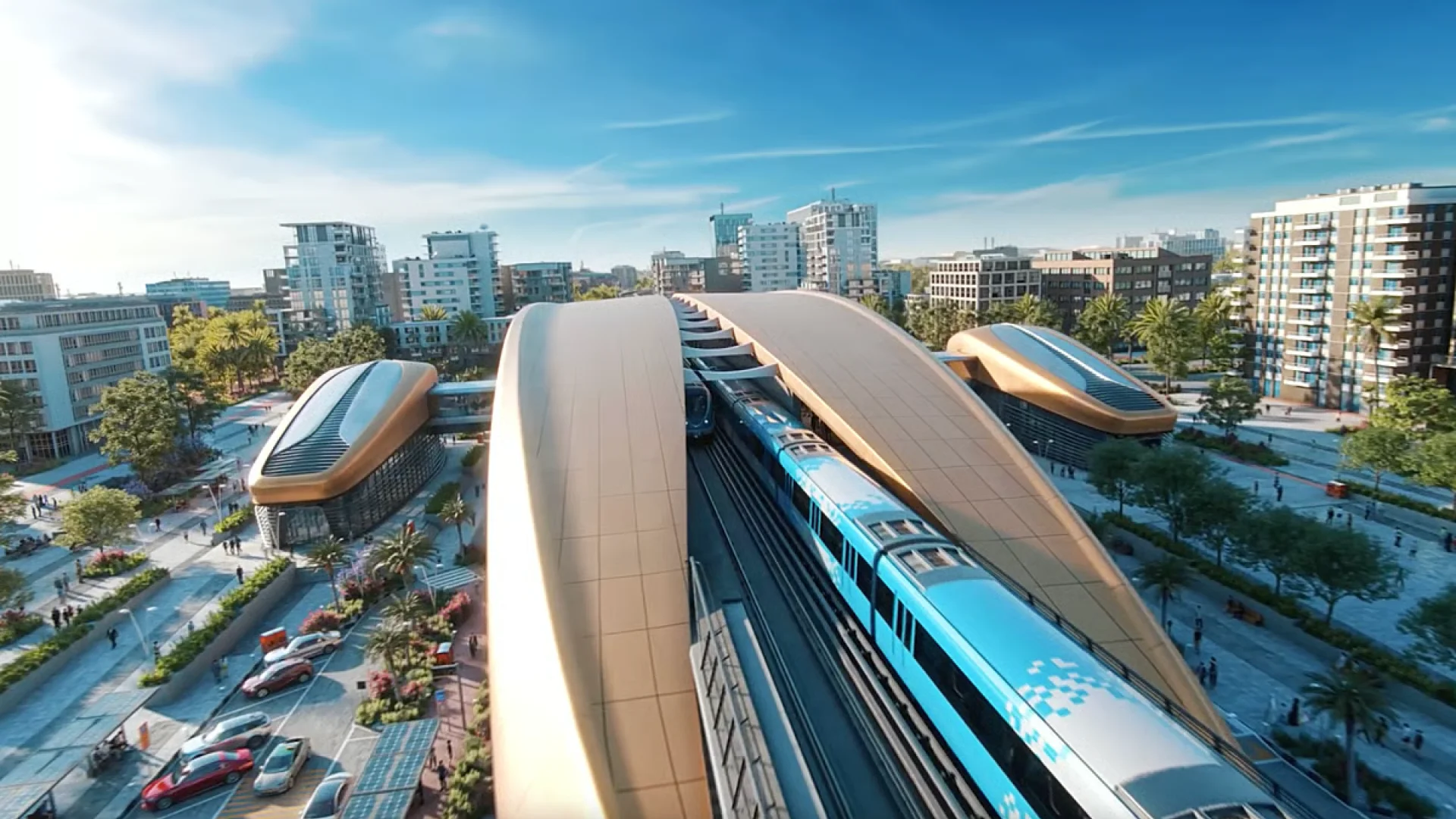

In Dubai’s International City, the most telling sign of the Blue Line Metro isn’t a tunnel or a track—it’s the sudden quiet on used-car listings. Residents say relentless congestion, parking hassles, and the monthly cost of keeping a vehicle have pushed them to act early, betting that rail will finally make commuting predictable. The metro announcement has seeped into everyday decisions: some households are downsizing from two cars to one, others exiting car ownership entirely. For a district built on affordability and long commutes, the promise of a new line feels less like a convenience and more like a reset button.
The heat hits first. It rises off the asphalt in International City like a held breath, turning parked cars into little metal ovens and the air into something you can almost stir. In the late afternoon, the streets are loud in that familiar Dubai way—engines idling, a delivery bike squeezing through, a taxi horn tapping out impatience. And then there’s a small, quiet moment that doesn’t match the noise.
A man stands beside a silver sedan with a freshly wiped dashboard and an empty phone cradle. He’s not polishing it for pride. He’s saying goodbye. On his screen, the chat thread ends with a neat, modern sentence: “Collected. Thanks.” He pockets the phone and looks down the road where traffic is already thickening, even before the real rush begins.
“It sold in a day,” he says, half surprised, half relieved. “I just don’t want to keep paying for it.”
In International City, that sentence is spreading. Not as a slogan, but as a practical decision made between rent, groceries, school runs, and a commute that can feel like a slow-motion test of patience. The trigger, residents say, is hope—hope shaped like a metro line. Dubai’s upcoming Blue Line has sparked something you can’t measure with construction photos: people are changing their lives before the first train ever arrives.
International City is a patchwork of clusters and courtyards, an affordable address in a city that doesn’t always make affordability easy. Walk through the neighborhood and you’ll hear a dozen accents before you reach the next corner shop. A barber calls out to a regular. A supermarket cashier switches languages without missing a beat. It’s busy, lived-in, real.
But it is also, unmistakably, a place of movement—because so many people who live here work somewhere else. The commute isn’t a side detail; it’s the daily spine of life. And lately, that spine has been aching.
“Some mornings I spend 15, 20 minutes just trying to exit the area,” says a resident nursing an iced coffee in a small café. She stirs the cup like she’s trying to calm the traffic with a spoon. “Then you hit the main road and it’s the same story again.”
Congestion is not new in Dubai, but residents describe a shift: more cars, more delivery vans, more ride-hailing pickups, more everything—while the same junctions keep bottlenecking like a pinched hose. The result is a daily pattern of delays that feel both predictable and impossible to plan around.
Dubai is a city where the car has long been a symbol—freedom, status, independence. In International City, residents are increasingly talking about cars in a different register: cost, fatigue, hassle.
Fuel. Insurance. Maintenance. Parking. Fines. The surprise expenses that arrive like unwelcome guests—battery replacement, tire wear, repairs after a minor scrape in a cramped parking lane. Add to that the invisible cost: the hour that disappears into traffic, the mental drain of watching the clock while nothing moves.
“I did the math,” says a young professional standing near an aging SUV, his hand resting on the roof as if he’s deciding whether to keep a pet. “If the metro is coming, why should I keep this? Even now, I can manage with buses and taxis sometimes. It’s not perfect, but it’s cheaper than owning a car that mostly sits.”
That’s the key detail in this moment: people aren’t waiting for the Blue Line to open. They’re acting on expectation. The metro announcement is changing the calculation of what’s worth it—what’s necessary—right now.
No one pretends the present is easy without a car. Residents describe bus stops where shade is scarce and summer feels personal. They talk about long waits, crowded rides, and the way a short distance can stretch when traffic clogs the arteries.
“Sometimes I tell the driver to drop me and I walk,” one resident says, laughing the kind of laugh that comes from surrender. “Because you’re just sitting there otherwise. Sitting and watching time go.”
Still, the phrase keeps returning in conversations, like a refrain: “When the metro comes…”
When the metro comes, the commute becomes a timetable instead of a gamble. When the metro comes, parking stops being a daily hunt. When the metro comes, International City is no longer just “affordable but far”—it becomes connected.
Infrastructure does that. Even before it exists, it changes how people imagine their options. It seeps into WhatsApp groups and elevator chats, into dinner-table decisions and late-night budgeting.
In districts where money is looser, people keep the second car “just in case.” In International City, “just in case” is a luxury. Budgets are tight enough that every recurring payment has to justify itself.
That’s why the Blue Line has landed here with such force. A metro line isn’t simply comfort—it’s financial breathing room. If you can replace a monthly car payment with a transit pass and the occasional taxi, you don’t just save; you rebalance your life.
Residents also describe households downsizing: two cars becoming one, one car becoming none. Some are experimenting—borrowing vehicles, coordinating rides with colleagues, mixing buses with ride-hailing, planning errands around off-peak hours. It’s a neighborhood learning to move differently.
The changes aren’t only on car-selling platforms. They show up in the street choreography. More people walking between clusters. More ride-sharing arrangements. More conversations about “best times to leave.”
A shop owner watches the road from his doorway as if it’s a weather forecast. “If it becomes easier to reach,” he says, “more people will come. They’ll stay longer. They’ll rent here.”
That last sentence is where transport stops being only transport. It becomes a story about place value—about how a neighborhood is perceived, how it’s priced, how it competes.
International City has always been busy, but in this moment it feels like it’s listening for something. Not the horn blasts. Not the engines. Something quieter. The imagined sound of a train pulling in, doors opening, commuters stepping out into a day that suddenly runs on schedule.
Back by the curb, the man who sold his sedan adjusts his backpack straps and glances toward the bus stop. The sun is still hard. The traffic is still thick. But his step has a different rhythm, as if he’s already walking toward the future he’s chosen to believe in.
The International City car-selloff narrative is more than a human-interest story; it’s a behavioral signal that markets often price in early. When residents reduce car dependence before a metro line opens, it suggests strong confidence in the project’s usefulness—and that can translate into housing demand shifts well ahead of completion.
1) Transit access can widen the tenant pool
International City’s affordability has historically been offset by commute friction. A new metro connection can broaden the tenant base to include transit-oriented professionals and households that previously avoided the district due to congestion. In practical terms, investors may see:
2) The “anticipation effect” is real
Real estate often reprices on announcements and credible progress milestones, not on opening day. The fact that residents are already changing high-stakes habits (selling cars) indicates expectations are moving from abstract to actionable. Investors should track micro-trends—rental listings, achieved rents, and transaction volumes—along likely catchment areas.
3) Micro-location and walkability will matter more
Not all of International City will benefit equally. Premiums typically concentrate where the commute experience is simplest: safe pedestrian routes, reliable feeder options, and minimal last-mile friction. Conversely, units too close to high-traffic roads may face noise and air-quality trade-offs that cap upside.
4) Product positioning: “metro-ready” living
Investors and landlords can align renovations and marketing to the coming transit demand: practical layouts, durable finishes, better soundproofing, and building operations that support higher turnover. Messaging that quantifies time/cost savings can outperform generic location claims.
5) Risk framework
Metro-led upside is compelling, but underwriting should remain disciplined. Key checks include:
Bottom line: The Blue Line conversation is already shifting behavior in International City. For investors, that’s a sign to watch the district closely: infrastructure credibility plus affordability can create a powerful demand mix—especially for properties that nail the last-mile reality.