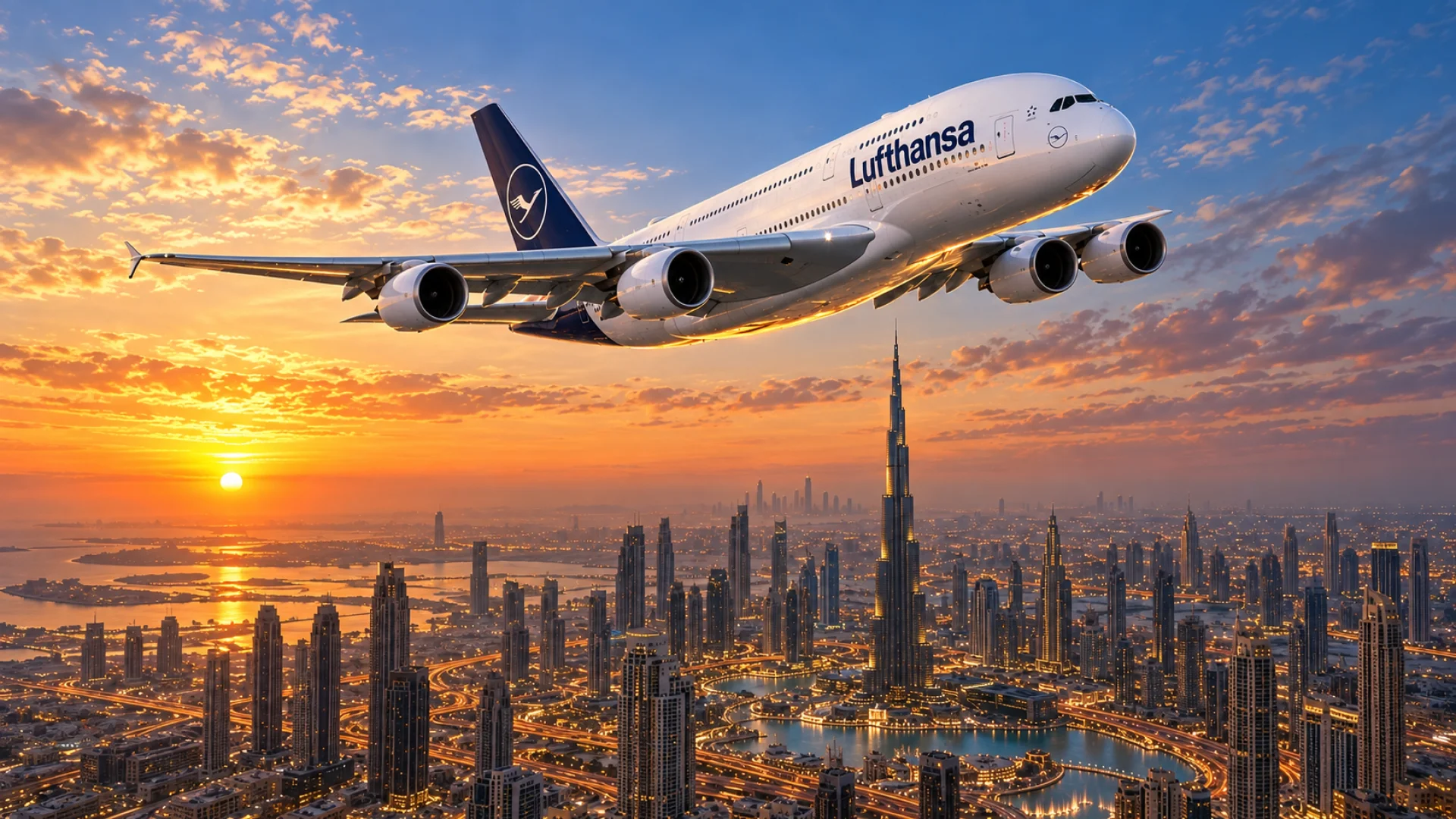
The departure board in Frankfurt flickers—and there it is again: Dubai. After years off the map, Lufthansa is bringing the Gulf city back into its network, tapping into surging demand for both business and leisure travel. More feeder options from across Germany, added winter capacity, and familiar loyalty perks make the return a statement. It’s also a clear answer to fierce Gulf competition in a season when sunshine and deal-making share the front row.
The first chime in the terminal feels like a nudge. Outside, dawn hasn’t cracked yet; the glass facade glows pale, cardamom and croissants ride the air. At the gate, blue-scarved crew fan out boarding passes, a man with a silver carry-on sends one last email. Then the words people have been missing: “Boarding for Dubai.” Heads rise. A low murmur. The crane on the tail winks under the floodlights. Lufthansa is back on the Gulf corridor.
The comeback is more than nostalgia. For several seasons, Dubai was off the mainline map; now it returns to the schedule—regularly, multiple times a week—just as winter cravings for warm nights and city lights roll in. Executives whisper about seats vanishing faster than trade-fair badges; families sketch out pool-over-parka getaways; startup crews book quick sprints in co-working lofts with skyline views.
“We had to move,” a Lufthansa agent says at the podium, smoothing a printed list. “Demand to the Gulf went through the roof—for business and for leisure.” It tracks: between trade flows, tourism, fairs and IT projects, Dubai’s pull from Germany is back in force. The city’s terminals feel like cathedrals of glass and light. Eight, ten, twelve hours of sun. New museums, buzzy concerts, sand-softened beach clubs, and a hotel scene that never stops inventing itself.
For the Lufthansa Group, it’s also network logic. When Frankfurt runs Dubai, places like Hanover, Nuremberg, Leipzig and Erfurt turn into neat feeders with one big target. Regional train to ICE, Gate A to Gate Z: a tidy line that lands at the Arabian Gulf. On the other side, partners, pitches, signings, sand, and the faint perfume of oud in the evening air.
Competition? Of course. Emirates has defined the German sun-run for years. But capacity is finite, slots are scarce, and demand won’t fit into a four-airport box forever. That’s where Lufthansa slides its cart into the aisle: reliable European hubbing, familiar loyalty programs, German-speaking crews. For many frequent flyers, this is more than a blast from the past—it’s muscle memory.
By the check-in scale, a mini-dialogue. “Business or leisure?” asks the agent. “Both,” the woman in the oversized blazer smiles, lifting her laptop. “Meetings by day, desert by night.” Next to her, a grandmother in lemon-yellow pushes a suitcase. “First time Dubai,” she says. “The grandkids just moved.” Routes stitch lives together; a line on a map can become a thread in a family story.
Behind the scenes, the move is a strategic bet. The long-haul fleet is being refreshed, demand curves point up, and German firms report project pipelines stretching between the Rhine-Main region and the Emirates. The competitive heat remains high: fare wars, product tweaks, brand theatre—the Gulf corridor is both a stage and a ring.
And it’s a canvas for dreams. Landing in Dubai, you feel it at once: the warm wall of night air, the steady thrum of vents, a taxi line that sparkles like a string of LEDs. “Welcome to Dubai,” the driver says, gesturing right to desert black, left to high-rise glitter. You sit back, eyes forward, and that sense arrives—the one that says things move faster here.
Next morning at City Walk, the sun still forgiving, an espresso on the table. Two voices at the next seat. “You’ve got the route back?”—“Yes. Frankfurt is live. Bookings through the roof.” A pen scratches across a notebook, an arrow from “Pitch” to “Deal,” a tiny exclamation mark. That’s the sound of a corridor breathing again.
What does this return tell us? Perhaps this: markets are cycles, cities are magnets, and timetables are heartbeats. They quicken, they slow, and when rhythm returns, everything feels alive again. The chime sounds, doors seal, engines roll. Destination: Dubai.
For property hunters, this route is about proximity. If you’re scouting, investing, or managing rentals in Dubai from Germany, reliable lift reduces friction. The revived connection makes snap viewings, weekend inspections, and short due-diligence loops possible—and trims opportunity costs.
German investors win twice: the dependable air bridge simplifies on-site asset management, and tighter schedules improve predictability for handovers, snagging, and tenant transitions. Structure your day: morning site walk at Creek Harbour, afternoon bank meeting, evening return flight. Three ticks, one step closer to target allocation.
Risks remain: currency peg considerations, rate dynamics, build quality, operator strength—all demand scrutiny. But the renewed air corridor narrows the gap between decision and execution. Often, it’s the small things that tilt the scales: an on-time flight. A familiar gate. A city that keeps saying: come, see for yourself.