
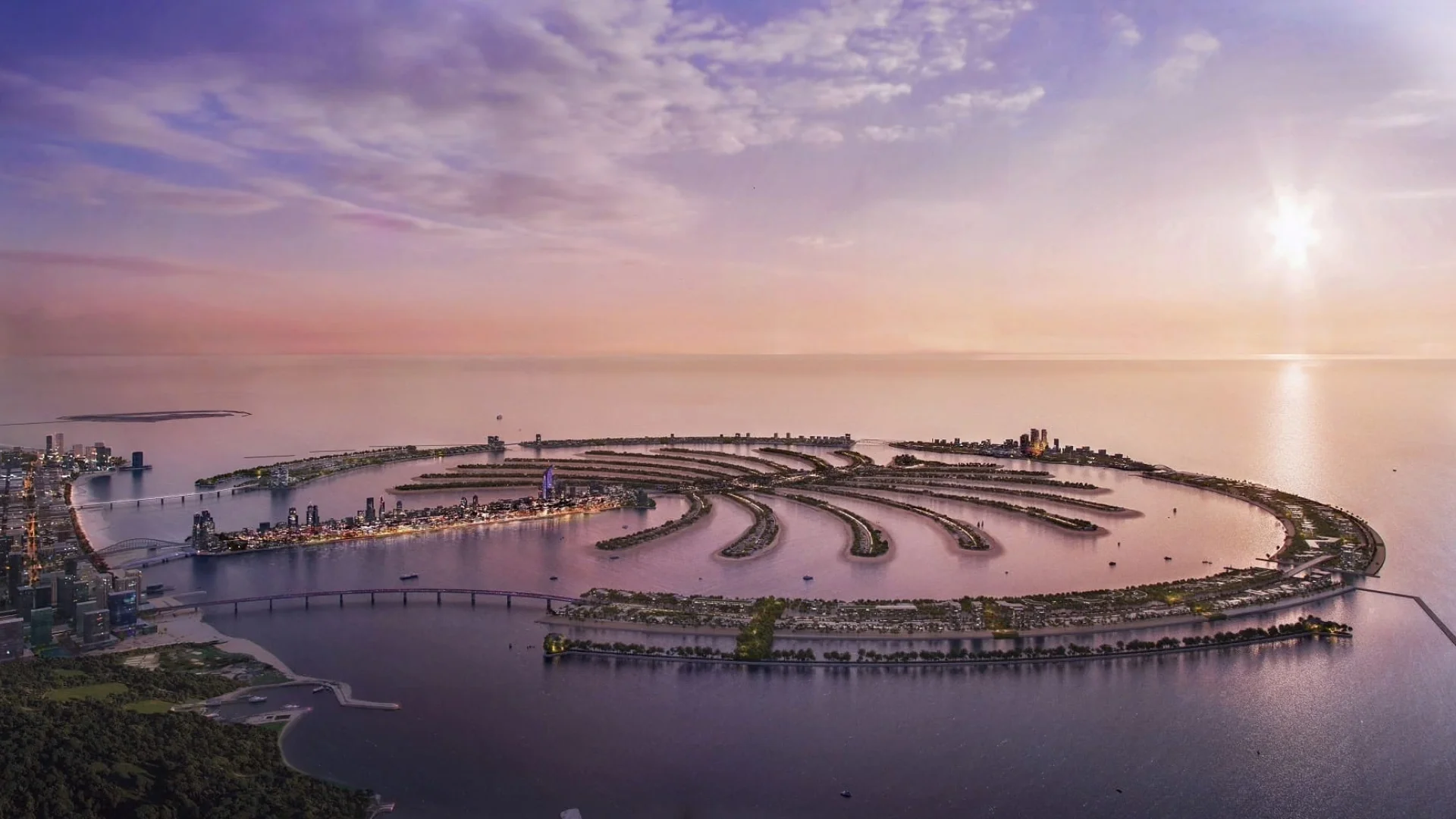

At dawn on Palm Jebel Ali, Nakheel drew a clean line in the sand: forty-four villas, all on the water, all on Frond F. Announced in August 2026, the limited release signals a poised new chapter for Dubai’s reborn palm-shaped archipelago. Every home promises true beachfront living—privacy, glass-to-horizon views, and curated contemporary design where indoors and outdoors are one breath apart. For buyers and investors, it’s a front-row ticket to real scarcity and a lifestyle that begins where the tide licks the steps.
The day opens like a secret. First light washes over Frond F, and the sea turns from ink to silver. A sales advisor traces a rectangle in the sand with the tip of a pen. “How many?” someone asks. He grins. “Forty-four. All on the beach.”
That’s how a launch feels when the number is small and the shoreline is long. Nakheel has unveiled a limited collection of 44 beachfront villas on Palm Jebel Ali’s Frond F—no back rows, no almosts. Just sand, horizon, and the quiet insistence of the Arabian Gulf. It’s the kind of announcement that travels fast in a city that understands waterfronts as more than a view. Here, the water is the neighbor.
In the sales gallery, a scale model gleams under a halo of spotlights. Little palms lean into a painted breeze; miniature boats skim a lacquer-blue lagoon. A planner taps the frond silhouette. “This collection is about proportion,” she says. “Sightlines that carry, rooms that breathe, and edges that blur so the sea does the talking.” You can feel the design logic: light, clarity, and a choreography that lets the eye run free, from terrace stone to tide line.
Why it matters now? Scarcity. Palm Jebel Ali is stepping back into the spotlight with deliberately few front-row seats. Forty-four is a precise promise—enough to make a neighborhood, few enough to make every address a story. It’s also a statement of intent. Rather than shout, this launch hums: measured, collected, confident.
Each villa in the collection is conceived less as a product than as a coastal ritual. Mornings begin with bare feet on cool sand. Noon folds into shade and sea breeze. Evenings gather on broad terraces, where the horizon draws a perfect line and the city glows faintly in the distance. The palette? Expect calm: natural textures, generous openings, and foundations laid around privacy without turning the house inward. The sea is always in frame.
If you stand out here long enough, you start to hear how people think in waterfront terms. “We want something that lasts,” a couple tells the advisor. He nods toward the tide. “The sea lasts.” It’s a small line, but it rings true. In Dubai, where spectacle is common, the scarce things still run the show: prime land, resilient locations, proven developers.
And the masterplan matters. Palm Jebel Ali isn’t just an address—it’s a geography being written. These 44 homes act like anchor points for a rhythm that will fill in with promenades, gardens, and daily routines. For now, there’s wind and the purposeful poetry of machinery. You can read the future here like a blueprint on the horizon: paths that will knit together, streets that will soften, neighbors who will learn the tide times by heart.
What happens next? Interested buyers register, study plots and layout options, and explore personalization where available. Nakheel will pace communications across phases, with timelines and delivery details shared directly. The constants are clear: the shoreline is finite, and demand, historically, is not.
If you know the Palm Jumeirah story, you know the echo. Villas on sand became both postcard and portfolio—homes as well as hedges. Palm Jebel Ali picks up that thread with a calmer confidence, folding lessons learned into a new canvas. It’s not a drumroll; it’s a metronome. Forty-four beats. Forty-four addresses. Forty-four chances to live where the map meets the sea.
Back on the beach, a prospective buyer tightens her laces and steps to where the water fingers her shoes. “Imagine sunrise here,” she says. Someone beside her doesn’t answer. They don’t need to. The picture does the talking.
Waterfront isn’t a fad. It’s a physics problem: fixed shoreline, growing demand. But good decisions ride on more than emotion.
Questions to bring to the sales desk:
Buyer profiles who fit Frond F:
Bottom line: Frond F doesn’t shout. It draws a line—clean, bright, and right at the water’s edge. If you invest here, you’re buying perspective at sea level.