
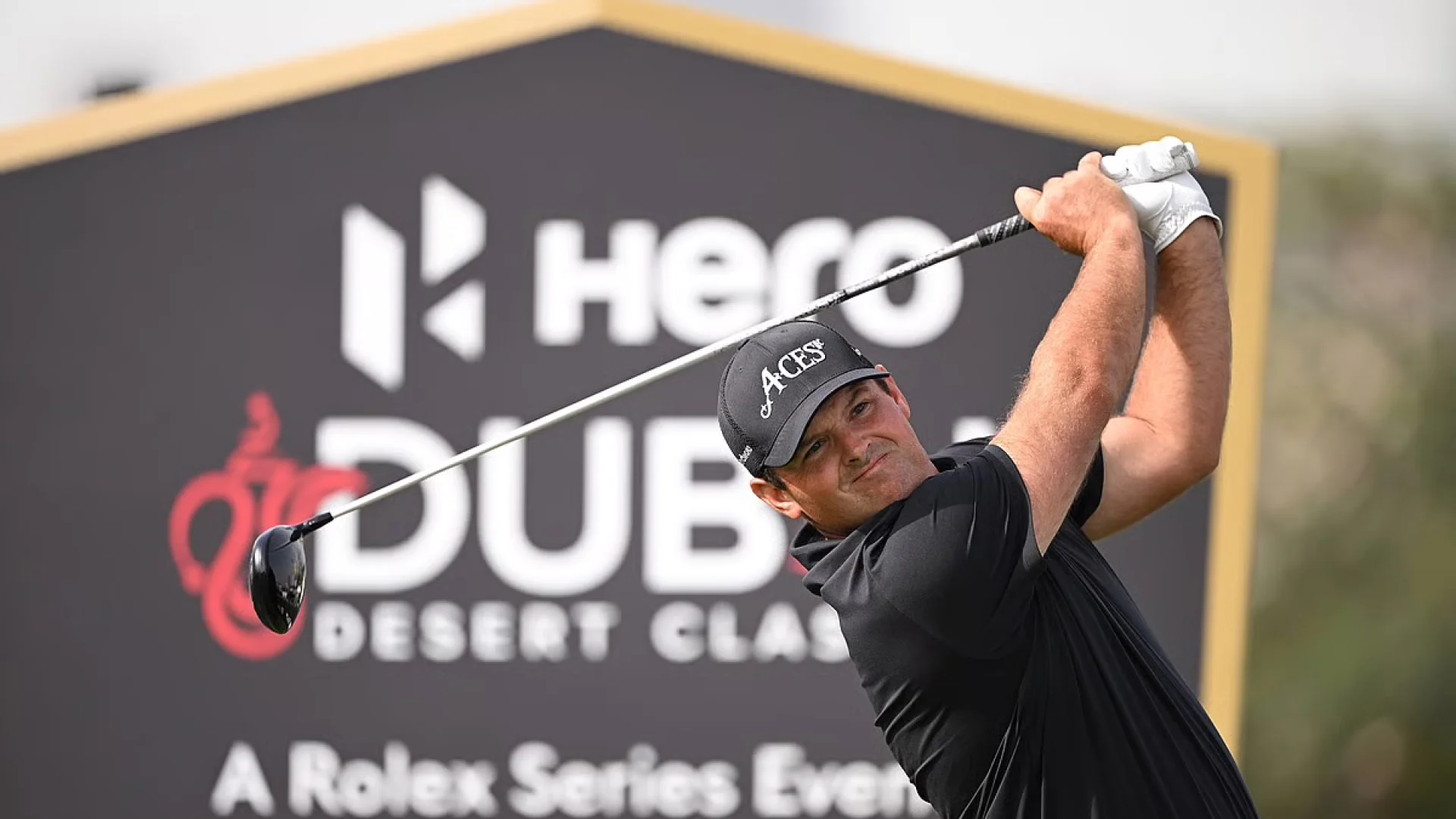

In the bright, hard light of Dubai, Patrick Reed has edged his way to the top of the Dubai Desert Classic leaderboard at the halfway mark. A blend of controlled ball-flight, pragmatic course management and timely putts has put the American in front after two rounds, with a tightly packed group of chasers poised to pounce. The Emirates Golf Club is playing fast and unforgiving, its greens demanding touch and nerve while the breeze turns simple decisions into debates. With the weekend looming, Reed’s advantage feels less like a cushion and more like a thin line he’ll have to walk shot by shot.
The wind arrives first. It combs through the palms, snaps at the flags, and carries the faint click of practice swings across the Emirates Golf Club like a warning. Up close, the greens shine with that particular Dubai sheen—sunlit, firm, almost too perfect—until you watch a ball land, take one hop, and skitter away as if it has somewhere else to be.
Patrick Reed stands on the edge of it all with the posture of a man who has made peace with discomfort. A quick look down the fairway. A tiny nod to his caddie. Then the swing—compact, decisive, built for control rather than applause. By the end of the second round, that control has turned into something tangible: the halfway lead at the Dubai Desert Classic.
There’s no fireworks show to announce it. Just the steady accumulation of good choices. The kind that don’t make highlight reels until you add them up and realize the math has pushed everyone else behind.
Dubai can feel like a city of big gestures, but this week the course is dealing in small, sharp truths. Miss a line by a yard and you’re pitching from a lie that looks fine until it isn’t. Land an approach a fraction long and it releases, sliding into the kind of putt that makes even confident players exhale a little too loudly.
Reed’s advantage, at least so far, has been his willingness to accept what the course offers and refuse what it doesn’t. He’s shaping shots to keep the ball under the breeze, aiming for sensible parts of greens, and living happily with pars that feel like quiet victories. When the birdie chances come, he takes them—no drama, just a putter face that stays square through impact and a ball that keeps rolling like it trusts him.
On these greens, trust matters. The pace is quick, the breaks are subtle, and the margin between “great lag” and “three-putt trouble” is a heartbeat. You can see it in the way players hover over their lines, reread the last two feet, then stand up and start again, as if the hole has moved while they weren’t looking.
A halfway lead in Dubai isn’t a guarantee—it’s an invitation. The leaderboard stays tight, the kind that makes phones come out near the scoring area, the kind that turns every incoming number into a ripple. Big names remain present, not necessarily roaring, but close enough to be dangerous. One loose swing, one gust at the wrong time, one putt that lips out instead of dropping, and the story rewrites itself.
That’s the feeling hanging over the weekend: not certainty, but pressure. The wind can shift between tee time waves, making one side of the draw look suddenly kinder. Pins can be placed where a bold shot is rewarded—or where boldness is punished with a slick downhill putt that never stops.
Reed plays with a kind of contained intensity, the volume turned down but the intent unmistakable. He doesn’t look like he’s chasing a moment; he looks like he’s assembling one. There’s a brief exchange with his caddie—numbers, wind, a club held up for a second opinion—then the decision lands, and so does the shot.
It’s not that everything has been perfect. Nobody gets through two rounds here without a wobble. But Reed has been efficient at turning potential trouble into manageable outcomes: a smart miss, a tidy chip, a par that keeps momentum from leaking away. And when the door opens for a birdie, he walks through it quickly, before the wind can slam it shut.
As the light begins to soften late in the day, the course looks calmer than it feels. Volunteers move ropes, spectators drift between holes, and you hear the same sentence in different accents: “It’s playing quick.” Reed signs his card, offers a brief nod, and heads off with the expression of someone who knows exactly what a halfway lead is worth—only as much as you can defend tomorrow.
The weekend will ask for nerve. It will ask for touch. It will ask for the ability to stay patient while others surge. For now, Reed has the best seat in the house. But in the desert, even the leaders can feel the wind at their backs—pushing, nudging, reminding them that nothing is settled yet.
Global sporting events like the Dubai Desert Classic do more than fill hospitality suites—they reinforce Dubai’s positioning as a lifestyle capital. For real estate, that visibility can translate into demand for neighborhoods anchored by landmark leisure infrastructure, including golf courses and resort-style communities.