
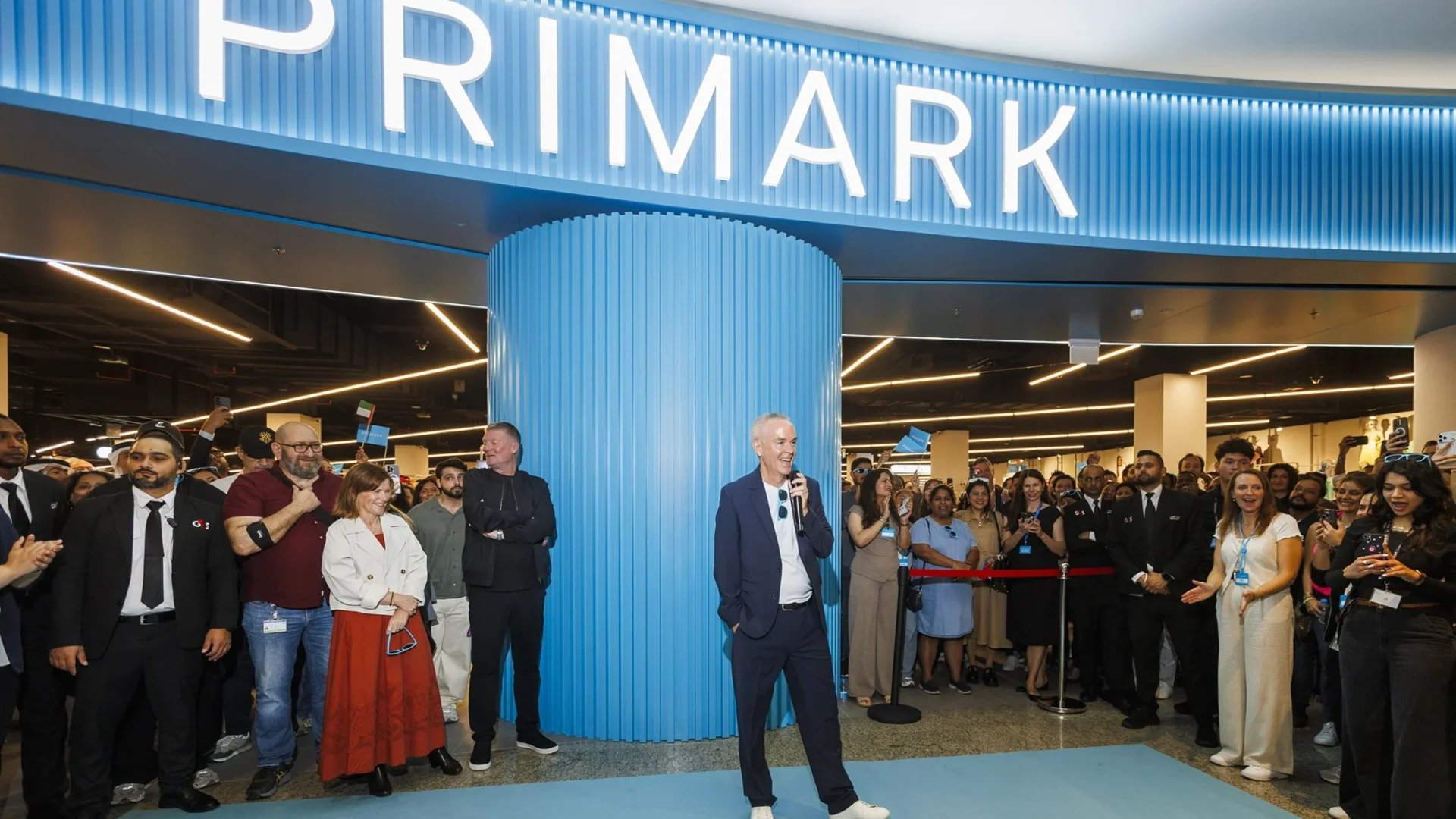

In Dubai Mall, a new storefront can feel like a live event: footsteps quicken, phones rise, and the first shoppers arrive already rehearsing their bargain-hunt routes. Primark has now opened in the city’s flagship mall, expanding its regional footprint under Alshaya Group. Alshaya CEO John Hadden says the retailer launched with “stock more than enough,” aiming to avoid early sell-outs and keep shelves full as demand builds. The move underlines a broader reality in Dubai: value fashion and mega-mall footfall are still a powerful combination.
The air is cooler than the outside heat and somehow louder at the same time. Dubai Mall has that particular soundtrack—heels on marble, stroller wheels, the soft ping of escalators—and today it’s punctuated by something else: the hum of anticipation. A young man leans over a railing, spots the signage, and says to his friend, “That’s it. Let’s go.”
Primark is open. Not tucked away, not timid. Open in the kind of place where openings don’t just happen—they land.
Inside, it’s movement in every direction. Hangers click. Cotton folds slide across fingertips. A shopper holds up two versions of the same top, squints, then turns to her sister: “Which one looks better in daylight?” The sister doesn’t hesitate. “The lighter one. Trust me.” A small decision, a small rush—multiplied by hundreds, it becomes the rhythm of the store.
Dubai Mall is a city within the city: luxury flagships and tourist landmarks, families on a day out, travellers on a stopover with a shopping list. Primark stepping into that ecosystem feels less like “another retailer” and more like a fresh current running through the corridors—pulling in students, tourists, parents, and anyone who enjoys the quiet thrill of finding something useful without a long internal debate.
And that is Primark’s signature: fashion and homeware at prices that encourage spontaneity. The psychology is simple and powerful. You come for one item. You leave with a bag that rustles like a confession.
At big openings, the danger isn’t lack of attention—it’s empty racks on day two. Alshaya CEO John Hadden addressed that head-on, saying Primark has “stock more than enough.” In plain terms: the store is built to absorb the first wave without looking picked over, and to replenish quickly as patterns emerge.
In Dubai, that matters. A popular location can go from “newly opened” to “fully raided” in a single weekend, powered by residents, regional visitors, and tourists who treat the mall like an itinerary stop. Availability becomes reputation. A well-stocked launch says: we expected you. We planned for you. Come back tomorrow—there will still be choice.
This opening also says something about the city itself. For all the growth in e-commerce and delivery culture, Dubai remains fiercely physical when it comes to shopping. The mall is still where people meet. Where they walk. Where they cool off. Where they spend time—and, inevitably, money.
Primark’s arrival reinforces the idea that retail in Dubai thrives when it blends the practical with the pleasurable. It’s not just about buying a T-shirt. It’s about the trip: the escalator ride, the coffee before, the quick detour past a window display, the “let’s check one more section” that turns into a full loop.
For the wider fashion market, it’s also a reminder that value-led players can be as culturally magnetic as premium brands—especially at a time when many shoppers worldwide are watching budgets more closely. In a place famous for extremes, the promise of “good enough, stylish enough, right now” can be oddly irresistible.
Near the exit, a teenager shifts a stack of basics from one arm to the other, grinning as if he’s gotten away with something. “I was only going to look,” he says. His mother laughs—because that line is the unofficial slogan of every successful store.
Primark at Dubai Mall doesn’t feel like a quiet addition. It feels like a new tide: aisles like waves, people like weather, and a clear message from Alshaya’s top floor—there’s enough stock to keep the story going.
For landlords and investors, Primark’s Dubai Mall debut highlights the continuing strength of prime, experience-led retail destinations. High-volume, value-focused anchors can drive sustained footfall, lift dwell time, and support leasing performance for neighbouring units. In practical terms, this kind of tenant reinforces the “all budgets, all day” mall model—an important factor in protecting rental resilience and retail asset attractiveness in top-tier Dubai locations.