
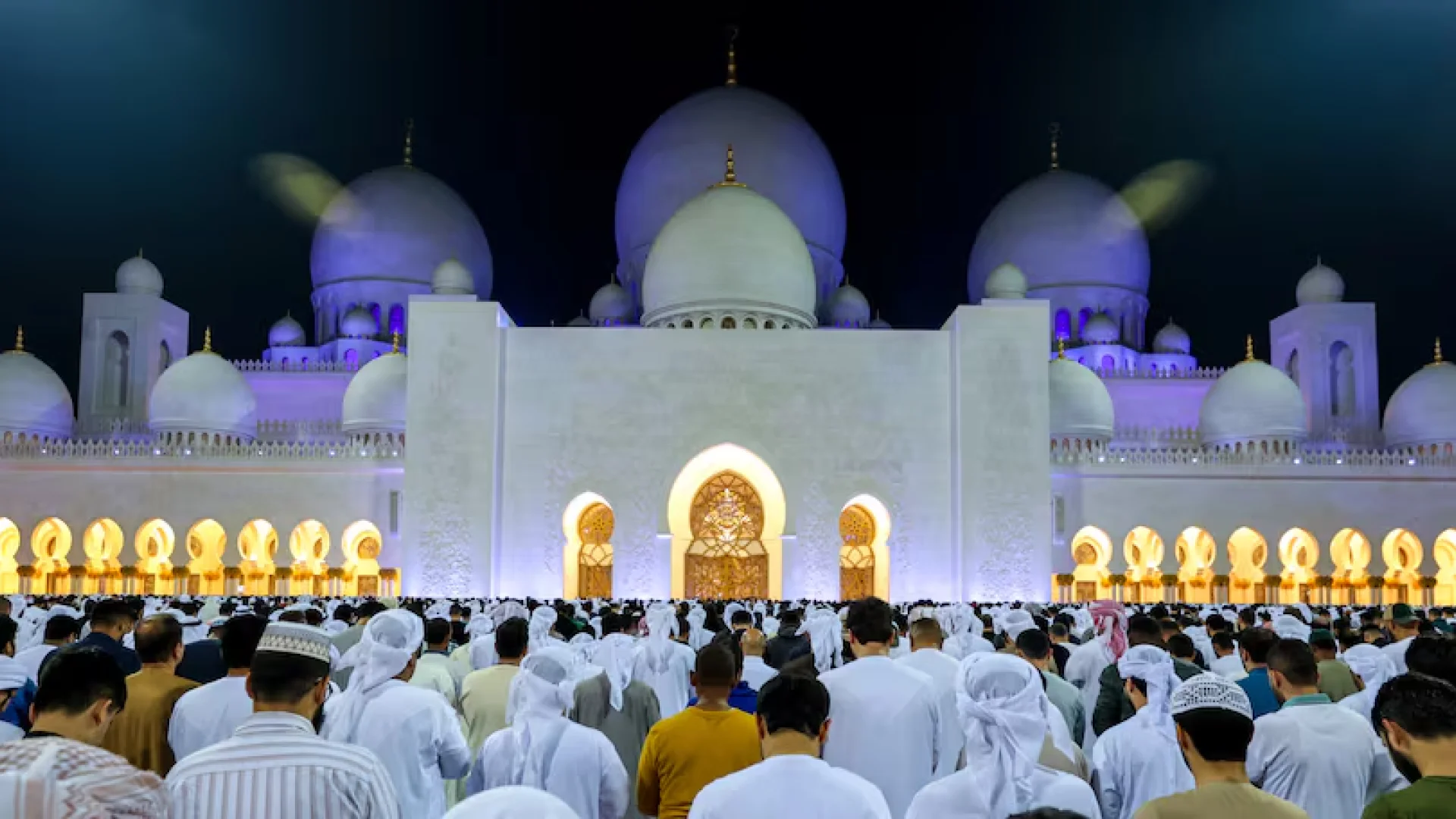

In the UAE, Ramadan doesn’t simply arrive—it rewires the clock. Ramadan 2026 is expected to begin in late February and run for 29 or 30 days, with the official start confirmed by the traditional moon sighting. Daytime grows quieter and more focused as working hours shift and routines compress, while nights bloom with Iftar tents, Suhoor lounges, late shopping and a distinctly communal energy. This guide pulls together what residents and visitors most need to know—timings, rules, openings, and how to plan—plus what the season quietly signals for property and investment decisions.
The sun drops behind the towers like a curtain being drawn—slowly, deliberately, with everyone watching. In the last half-hour before sunset, Dubai feels as if it’s holding its breath. Office chairs scrape back. Elevators fill. Cars stream toward home with a new kind of urgency.
In a small grocery near the metro, a boy stacks dates into a pyramid. His mother checks her phone, then looks up and smiles at the cashier. “Not long now,” she says. It isn’t a complaint. It’s a countdown shared by millions.
This is Ramadan in the UAE: a month that changes the city without closing it. A month that makes mornings purposeful, afternoons softer, and nights—unexpectedly—electric.
Ramadan follows the Islamic lunar calendar, so its start date moves earlier each year on the Gregorian calendar. In 2026, Ramadan in the UAE is expected to begin in late February and last 29 or 30 days. The key detail is how the start is confirmed: the official announcement typically follows moon sighting, meaning final dates are validated close to the beginning of the month.
It’s the kind of planning that feels both modern and ancient at the same time: spreadsheets on one side, a thin crescent of light on the other.
For Muslims, fasting generally means refraining from food and drink from dawn to sunset. For everyone else living in, working in, or visiting the UAE, Ramadan is a lesson in rhythm and respect. The country remains welcoming and active, but the tone becomes gentler—more mindful—especially during daylight hours.
In recent years, the UAE has clarified and modernised how daily life works during Ramadan. In many places, non-fasting people can still eat and drink in public, but etiquette matters. You’ll notice it in small decisions: a sip of water taken discreetly, music kept low, clothing choices that lean a little more modest.
Ramadan typically brings reduced working hours across sectors, with details varying between public and private employers and depending on the role. The effect is immediate. Meetings get scheduled earlier. Email threads feel shorter. The city’s productivity shifts into the morning, and the late afternoon becomes a runway toward Iftar.
Walk through a business district at 3pm and you can feel it: less noise, fewer hurried footsteps, more space in the air.
Families adapt their days too. Nights become longer—Suhoor (the pre-dawn meal) pulls some people awake while the world is still dark. Even for households that don’t fast, the social calendar changes: invitations arrive, dinners run later, and mornings start with a touch more quiet.
“We’ll go after Iftar,” becomes the default answer to everything—shopping, seeing friends, taking the kids out. The UAE doesn’t slow down. It simply moves its energy to the evening.
At sunset, there’s a visible shift—like someone has turned the lights on from the inside. Tables fill. Water glasses catch the glow. Dates appear everywhere, simple and symbolic. In hotels, Ramadan tents bloom into soft-lit villages of cushions, lanterns and steaming trays. In homes, the scene is quieter but no less vivid: a pot lid lifted, a prayer murmured, the first sip of water taken slowly.
Then the night opens up. Suhoor venues run late, sometimes well past midnight. Cafés hum. Malls stay busy. Families stroll promenades in the cooler air. If you arrive expecting a muted city, Ramadan surprises you: it’s not an off switch. It’s a second act.
During Ramadan, many venues adjust schedules—often shifting activity into the evening rather than reducing it. Restaurants may feel calmer in the day and fully booked at night. Shopping centres frequently extend late-night hours. Attractions remain open, but visitor patterns change: mornings become prime time for sightseeing; evenings for social life.
If you’re travelling, treat the day like a well-planned itinerary and the night like a reward. Do your outdoor plans early. Keep late afternoons flexible. And book popular Iftar experiences ahead if you want the full atmosphere.
You don’t need to be an expert to be respectful. In the UAE, Ramadan etiquette is mostly about awareness—reading the room and acting with consideration.
Ramadan ends with Eid al-Fitr, a holiday that feels like the city exhaling. Families gather, gifts appear, travel spikes, and leisure spots fill quickly. As with Ramadan’s start, exact Eid timing is linked to the lunar calendar, but it follows immediately after Ramadan and typically brings several public holidays—an important note for bookings, staffing and travel plans.
If Ramadan is the month of intentional living, Eid is its celebration: louder, brighter, and full of movement.
Travelling during Ramadan can be wonderful—less about rushing through checklists and more about experiencing the UAE’s social fabric. The country remains open and safe, and visitors often find the evenings especially memorable.
And somewhere between the lantern light and the first date at sunset, you understand why residents speak of Ramadan with such tenderness. It’s not only about what you stop doing. It’s about what you notice again.
For investors, Ramadan in the UAE is a recurring seasonal pattern that can influence occupancy, footfall and transaction timing—especially because the month shifts through the year and, in 2026, falls in a cooler period that supports outdoor evening activity. The implications are practical rather than theoretical: it’s about how people use space.
Investor takeaway: Ramadan is not a pause button—it’s a calendar-driven shift in behaviour. Assets that serve the evening lifestyle (walkable mixed-use, hospitality-adjacent residential, well-programmed retail) can see disproportionate benefits, while operationally heavy strategies need tighter scheduling. Treat Ramadan and Eid as predictable demand and logistics cycles, and you can underwrite with more confidence—and often, better performance.