
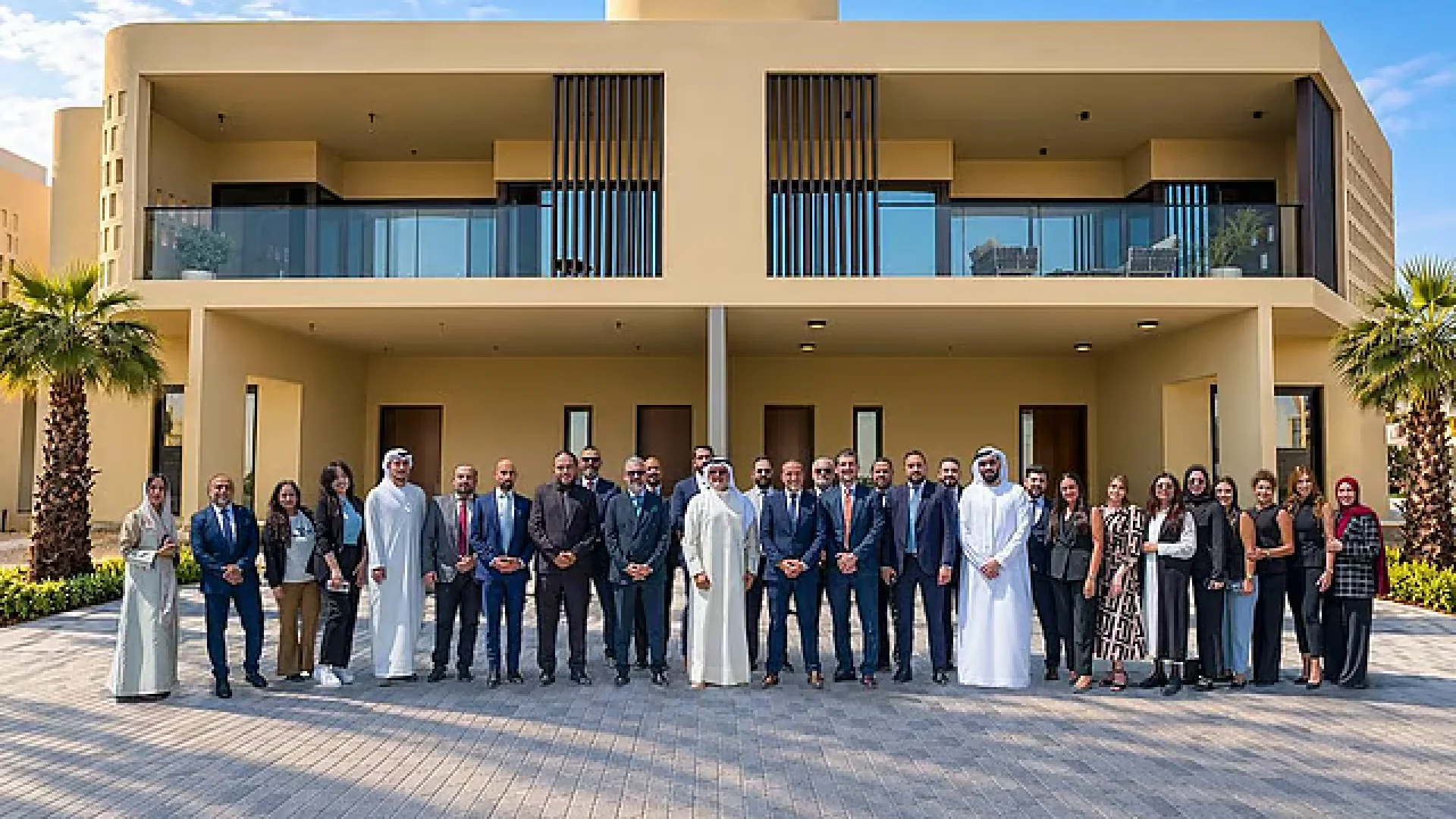

Sharjah is preparing 1,100 new homes for families, creating more than a construction project: it is laying the foundations for new neighbourhoods and long-term stability. The initiative reflects the emirate’s response to population growth and rising demand for secure, family-oriented housing. For future residents, the numbers translate into front doors, living rooms and a place to put down roots.
The first thing you notice is the emptiness. Wide stretches of sand, a hard blue sky and the distant hum of machinery. Then the lines appear: a road taking shape, foundations marked out, construction vehicles moving slowly across the site. In time, this open ground will have a very different soundtrack. Doors will close. Children will call to one another. Families will arrive home.
Sharjah is adding 1,100 new family homes. It is an easy figure to repeat, but difficult to imagine. Behind it are 1,100 households planning a future. A kitchen table. A shaded entrance. A bedroom waiting for its first occupant. A key held tightly in someone’s hand.
The project forms part of a broader effort to provide families with secure, suitable housing and to support the emirate’s continued growth. Housing is never only about walls and roofs. It is about permanence. It allows families to plan, children to grow up in familiar surroundings and neighbours to become part of everyday life.
“When will we move in?” That question may already be echoing around many households. For some families, the new homes will offer a path from temporary accommodation to a permanent address. For others, they will mark the beginning of independent family life. The homes may also help relatives live closer together, turning distance into a short drive rather than a daily challenge.
A family neighbourhood is felt in small moments. A parent walking a child to the car in the morning. A delivery van stopping at the right gate. A neighbour waving from a garden. At sunset, lights begin to appear one by one. The development becomes more than a project plan; it becomes a place with routines.
Those routines are why the arrival of 1,100 homes matters beyond the individual properties. New residents create demand for roads, schools, shops, healthcare, recreation and local services. A successful housing project does not end at the plot boundary. It connects homes to the systems that make everyday life work.
Sharjah’s growth has brought new economic opportunities and a steadily expanding urban footprint. At the same time, many residents are looking for something familiar and practical: a family-friendly environment, a reliable home and access to the wider city. The new development responds to that search for balance.
There is also a clear social dimension. A stable home gives families room to make long-term decisions. They can choose schools with confidence, establish local friendships and invest time in their community. Housing policy, at its best, is therefore a form of future planning. It shapes not only where people live, but how they experience the city.
Every established neighbourhood was once a construction site. Before the trees, there were plans. Before the familiar streets, there were survey lines. Before the voices, there was machinery.
The 1,100 homes will follow that same transformation. The most important change will not happen when the last wall is painted. It will happen gradually, when residents begin to claim the spaces between their homes. A child discovers a favourite corner. A family learns the quickest route to the shops. Two neighbours meet for the first time and, months later, stop to talk.
That human layer is essential. Family-oriented housing works best when it combines privacy with connection. Safe walking routes, shade, accessible services and shared spaces all influence whether residents simply occupy a property or genuinely feel at home.
For Sharjah, this approach supports a wider vision of urban development. The emirate is not relying only on taller buildings or denser districts. It is also creating room for homes designed around the realities of family life. That can make the city more attractive to residents seeking stability rather than a short-term address.
The number is significant, but the outcome will depend on how the new homes connect with their surroundings. Housing supply is most valuable when it comes with functioning infrastructure and a clear relationship to the existing city. A house can be completed in a day; a neighbourhood takes years to mature.
Eventually, the construction vehicles will disappear. In their place will be school runs, evening walks and the ordinary noise of domestic life. Someone will open a front door for the first time. Someone else will plant a tree. The sand will remain part of the landscape, but it will no longer define it.
That is the real story of Sharjah’s 1,100 new homes. The emirate is not simply adding buildings. It is preparing the setting for thousands of future memories.
The project is also relevant to Sharjah’s property market. Adding substantial family housing can encourage the development of supporting services, improve the attractiveness of emerging districts and help distribute population growth across planned residential areas. Retail, education, healthcare, mobility and leisure facilities often follow where a critical mass of residents is expected.
For investors, the quality of the surrounding infrastructure will be as important as the homes themselves. Access to established roads, schools and daily services can influence occupancy, buyer interest and long-term value. Family housing may also provide a comparatively stable demand base because it is linked to the practical needs of residents rather than solely to short-term market sentiment.
The initiative points to a broader direction for Sharjah’s residential sector: planned communities with a clear family focus and a stronger connection between homes and everyday amenities. The 1,100 houses are therefore both a housing measure and a marker of the emirate’s next stage of urban growth.