
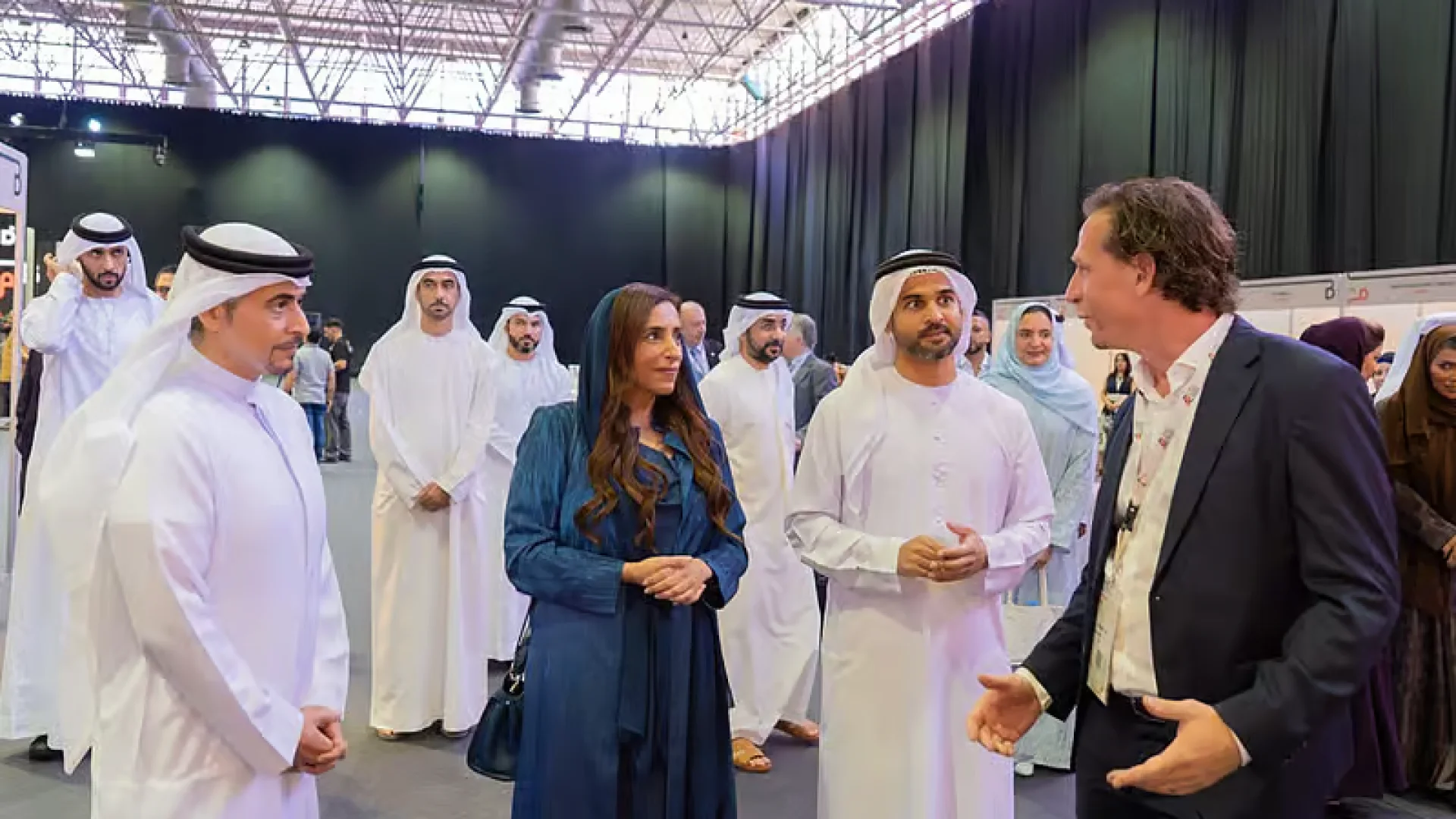

In Sharjah, shelves become meeting points as booksellers, publishers, authors and cultural leaders gather for the 2026 Sharjah Booksellers Conference. With Sheikha Bodour Al Qasimi highlighting the value of a connected publishing ecosystem, the event looks at digital change, independent bookshops, new readers and the enduring power of personal recommendation. It is a conversation about books—but also about the cities and communities built around them.
The first thing you notice is the sound. Not applause. Not a ringing phone. Paper. Pages turning, covers opening, a title spoken aloud across a busy aisle. At the Sharjah Booksellers Conference 2026, the book is not a silent object waiting on a shelf. It is moving from hand to hand, gathering questions as it travels.
Booksellers, publishers, authors, librarians and cultural organisations have come together to examine an industry being reshaped in real time. They discuss sales, distribution and digital platforms, certainly. But they also discuss something less measurable: trust. A good bookseller does not simply point to a product. They listen, remember what a reader enjoyed last month and sometimes recommend the book that changes a life.
The bookselling business now stretches across several worlds. A customer may discover a novel in a short video, compare editions online, listen to a sample on a phone and still walk into a shop to hold the printed copy. Reading habits are more varied than ever. So are the ways books are found.
That shift creates pressure, but it also creates possibility. Independent bookshops can become publishers’ partners, community venues, education hubs and trusted media brands. Their advantage is not always price or scale. It is personality. A carefully chosen shelf can feel like a conversation with the person who arranged it.
The conference gives the industry a place to ask practical questions. How can smaller retailers compete in a digital market? How can shops attract children and young adults? Which partnerships with schools, libraries and universities work best? And how can books remain visible when every reader is competing with an endless stream of content?
Sheikha Bodour Al Qasimi represents a broader understanding of the publishing world. No part of the chain stands alone. Writers need editors and translators. Publishers need distribution. Booksellers need readers. Readers need places where discovery feels personal and welcoming.
That connected view fits Sharjah’s long cultural trajectory. The emirate has built an international reputation through literary events, education, libraries and publishing initiatives. Its message is consistent: reading is not a luxury at the edge of public life. It is part of the infrastructure of an educated, creative society.
“People still come for a recommendation,” one imaginary bookseller might say between sessions. A colleague might answer, “Yes—but they often find us online first.” Both statements are true. The future of bookselling will belong to businesses that understand technology without losing human contact.
Walk into a bookshop and you may be looking for a particular title. Or a birthday gift. Or a quiet corner. Or simply a reason to pause. The strongest shops make room for all of these needs.
That is why the conference conversation extends beyond transactions. Bookshops are increasingly designed around events and encounters:
Each activity brings the shop back into the life of the neighbourhood. A reader arrives for a launch event and discovers a new publisher. A parent comes for a children’s workshop and returns for a novel. A student finds a study guide, then stays to browse.
These small moments have an urban effect. Bookshops help animate streets. They give mixed-use districts reasons to remain active after office hours. Alongside cafés, galleries, schools and public spaces, they create destinations rather than isolated buildings.
Sharjah also offers a valuable vantage point for the international circulation of Arabic literature. Translation is not merely a technical process. It is a bridge between markets, memories and ways of seeing. A book that begins with a regional audience may find readers far beyond it when the right editorial and commercial connections are made.
For booksellers, this creates a curatorial responsibility. They can introduce international titles while giving local and Arabic-language voices more space. Their shelves can look outward without losing their sense of place. In that balance, the shop becomes both a window onto the world and a showcase for its own community.
The industry’s future will be shaped by ordinary but difficult questions. How are books discovered? Who pays for editing and translation? How do publishers reach younger audiences? What should artificial intelligence do—and what should remain human? How can physical shops use data without becoming impersonal?
No single platform will answer these questions. Cooperation will. Publishers, retailers, technology companies, educators and cultural institutions can share tools and knowledge. The goal is not to replace the bookseller’s instinct, but to give it more reach.
Near the end of a conference day, the most important decision may happen far from the main stage. Two professionals stand beside a table of unfamiliar titles. One lifts a book and turns it over. “This one,” they say. “Let’s put it where readers can see it.” That gesture captures the enduring power of the trade. Books become culture when someone chooses to place them in another person’s path.
The conference also matters to property professionals. Cultural programming can strengthen a location’s identity and improve the appeal of well-connected, mixed-use neighbourhoods. Bookshops, libraries, cafés, schools and event spaces work together to create footfall and a sense of belonging. That combination can support resilient retail environments and make residential districts more attractive to residents, visitors and businesses.
Investors increasingly look beyond the building itself. They ask whether a project creates a place people want to return to. This approach, often described as placemaking, links cultural activity with long-term urban value. Sharjah’s bookselling ecosystem illustrates how literature, education and public life can help shape desirable districts—quietly, steadily and with an influence that reaches far beyond one conference.