
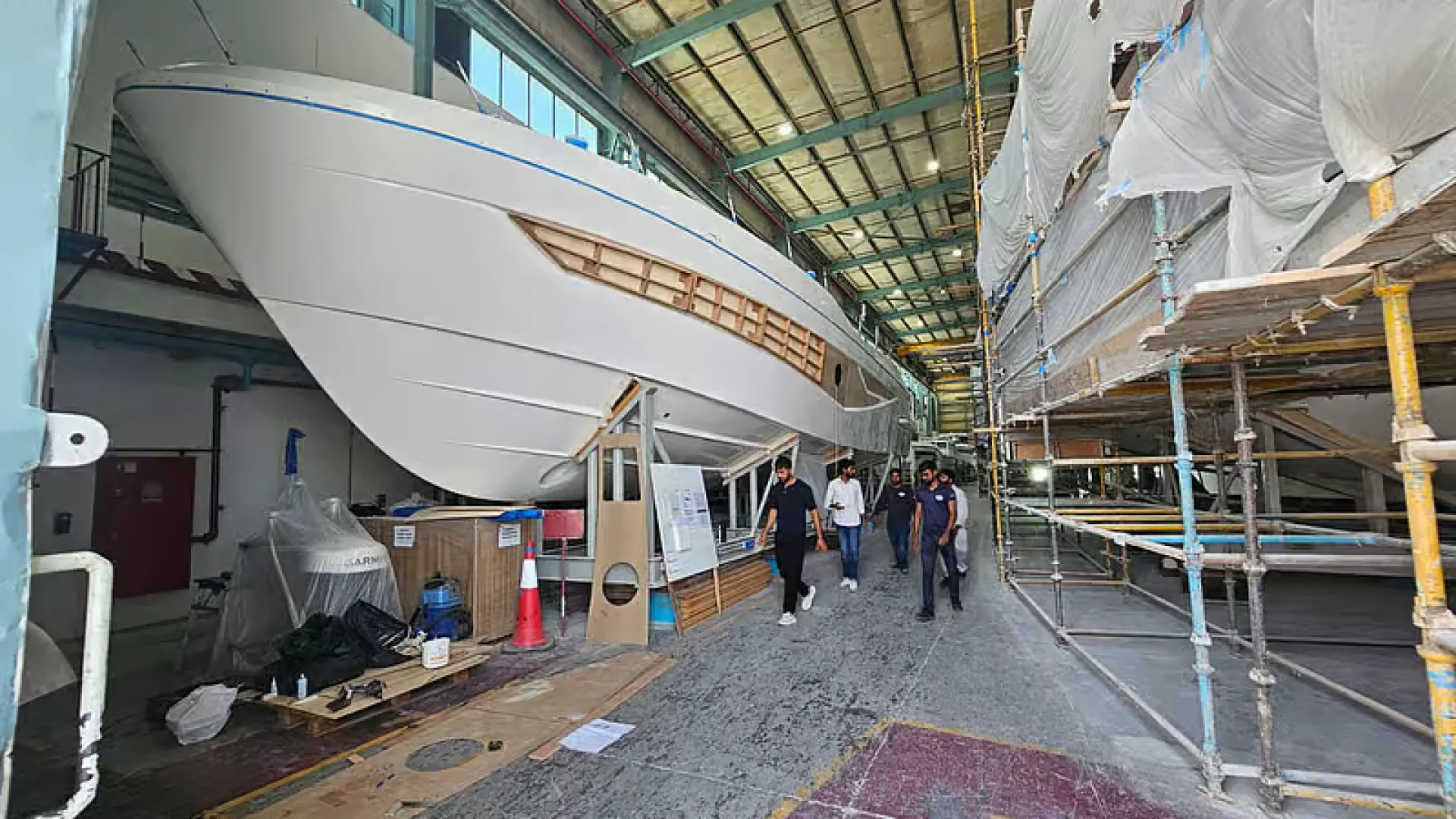

In a shipyard in the UAE, the soundtrack is grinders and welders—yet what’s taking shape isn’t a tanker, but a high-end home designed to live on water. The story follows how shipbuilding discipline, modular construction and premium interior fit-outs are being combined to produce floating luxury residences destined for European marinas and coastal destinations. Built for harsh marine conditions and finished to villa-level detail, these units promise a new kind of waterfront living where land is scarce, permits are slow, and demand for views never cools. It’s a glimpse of housing’s next edge: residential real estate that can, quite literally, move.
The first thing that hits you isn’t the sea.
It’s the sharp scream of a cutting wheel, the low, physical thud of steel being nudged into place, the hiss of a weld sealing shut like a zipper. Warm air hangs in the shed. It carries the scent of salt and engine oil, but also something unexpectedly domestic—fresh paint, new timber, the faint chemical sweetness of adhesive drying where a wall panel was set only minutes ago.
“Stand clear—module coming through,” someone calls.
A crane glides overhead with the slow confidence of something that has done this a thousand times. What swings below it isn’t a propeller or a mast section. It’s a room. Or at least the beginning of one: a finished wall segment with conduits already chased in, edges clean, surfaces smooth enough to catch the light. A piece of future living room floating through a working shipyard in the United Arab Emirates.
This is where Europe’s next luxury daydream is being assembled—by people in hard hats, with shipyard hands and shipyard habits. Floating luxury homes: built like vessels, dressed like villas, aimed at marinas and waterfront destinations where land has become too expensive, too regulated, too scarce to satisfy demand.
Shipyards are supposed to feel brutal. Functional. The kind of places where comfort is a concept reserved for the office trailer. Yet here, tucked behind scaffolding and tool carts, you catch flashes of something else: gleaming fixtures, carefully wrapped cabinetry, panels of wood with the kind of grain you’d expect in a designer apartment.
A worker wipes dust from a surface as if he’s polishing a car. “No chips,” he mutters, half to you and half to the material. “If it’s luxury, it has to look effortless.”
That’s the strange magic of these projects. They sit on the border between two industries that rarely share a vocabulary. From shipbuilding comes the obsession with stability, safety, corrosion resistance, standards. From real estate comes the promise: lifestyle, privacy, panoramic views, the quiet thrill of saying, this is my home.
The shipyard thinks in blocks. That’s its advantage.
On land, construction is a negotiation with weather, delayed deliveries, and the eternal question of who didn’t show up today. Here, much of the work happens in controlled conditions: modular sections prepared and finished, services pre-installed, tolerances checked and rechecked. It feels less like a building site and more like choreography—teams moving in sequence, each handing over a piece that’s already close to complete.
An engineer taps a metal edge with a knuckle. “This isn’t a weekend toy,” he says. “It has to survive sun, salt, wind—year after year.”
That sentence carries the whole point. Luxury on water is not just about a beautiful interior; it’s about marine reality. Everything must resist corrosion. Systems must be accessible for maintenance. Safety requirements are non-negotiable. These homes have to behave like vessels even when they look like residences.
And yet the mood on the floor is surprisingly human. A foreman calls out over the noise: “Slow it down—you’ll warp it!” Someone laughs, adjusts his gloves, and the module inches forward again. Hard work, yes. But purposeful. There’s pride in the precision.
Europe is the stage these floating homes are being built for. Not because Europe lacks boats, but because it has something far more valuable: coastlines and lakeshores where the romance is proven, the demand is constant, and the supply is constrained.
Think of the Mediterranean marinas with their neat rows of masts and sunlit promenades. Think of historic waterfront towns where every new development becomes a political battle. Think of lakeside regions where building codes are strict and vacant land is a myth.
When land becomes the bottleneck, water starts to look like opportunity.
Not limitless opportunity—water is regulated too—but different. A marina berth, a permitted floating zone, a managed waterfront development: these can become the new “plots.” The address shifts from street number to dock position, from garden wall to gangway.
Walk along a corridor of partially finished structure and you can feel the dual identity. Underfoot: the seriousness of marine-grade construction. Around you: the softening signs of domestic life—insulation tucked neatly behind panels, lighting tracks laid out with care, openings that will become floor-to-ceiling windows.
In one section, a worker kneels on the floor, aligning an edge with the patience of someone setting a jewel. “It has to feel like a penthouse,” he says without looking up.
That’s the aspiration: not “boat living,” but “villa living”—with the water as your front yard. Decks replace gardens. Terraces become outdoor rooms. Glass walls frame the horizon like art.
The shipyard isn’t producing a hull that someone will later decorate. It’s producing a finished lifestyle unit: structure, systems, and interior coming together as one product.
Luxury usually implies one-off craftsmanship. Modular construction implies repetition. Here, the two are being forced into a new partnership.
The idea is simple: standardize the parts that benefit from standardization—structure, technical systems, proven layouts—then customize finishes and configurations where buyers feel it most. The result is something that can be produced more predictably than a bespoke villa on a constrained waterfront site, while still delivering the “this was made for me” effect.
It’s also a response to the real world: volatile construction costs, labor shortages, and long timelines in many European markets. A shipyard can offer what developers crave most: control. And control, in 2026, is a luxury of its own.
There’s an emotional hook here that’s difficult to price but easy to understand. People don’t just buy square meters. They buy mornings.
They buy the moment you slide open a door and the air smells like water. They buy the tiny sway underfoot that reminds you you’re afloat, but safe. They buy the line they’ll repeat at dinner—“Yes, we live on the marina”—and the surprised pause that follows.
These floating homes sit at a crossroads of markets: residential real estate, hospitality, and maritime. Ownership can be personal, but usage can look like a serviced-apartment model. The asset can be a second home, a rental unit, a branded stay, or a combination—depending on local regulation and operator strategy.
Watch another module settle into place. The crane lowers. Metal meets metal with a brief, ringing clink. For a second, everything goes quiet—like the yard is holding its breath.
A technician knocks twice on the panel. Solid. He nods. “Fits.”
That single word contains the promise: repeatable quality, predictable assembly, a home that can be delivered rather than endlessly built. It’s not just an object; it’s a schedule. A timeline that doesn’t drift like a tide.
And in a world where coastal land is scarce and waterfront dreams are abundant, that kind of certainty is powerful.
For investors, floating luxury homes matter because they target one of the most supply-constrained categories in real estate: true waterfront exposure. In mature European coastal and lakeside markets, new shoreline development is limited by geography, zoning, heritage protections, and environmental rules. Floating residential units—where permitted—can create additional waterfront “keys” without consuming new land, effectively expanding premium inventory through marina infrastructure rather than plots.
1) Value shifts from land to berth + operations
Traditional residential value is land-led. Floating homes are berth-led and operator-led. The investment case often depends on long-term access to a high-quality marina berth, fee structures, and the strength of the service model (security, concierge, maintenance). This looks closer to serviced living or hospitality than to a simple condo purchase.
2) Revenue potential and positioning
Where regulations allow short-term letting, these units can command high nightly rates because they combine scarcity (waterfront) with novelty (experience). However, premium ADR only holds if the product is truly “villa-grade” in finishes and the guest journey is seamless—check-in, access, privacy, noise control, and marina amenities.
3) Regulation is the make-or-break variable
Europe’s legal treatment of floating structures varies widely: some jurisdictions treat them as vessels, others as real estate, and some create bespoke categories. That classification affects:
Early projects that secure clear frameworks with port authorities and municipalities can enjoy first-mover advantages; unclear status can delay deployment and compress returns.
4) Lifecycle costs must be underwritten like marine assets
Operating expenses are structurally different from apartments on land: corrosion control, hull inspections, marine systems servicing, and periodic dry-docking/technical checks (depending on design and rules). Investors should model reserves accordingly and favor standardized components, long-term maintenance contracts, and strong operator KPIs to reduce downtime.
5) Exit liquidity and comparables
Resale markets may be thinner than for conventional homes because buyers compare them to both luxury property and luxury craft. Exit channels can include real estate brokers, yacht-style brokers, or direct operator networks. Transparent performance data (occupancy, net operating income, maintenance history) will increasingly matter for pricing.
Investment takeaway: Floating luxury homes are a niche, not a mass solution—but they are a potentially high-margin response to waterfront scarcity. For real estate investors, the winning formula is: secured premium berthing rights + clear legal classification + professional operations. Where those align, “housing on water” can become an investable extension of Europe’s most coveted locations.