
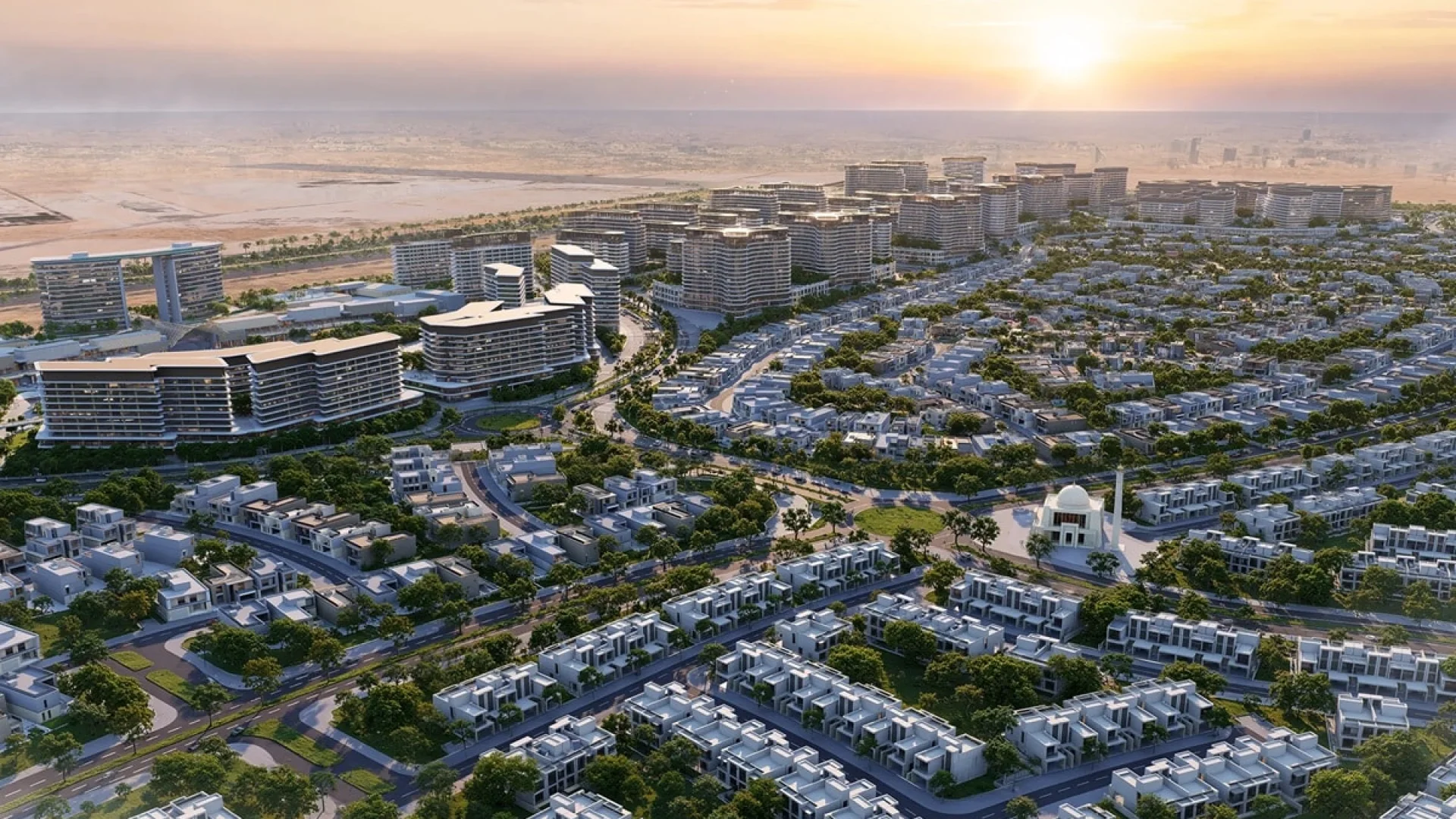

Sobha Realty is taking its Dubai-born development model abroad. The company has secured four sites across the United States and Australia, creating the foundation for its next international growth phase. The move broadens Sobha’s geographic footprint while testing whether its reputation for integrated, quality-led development can travel successfully across very different real estate markets.
On the map, Dubai is no longer the final destination. It is the starting point. Four new markers stretch away from the emirate towards the United States and Australia, turning Sobha Realty’s international ambitions into something tangible.
The Dubai-based developer has secured four sites in the two markets. Details of the individual projects and their delivery schedules are expected to emerge progressively, but the strategic message is already clear: Sobha is moving beyond its home market and preparing to build a broader global platform.
This is not simply a matter of planting a logo in new cities. Land is the foundation of every development story. Once a site is secured, a concept can become a master plan, a master plan can become a neighbourhood, and a neighbourhood can eventually become an address people recognise.
The United States and Australia offer very different environments, yet both are significant destinations for premium real estate. The US combines deep capital markets with a wide range of metropolitan economies and buyer profiles. Australia brings strong urban centres, internationally connected cities and a long-established appetite for well-located residential property.
For Sobha, entering both markets at the same time creates opportunity and complexity. Planning rules vary from state to state and city to city. Construction costs, financing conditions, taxation and buyer preferences are not identical. The company will need to preserve the qualities that define its brand while adapting each project to its local setting.
“Can the Dubai model travel?” That is the question now hanging over the expansion. The answer will depend on more than architecture. It will be shaped by execution, local knowledge and the everyday experience of future residents.
Sobha has built its reputation around a tightly controlled development approach. The company presents itself as an integrated developer, with greater involvement across design, construction, materials and delivery than a purely outsourced model might allow.
In practical terms, that philosophy reaches far beyond a sales brochure. It appears in the feel of a lobby, the precision of a façade, the way a landscaped path meets a building entrance and the quality of finishes a resident touches every day. The difference between an acceptable project and a memorable one is often found in these small moments.
Dubai has given Sobha a high-profile laboratory for this approach. The city is known for ambitious master plans, fast transformation and a highly international customer base. Yet the next test will take place in markets where local expectations and regulatory frameworks are different.
An American buyer may think about commuting patterns, school districts, amenities and resale liquidity. An Australian buyer may place particular emphasis on climate response, outdoor living, energy performance and the character of the surrounding neighbourhood. The product must listen to those differences.
Premium residential development is increasingly about more than the apartment itself. Buyers examine floor plans, natural light, acoustic comfort, open space, building management, energy use and the quality of the wider community. A polished entrance is welcome, but it is not enough.
What matters is the complete sequence of daily life. How long does it take to reach the lift? Is there shade on the walk home? Does the landscape still feel generous after several summers? Are shared spaces useful rather than decorative? Does the building age with dignity?
Sobha’s expansion places these questions at the centre of its international proposition. The company is effectively exporting a promise of control and consistency. It will have to prove that the promise can be delivered under new planning systems, by new teams and in new climates.
The move also reflects the growing confidence of Dubai’s real estate sector. Developers that once focused primarily on the Gulf are increasingly looking outward, carrying capital, brand recognition and project experience into international markets.
For Sobha, global expansion can reduce dependence on a single market and open relationships with new investors and buyers. It can also strengthen the brand among internationally mobile customers who want a trusted developer in more than one country.
But international growth is never frictionless. Projects take years, capital is committed long before revenue arrives, and construction costs can change sharply. Interest rates influence affordability. Planning approvals can take longer than expected. Local partnerships can become decisive.
The four secured sites are therefore an important beginning, not the conclusion of the story. The real measure of success will come later: when plans are approved, cranes arrive, sales begin and residents start judging the result for themselves.
The next phase will involve site planning, approvals, local market research, design development and the creation of delivery structures suited to each location. Sobha will need to balance a recognisable global identity with genuinely local projects.
That balance is often where international developers succeed or fail. A copied product can feel disconnected. A project that abandons the parent brand can lose its point of difference. The strongest outcome lies between those extremes: a development that feels unmistakably Sobha, yet belongs naturally to its city.
Observers will be watching for the type of projects selected for the four sites. Will the company focus on premium apartments, larger master-planned communities or mixed-use destinations? How much emphasis will be placed on sustainability, digital services and shared amenities? And how will the Dubai experience influence the design of homes in very different urban environments?
For now, the map tells the story in its simplest form. Four sites have been secured. Two new markets are opening. A Dubai developer is preparing to turn international ambition into streets, buildings and homes.
From an investment perspective, the expansion offers potential diversification. Sobha will no longer depend solely on opportunities in Dubai, while its international profile may help the company reach high-net-worth buyers seeking property in multiple jurisdictions.
However, the risk profile also becomes more complex. Investors will need to follow land costs, planning milestones, construction budgets, financing arrangements and local demand in each market. Securing a site is meaningful, but it does not by itself guarantee a profitable development. Execution remains the central issue.
For buyers, the move could create access to a consistent international brand with localised projects. For investors, the key milestones will be clear communication, timely approvals, disciplined construction and evidence that the Sobha quality proposition works beyond Dubai. The next chapter will be written on the ground, where drawings become buildings and buildings become communities.