
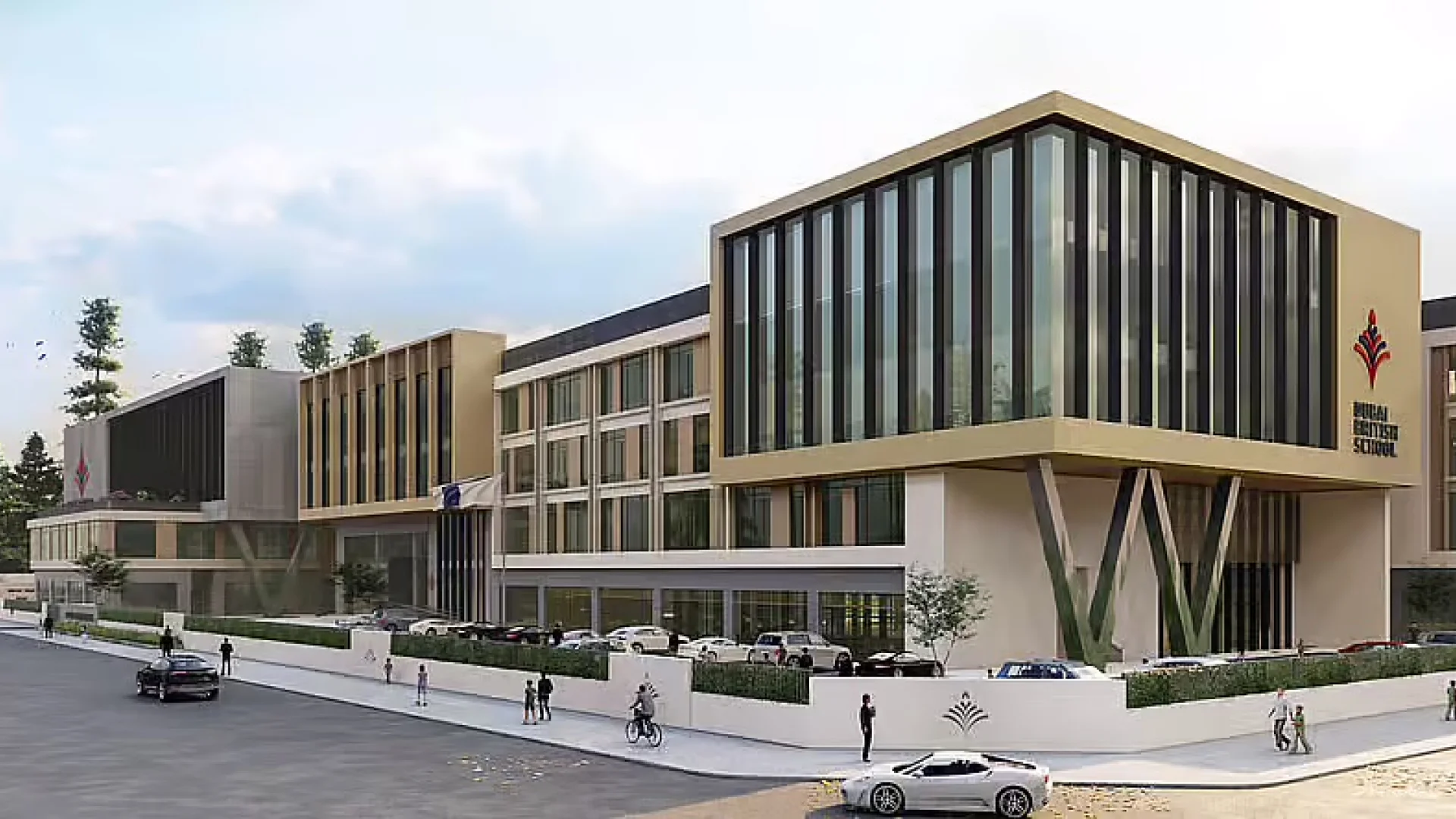

The school gate is where a city’s future queues up—shoelaces, lunchboxes, quick hugs, and parents scanning the clock like a stock ticker. Taleem, one of the UAE’s major private education groups, is set to open three additional schools, creating roughly 5,000 new seats. The expansion lands in a market shaped by population growth and steady family inflows, where waiting lists can define where people live and how they plan their careers. Beyond classrooms, the move signals something broader: education capacity is becoming urban infrastructure—powerful enough to reshape neighbourhood choice, commuting patterns, and even rental demand.
The sun isn’t fully up yet, but the drop-off lane is already a small theatre. A car door clicks. A water bottle rolls. Someone calls out, “Don’t forget your cap!” and a child—half-asleep, half-excited—breaks into a run that turns the morning heat into a warm blur. The security guard nods, the gate swings, and the day begins the way it does across the UAE: fast, bright, and full of plans.
This is the scene Taleem is betting on—again. The UAE-based education group is preparing to open three more schools across the country, adding around 5,000 new seats. For families, that number doesn’t read like corporate strategy. It reads like relief. Like possibility. Like fewer “we regret to inform you” emails and a better shot at keeping siblings on the same campus.
In Dubai and Abu Dhabi, people don’t just ask, “How far is it to work?” They ask, “How far is it to school—at 7:15 a.m.?” That question has its own physics. Ten minutes at midday becomes thirty in the morning. One missed turn can cost a registration appointment. A good school within reach can turn a complicated relocation into something that suddenly feels doable.
Private education plays an outsized role in the UAE’s daily life, especially for expatriate families who rely on international curricula, and for local families who value choice, specialisation, and global pathways. As the country continues to attract talent and investment, more families arrive—and the demand for school places doesn’t simply rise; it tightens. Waiting lists lengthen. Catchment areas gain invisible borders. Neighbourhoods become “school-friendly” or “too far,” often overnight.
Taleem’s plan to add three schools is a direct response to that pressure. More seats mean more timetables, more teachers, more buses, more after-school clubs—and, crucially, more capacity in a market where capacity can feel like the rarest commodity.
Numbers are tidy; mornings are not. A parent at the curb does the math differently. Five thousand seats is the difference between a manageable commute and a daily cross-city sprint. It can decide whether a family chooses to renew a lease, upgrade to a townhouse, or move closer to a school that fits their child’s needs.
From a market perspective, 5,000 new places is material. In specific districts, it can ease demand spikes and spread enrolment across a wider map. It can also create fresh gravitational pull: a new campus becomes a destination, and destinations shape how cities breathe. Roads fill at certain hours. Cafés learn the rhythm of pick-up time. A quiet street starts to sound like whistles, chatter, and bouncing basketballs by late afternoon.
School networks don’t expand on hope alone. Opening new schools is expensive, operationally complex, and reputationally risky if quality slips. When a major operator moves forward, it’s usually because the underlying demand looks durable.
And in the UAE, demand has multiple engines: ongoing population growth, corporate hiring cycles, new residency pathways, and a broader shift toward the country as a long-term home rather than a short assignment. Families who plan to stay plan around schooling. They choose housing around schooling. They build community around schooling.
That’s why Taleem’s announcement lands beyond the education pages. It’s also a lens into how the country is expanding—one classroom at a time.
You can often tell a school is nearby before you see it. You hear it: the squeak of trainers on a court, the metallic clap of a gate, the sudden burst of a bell. You smell it too—fresh cut grass, sunscreen, sometimes that familiar cafeteria note of toasted bread and something sweet.
A new campus doesn’t just arrive; it rewires the routine of a whole area. Retail follows. Services cluster. Playgrounds get busier. The neighbourhood’s identity shifts subtly from “developing” to “settled.” In property viewings, it becomes a line that sells itself: “The school is ten minutes away.”
And it isn’t only about convenience. For many parents, proximity means participation: more time for parent-teacher meetings, school performances, and the everyday moments that make a place feel like home.
“Do you think we’ll get in next year?” a mother asks, phone in hand, as if the admissions office might text at any moment. She’s not alone. In competitive school markets, expansion reads like oxygen. More seats can mean shorter waiting lists, more stable planning, and fewer compromises—especially for families balancing budgets, commutes, and different learning needs among children.
Of course, supply is only half the story. Families also care about standards: leadership teams, teacher recruitment, academic outcomes, and culture. A building can go up quickly; a school community takes time to grow roots. The success of any expansion ultimately depends on whether quality scales with quantity.
By the time the last latecomer slips through the gate, the street outside has calmed. A forgotten name tag sits near the curb like a tiny flag of the morning’s rush. Inside, lessons begin. Outside, the city keeps moving—quietly reorganising itself around where the next classrooms will open.
For real estate investors in the UAE, new school openings are not a soft lifestyle headline—they are a forward indicator of family-led housing demand. Taleem’s plan to add three schools and roughly 5,000 seats suggests sustained confidence in demographic growth and the private-education market, both of which can materially shape residential absorption, rents, and neighbourhood maturity.
1) Rental demand and tenant quality. Families typically sign longer leases and prioritise stability across school years. When a reputable operator expands, areas within practical peak-hour driving distance can see stronger demand for 2–3 bedroom apartments, townhouses, and villas. This can translate into lower vacancy, smoother renewal rates, and less turnover-related cost for landlords.
2) Pricing power through “school proximity.” In fast-growing districts, school announcements can shift perception quickly: what felt “too early” becomes “ready.” That perception often becomes pricing power—especially where the school complements other infrastructure like retail, parks, clinics, and transit links. Investors should track not only current amenities but also the pipeline and the credibility of delivery timelines.
3) Master-planned community momentum. Schools often function as anchors in master plans, accelerating the arrival of supporting services. Where a school opens, you frequently see a stronger case for walkability-oriented micro-markets: cafés that match pick-up times, tutoring centres, sports academies, and convenience retail. These secondary effects improve liveability and can support both capital values and rent resilience.
4) Strategy: timing and radius matter. The strongest investment window often sits between announcement and opening, when sentiment rises but full price re-rating may not yet be realised. Investors should map realistic commute radii during school-run hours (not off-peak) and compare competing supply scheduled for handover in the same period.
5) Practical investor checklist.
Bottom line: expanding school capacity is a tangible, investable form of infrastructure. Taleem’s additional 5,000 seats point to continued family inflows—and that tends to support the very segments of the housing market that reward patient, location-specific investment: well-connected, family-oriented communities where “the school run” is not a burden, but a selling point.