
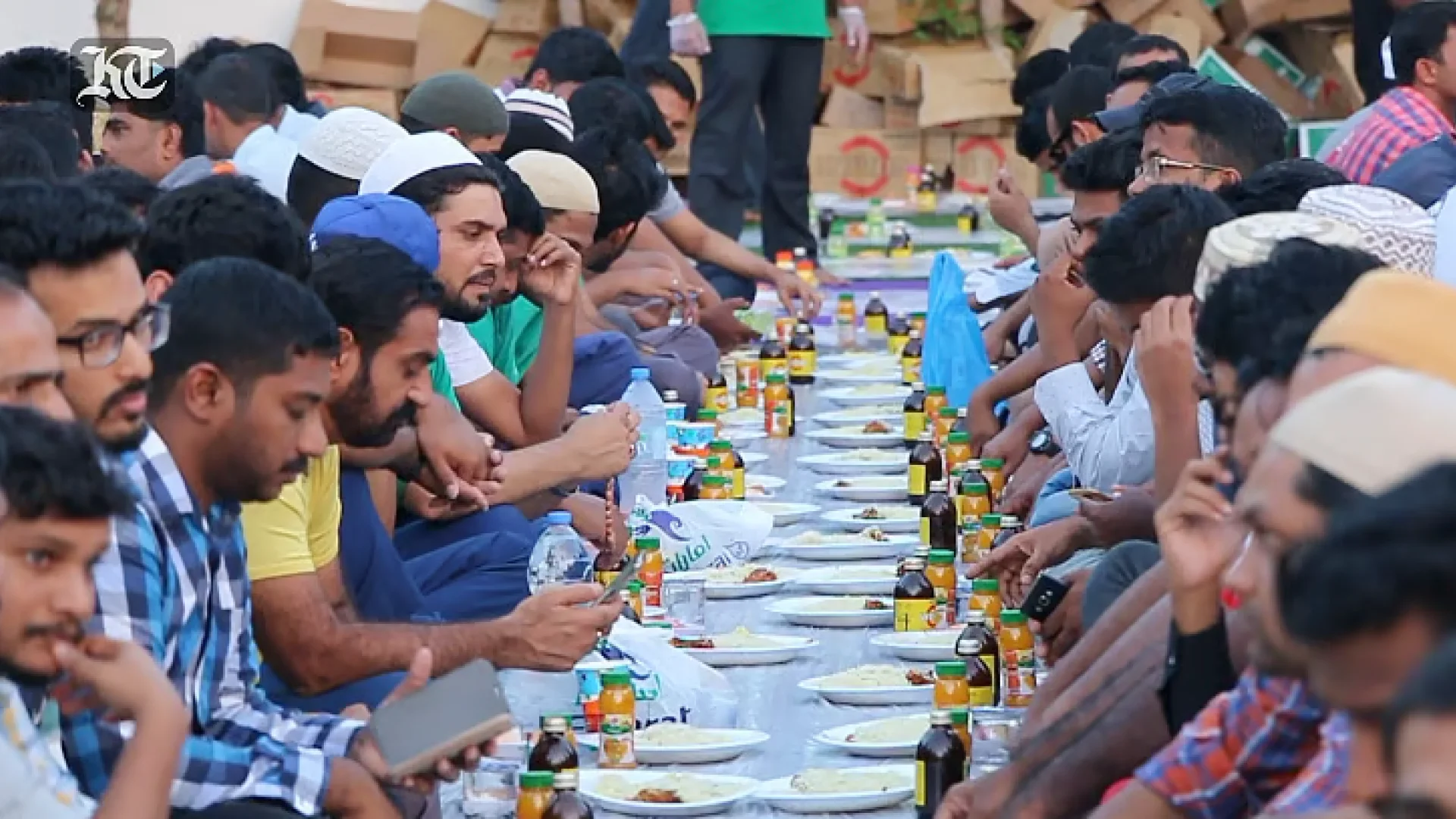

At sunset, the UAE turns into a moving dining room: in Ramadan’s first week alone, about 10 million iftar meals were distributed across the country through tents, mosques, community hubs, worker accommodations, and mobile points. The headline number is the result of high-speed coordination—large kitchens running in shifts, chilled supply chains, permits, transport routes, and volunteers who stack boxes as the call to prayer approaches. It’s a nationwide effort that blends public support with private giving, aiming to reach families in need, commuters, workers on long shifts, and anyone who might otherwise break their fast alone. In a region known for scale, this is scale with a human pulse.
The air changes before you see the clock. A thin breeze slides under the tent’s canvas, carrying the smell of cumin, steamed rice, and cardboard warmed by hands. Somewhere behind you, boxes scrape softly over metal tables—shhk, shhk—like a shy percussion section tuning up. A volunteer in a reflective vest leans in and whispers, “Water to the front, please.”
Everyone knows what minute is coming. The crowd doesn’t rush; it tightens, the way a city tightens around a traffic light about to turn green. Faces tilt toward the horizon between buildings. A boy hugs a tray of dates as if it might float away. Then, in the span of a breath, the call to prayer arrives—an invisible thread pulled through thousands of people at once.
This is what a number looks like when it becomes real.
In the first week of Ramadan, the United Arab Emirates distributed around 10 million iftar meals nationwide. The figure is astonishing on paper. On the ground, it’s astonishing for a different reason: it’s made of tiny decisions repeated at speed—one lid pressed down, one queue redirected, one extra bottle of water placed into the right hand at the right time.
You can tell a lot about an operation by what it does in the last ten minutes before sunset. That’s when everything matters: the rice can’t be late, the chicken can’t be cold, the traffic can’t block the delivery van, the volunteers can’t disappear.
And yet the mood is not frantic. It’s tenderly precise.
“More than yesterday,” a coordinator says, glancing at a list on his phone. He doesn’t sound proud. He sounds responsible. He waves a group of volunteers closer, and they move as one—forming another line, opening another table, making room.
Across the UAE—Dubai, Abu Dhabi, Sharjah, Ajman, Ras Al Khaimah, Fujairah, Umm Al Quwain—authorities, charities, foundations, community groups, and corporate donors have been pooling resources to keep iftar tables full. The meals have been distributed through large public tents, mosque-based programs, neighborhood points, and mobile teams that head toward places where hunger is quiet: worker accommodations, transit corridors, and edges of cities where a long commute can swallow the evening.
During the day, the evidence is easy to miss. A pallet of bottled water outside a community center. A banner tied to a fence. A refrigerated truck parked like it’s taking a nap. But as the afternoon tilts toward evening, the city starts folding itself into a new shape—streets into routes, parking lots into dining rooms, public spaces into invitations.
Under the biggest iftar tents, the light is soft and flattering, like the city is trying to look gentle. Rows of carpets swallow footsteps. Strings of bulbs hang low like patient stars. People arrive in waves, some dressed for prayer, others in work uniforms still dusty from the day.
A man beside you stares at his meal box for a second longer than necessary, as if confirming it’s not a mirage. “I finish late,” he says. “Without this… it would be hard.” He shrugs, embarrassed by gratitude, then smiles anyway.
This is the point of the system: to catch the day’s long tail. To meet workers, commuters, families managing tight budgets, and anyone who might otherwise break the fast with nothing but a vending-machine snack and a silent phone screen.
Large-scale cooking has its own kind of poetry, and its own discipline. Portions must be consistent. Storage must be safe. Timing must be exact. When you watch volunteers moving meal boxes from stacks to tables, you realize the box is not just packaging—it’s a promise that arrives on time.
Menus vary by initiative and location, but the logic is familiar: nourishing, transport-friendly, and respectful of tradition. Dates and water are almost always there—the classic first step of iftar. Then rice dishes, bread, lentils, yogurt, fruit, sometimes something sweet tucked in like a small celebration.
And every night, you see the same micro-moments of generosity: a volunteer slipping an extra bottle of water into a bag. A stranger nudging a tray forward. Someone murmuring, “Take one more,” as if abundance is a thing you can pass hand to hand.
Ten million meals in a week is not only charity—it is logistics wearing a human face. It means kitchens running in shifts, supply chains that keep ingredients fresh, hygiene standards that hold under pressure, and traffic plans that prevent bottlenecks at the exact hour when everyone wants to be somewhere else.
It also means coordination between sectors. Public institutions help structure and regulate. Charities and foundations mobilize networks and funding. Businesses contribute supplies, transport, manpower. Volunteers—students, professionals, retirees—become the connective tissue, the ones who translate strategy into a meal placed in front of someone who is hungry.
A volunteer at the end of a table presses lids shut with both palms, rhythmically. Tap. Tap. “You’re welcome,” she says before anyone has thanked her, because she’s already turning to the next person. In a few minutes, the line will be gone, the tables will be cleared, and the tent will exhale like a theatre after the final scene.
The UAE is famous for scale—towers, highways, megaprojects that look like they were drawn with a ruler. But the most revealing kind of scale is the one that doesn’t need to shine. Ten million iftar meals is a record made of rice, dates, and water. It doesn’t belong to a brand. It belongs to an ecosystem.
And it changes how you see the city. A parking lot becomes a gathering place. A community center becomes a dining hall. People who would never meet in daily life sit shoulder to shoulder, united by an ancient rhythm: wait, listen, sip water, eat, breathe.
“Sit here,” an older man says, shifting over on the carpet to make space. The spot beside him is warm from the day. You sit down. The call to prayer begins, and you feel the astonishing softness of a crowd becoming quiet together.
For real estate investors, the “10 million meals in one week” milestone is more than a feel-good statistic—it’s a live demonstration of the UAE’s operational capacity during peak daily demand. The same ingredients that make mass iftar distribution possible—permitting, security, traffic management, reliable utilities, efficient logistics, and cross-sector coordination—are the fundamentals that de-risk large real estate projects and improve asset performance.
1) Community infrastructure adds location value
Iftar tents and neighborhood distribution points rely on accessible, safe, well-managed public and semi-public spaces. Master-planned communities that offer flexible plazas, shaded walkways, multi-use halls, and generous drop-off zones become more resilient and attractive to tenants. Investors should treat “community-ready design” as a differentiator that supports occupancy and rent stability, particularly in family-oriented districts.
2) Logistics and food-support ecosystems benefit industrial assets
Large-scale meal programs increase seasonal and recurring demand for:
While Ramadan is seasonal, the underlying logistics capability is year-round—and often overlaps with e-grocery, catering, hospitality supply chains, and municipal preparedness planning.
3) Residential resilience and tenant retention
Cities that can deliver social support at scale tend to signal stability—important for mid-market residential investments. Worker accommodations, commute-heavy zones, and mixed-income neighborhoods are directly impacted by meal distribution networks. Assets near strong community services may see reduced churn and reputational uplift, supporting steadier cash flows.
4) ESG becomes measurable, not abstract
For institutional capital, partnerships around Ramadan initiatives create quantifiable “S” outcomes: meals supported, volunteer hours hosted, community spaces provided. Landlords and developers can integrate such programs into property management and placemaking, strengthening ESG reporting while deepening community ties—an edge in competitive leasing markets.
5) Retail & F&B: understanding Ramadan footfall patterns
Ramadan shifts demand toward evenings and late-night hours, boosting the importance of parking, transit access, and tenant mixes that perform after sunset. Investors in neighborhood retail and mixed-use should model these temporal patterns, as operators who align staffing, menus, and delivery capabilities can outperform—supporting stronger rental negotiations and tenant longevity.
Investor takeaway: The first-week “10 million iftars” headline signals governance capacity, community-centric placemaking, and mature urban logistics. For investors, it reinforces the appeal of UAE assets that combine accessibility, flexible public realm, and operator-ready infrastructure—especially in mixed-use communities, urban logistics, and well-serviced residential catchments.