
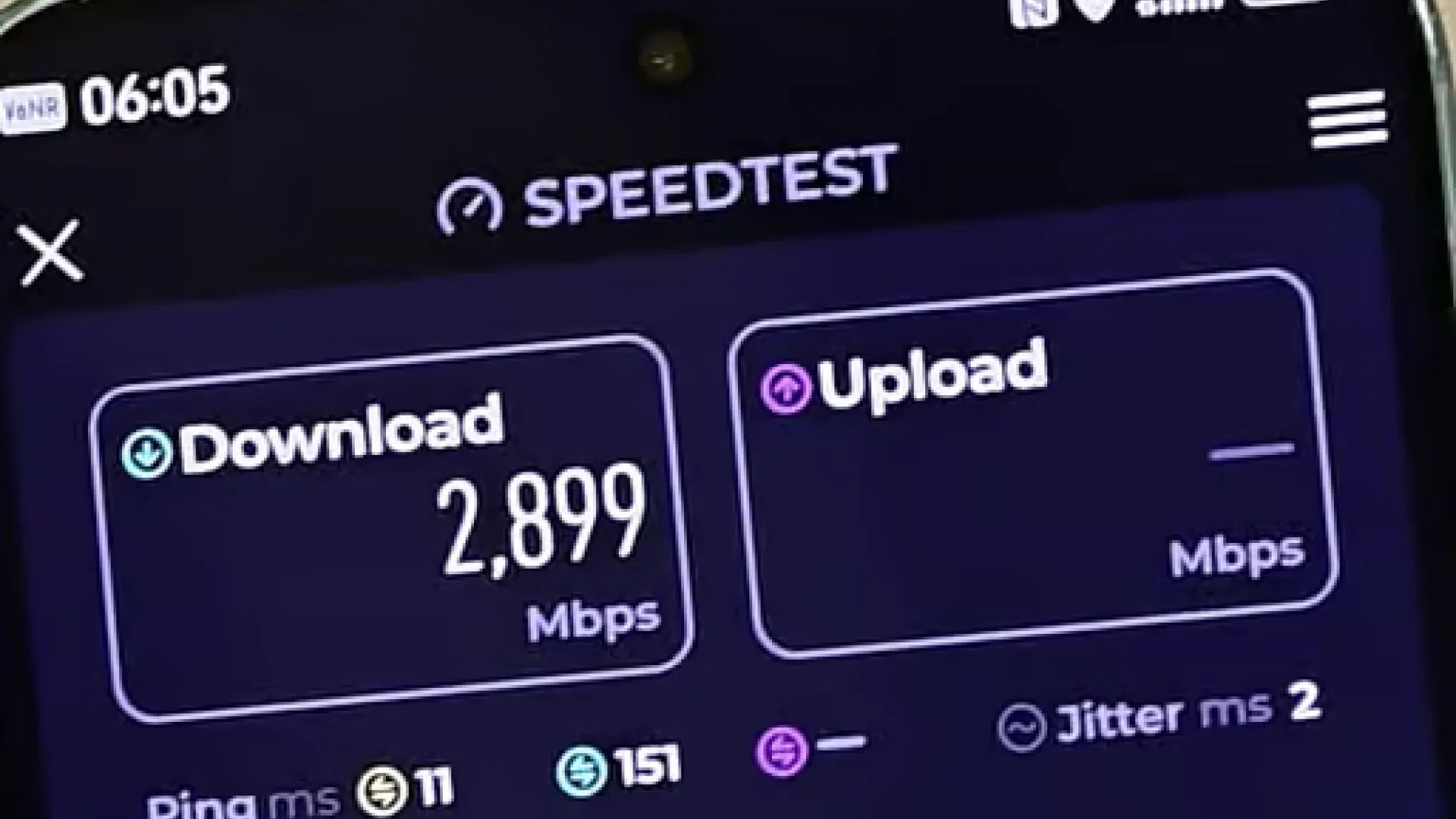

You notice it first in the tiny pauses that vanish: a video call that doesn’t hiccup in the lift, a massive upload that finishes before you’ve taken your next sip of coffee. The UAE is welcoming 5.5G—often framed as 5G-Advanced—built to deliver higher peak speeds, lower latency and stronger performance in crowded, real-world locations. Huawei’s Pura 90s series is being positioned as a showcase device family for this new network chapter, reflecting how mobile life is shifting from “connected when convenient” to “connected by default.” For cities that grow vertically and move fast, that shift isn’t cosmetic—it’s structural.
The mall is doing what UAE malls do best: swallowing the heat outside and exhaling cool air and glossy light. Somewhere near the coffee counter, a barista calls out an order. Somewhere above, a fountain throws silver arcs into the air. And at a small table by the railing, a man holds his phone like it’s a compass.
“Try it now,” his friend says—half challenge, half dare.
A tap. A pause so short it barely exists. Then the man’s eyebrows lift. “Done,” he says. Not a message. Not a payment. A full-fat video upload, the kind that used to demand patience, Wi‑Fi, and a few minutes of your life you’d never get back.
This is how 5.5G arrives in the UAE: not as a diagram on a stage, but as a sensation. A missing wait. A smoother moment. A quiet confidence that the network will keep up with you—inside towers, between stations, in the thick of weekend crowds.
5.5G—often described as 5G-Advanced—is being introduced as the next step on top of existing 5G. The promise is familiar yet meaningful: more speed, more capacity, and better responsiveness. But the real story isn’t just “faster.” It’s more consistent when the city is at its busiest.
In practical terms, it aims to improve performance where networks typically feel strained: malls, business districts, transport hubs, high-rise clusters, major events. Think fewer stutters on video calls, smoother cloud apps on the move, quicker uploads for creators, and a stronger baseline experience when thousands of devices compete for the same airspace.
Networks are invisible. You can’t hold 5.5G in your hand. So launches often need a tangible symbol—something that says, this is what the next chapter feels like. In the coverage around the UAE’s 5.5G arrival, the Huawei Pura 90s series is presented as that symbol: a device lineup positioned to showcase the network’s upgraded capabilities.
It makes sense. The modern smartphone isn’t a “phone” anymore; it’s an office, a camera rig, a wallet, a studio, a gaming console, a translator, a navigation system, a remote control for your life. When all of those roles run at once—cloud sync in the background, video calls in the foreground, AI features pulling data on demand—the network stops being a convenience. It becomes infrastructure.
If you want to understand why 5.5G matters in the UAE, don’t picture an empty lab. Picture a Friday night. Picture a metro platform as the doors open. People step out in waves—tourists dragging suitcases, office workers sending last-minute voice notes, couples filming a quick clip for social, drivers checking maps, riders ordering rides, kids streaming cartoons, everyone tapping and scrolling as if the air itself is a touchscreen.
That’s when the difference between “fast in theory” and “fast in reality” becomes personal.
Because in dense, vertical cities, the network isn’t competing with distance—it’s competing with demand. And demand, here, is relentless.
Mobile network marketing loves peak numbers. But users don’t live at peak. They live in corridors and elevators, in underground parking, in taxi back seats, in glass-walled offices where signals bounce and fade. The shift toward 5.5G is, at its core, about narrowing the gap between those glossy peak claims and the messy reality of everyday movement.
In other words: less waiting, less guessing, less “I’ll send it when I’m on Wi‑Fi.”
The most convincing technology upgrades are the ones you stop noticing—because they remove the small annoyances you had accepted as normal.
With 5.5G, those annoyances might look like this: the frozen face mid‑sentence on a call; the upload bar that crawls; the sudden dip in quality as you walk from the lobby into a lift; the lag that turns a game into a chore. Remove enough of those tiny frictions, and behaviour changes.
People create more on the go. They rely on cloud tools without fear. They take meetings from wherever they are, not wherever the Wi‑Fi is best. They treat mobile connectivity as the default, not the backup.
The UAE has a particular rhythm: ambitious, fast-moving, and unapologetically modern. New districts rise, transport links multiply, and digital services are pushed into daily life with unusual speed. In that context, upgrading mobile infrastructure isn’t just a tech headline. It’s part of the country’s broader narrative—being ready for what’s next, and being seen as ready.
And because the UAE’s cities are magnets for visitors, business travellers, and remote teams, the network experience isn’t judged only by residents. It’s judged by everyone who lands, connects, and expects the same level of smoothness they saw in the skyline outside the taxi window.
Back at the café table, the two friends have moved on to other tests—sending files, opening cloud documents, hopping between apps. The conversation is light, almost playful, but the verdict is serious in its simplicity.
“It doesn’t load,” one of them says, looking at the screen as if it’s misbehaving. Then he corrects himself. “It just… appears.”
That’s the point. The future of mobile connectivity isn’t only about being faster. It’s about feeling frictionless—like the city itself, always in motion, always on.
In real estate, value often follows infrastructure—sometimes roads and rail, sometimes schools and parks, increasingly also connectivity. As 5.5G expands, it can reshape how tenants, guests, and businesses evaluate a building or district, especially in a market defined by high-rises and mixed-use destinations.
Investment lens: In competitive districts of Dubai and Abu Dhabi, digital infrastructure can become part of the differentiator that supports occupancy, lease velocity, and guest satisfaction. Projects that plan for high-quality indoor coverage and integrate smart services may translate smoother connectivity into stronger operational performance—turning an invisible network upgrade into visible commercial advantage.