
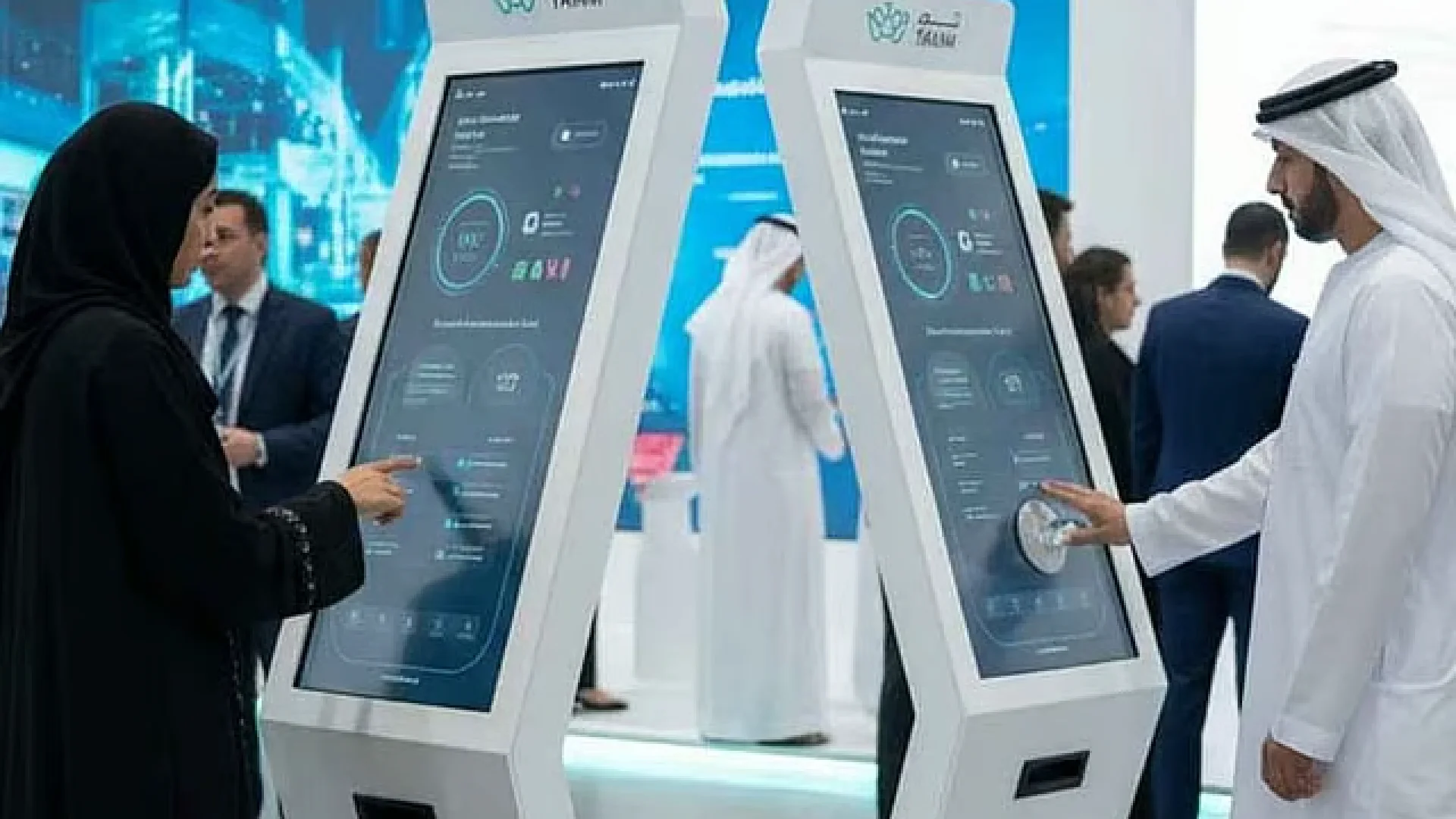

In the United Arab Emirates, artificial intelligence is moving from a futuristic promise into ordinary working life. It is helping companies screen candidates, enabling public bodies to process requests and changing the skills employees need every day. The result is not simply fewer tasks for people, but a new division of labour in which machines handle patterns and repetition while humans provide judgement, creativity and accountability.
The working day can now begin with a notification rather than a conversation: a candidate has been matched to a vacancy, a form is missing one document, a system has spotted an operational problem. Across the United Arab Emirates, artificial intelligence is slipping into the background of professional life – quick, quiet and increasingly practical.
The Gulf News report describes a transformation that reaches well beyond technology companies. Recruitment, government services and routine business processes are all being reshaped. AI can sort information, identify patterns and recommend next steps. For employees, that may mean less repetition and more time for judgement. It also means that digital literacy is becoming part of almost every profession.
The UAE has spent years building a reputation for ambitious digital transformation. Government entities and private companies are testing intelligent systems to make services faster, more targeted and easier to access. A process that once required several forms, visits or waiting periods can increasingly begin online and move through automated checks.
“The system has prepared the first draft,” an employee might say before reviewing the result. That sentence captures the new relationship between people and technology. AI does not automatically remove the human role. It changes where human attention is needed. Software searches, sorts and repeats. People verify, explain, decide and take responsibility.
Recruitment is one of the clearest areas of change. Companies can process large volumes of applications, compare qualifications and identify potential matches more quickly. Digital tools can also support the search for international professionals, an important advantage in a labour market shaped by global mobility and demand for specialised skills.
Yet a CV is never the whole story. Motivation, judgement and cultural fit are difficult to reduce to keywords. An algorithm may highlight a promising profile, but the final decision still requires human insight. The best recruitment systems therefore work as assistants, not as unquestioned gatekeepers.
Public services are changing in similarly practical ways. Chatbots can answer routine questions. Intelligent platforms can route applications to the right department. Data analysis can help authorities anticipate demand and identify bottlenecks before they become visible to the public.
Picture a small scene. An entrepreneur submits an application late in the evening. The system checks the information, points out a missing attachment and explains the next step. No trip to a service centre. No unanswered phone call. No uncertainty about what happens next. Such moments may seem ordinary, but they can alter the relationship between citizens, companies and institutions.
As technology takes over repetitive work, other abilities become more valuable. Employees do not all need to become software engineers. They do need to understand how AI tools operate, what data they use and where their recommendations may fail. Critical thinking, communication, creativity and problem-solving become practical career assets.
For employers, training is no longer an optional benefit. Buying new software without preparing the people who use it rarely delivers the promised transformation. Organisations that combine technology with clear processes, human oversight and continuous learning are more likely to gain lasting value.
The deeper AI moves into decision-making, the more important transparency becomes. Applicants want to know how their data is assessed. Customers expect understandable answers. Employees need confidence that changing roles will come with support rather than surprise.
The essential question is therefore not only what AI can do, but what it should be allowed to do. Data protection, algorithmic bias and responsibility for automated decisions will shape the labour market just as strongly as computing power. Trust is not a technical add-on. It is part of the service.
The impact reaches the property market. AI-focused companies and digitally skilled workers strengthen locations that combine international connectivity, efficient administration and innovation infrastructure. Office buildings in such markets must offer more than desks. They need flexible layouts, reliable digital networks and spaces where teams can meet, collaborate and learn.
Investors are increasingly interested in properties that support hybrid work and smart operations. High-quality connectivity, adaptable floor plans, energy-efficient systems and data-enabled building management can improve both user experience and operational performance. Predictive maintenance, intelligent cooling and occupancy analysis may reduce waste while making buildings more responsive.
The future office is not necessarily an empty room watched by machines. It is a place where technology takes care of repetition and people regain time for ideas. In the UAE, that transition is already becoming part of the landscape.