
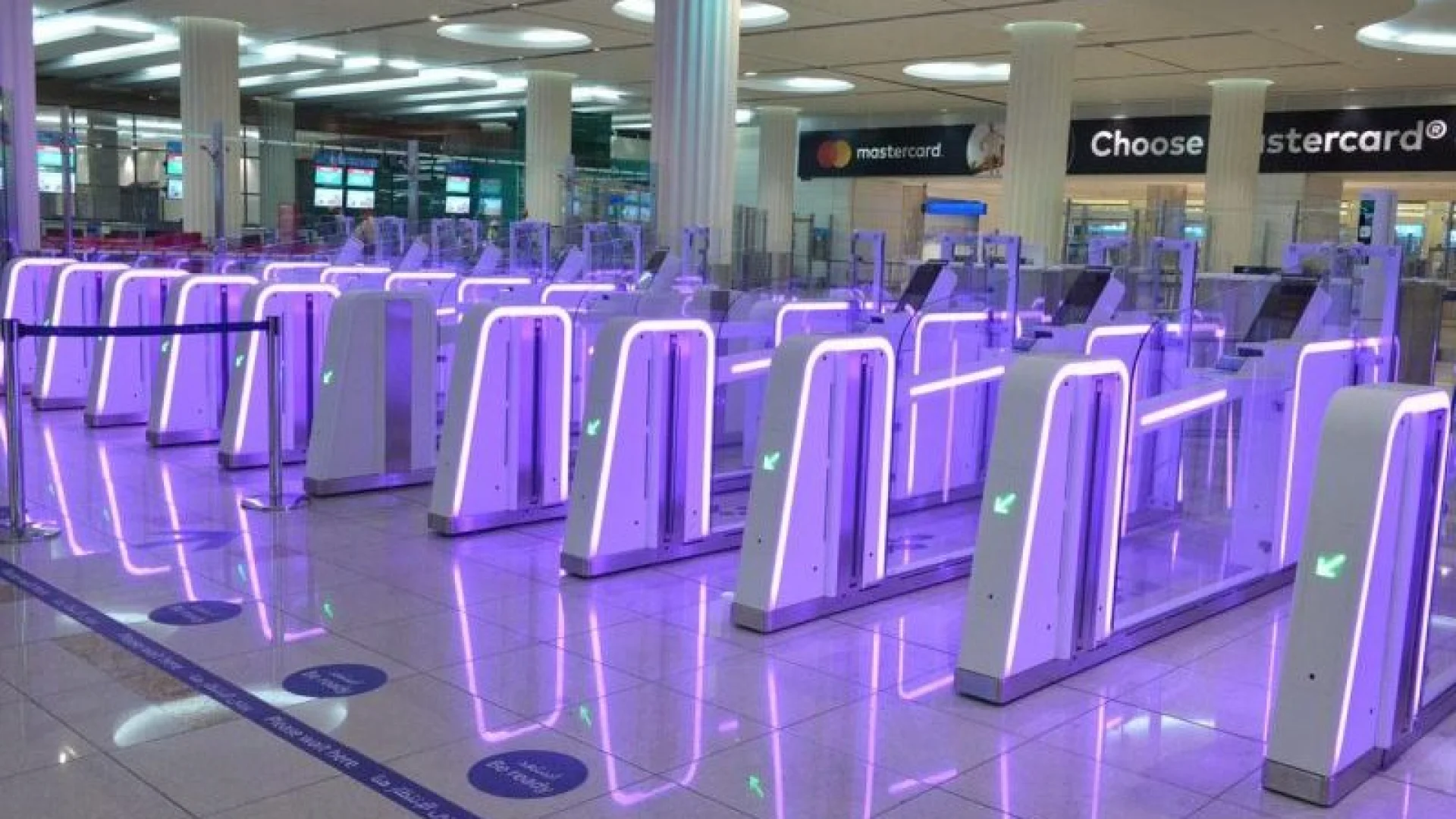

A soft chime, a camera’s calm gaze, and the barrier opens as if it recognizes you. Across the UAE, airports are accelerating a shift toward passport-free—or at least passport-light—travel, leaning on biometric identity, automated gates, and smarter border processing. The aim is simple and ambitious at once: move more people, more smoothly, with security embedded in the flow rather than stacked in a line. For a country built on connectivity, the impact reaches beyond terminals into tourism, business travel, and the investment story of place.
The first thing you notice is what’s missing.
No tight knot of travelers inching toward a counter. No passports fanned open like playing cards. No resigned sighs. Instead, there’s a quiet lane edged with glass and brushed steel, an e-gate blinking green, and a single instruction that feels almost intimate for an airport: “Please look straight ahead.”
You do. A second passes—maybe two. The gate unlocks with a soft click. And just like that, the border becomes a moment instead of a memory.
This is the direction the United Arab Emirates wants air travel to move: toward journeys where identity is verified by biometrics and the traditional ritual of stamping and scanning documents fades into the background. Dubai, Abu Dhabi, and other UAE hubs are expanding automated border pathways—e-gates, smart processing, biometric checks—so the airport feels less like a series of obstacles and more like a continuous corridor.
In practice, “passport-free travel” isn’t a promise that documents vanish overnight. It’s a redesign of the sequence. Instead of presenting a passport at multiple touchpoints, the traveler’s identity can be confirmed using biometric markers—most commonly facial recognition and, in some systems, iris verification—linked to the relevant travel and immigration permissions.
The effect is subtle but powerful: fewer repeated checks, fewer bottlenecks, and more predictable passenger movement. Airports stop behaving like crowded funnels and start behaving like well-timed valves.
Watch the lane for a minute and you’ll see it. A family with a stroller glides forward without the stop-start rhythm of old queues. A frequent flyer who usually multitasks on autopilot looks up, surprised that it’s already their turn. A couple exchange a quick look—that was it?—then break into the relieved laughter of people who expected friction and found none.
Airports in the UAE are not just infrastructure; they’re national posture. Connectivity is part of the country’s identity, and hub performance is measured in minutes as much as in aircraft movements. When passenger volumes surge in waves—arrivals, departures, transfers—every slow checkpoint becomes a choke point that ripples through the entire terminal.
Biometric automation targets three outcomes at once:
It’s easy to dismiss that last point as branding—until you realize how deeply an arrival experience colors a trip. The border is the first handshake of a country. If it’s quick and calm, everything that follows feels a little more possible.
E-gates don’t try to look futuristic. They look finished. Clean lines, clear signage, minimal drama. The technology is doing the heavy lifting offstage—matching a face to a secure identity record, checking permissions, triggering an approval—and the traveler gets a single, simple outcome: proceed.
In UAE airports, this automated infrastructure is being expanded and refined to support large-scale passenger flows. The vision is a border process that can scale with demand, especially in hubs where connecting traffic is the lifeblood. The passport becomes less of a physical prop and more of a data point in a trusted chain.
“Here,” a staff member says, gesturing toward the green-lit lane. Their voice carries the confidence of someone who has watched this work hundreds of times. “Just look at the camera.”
A traveler steps in, shoulders slightly tense. The scanner’s light catches their face. A tiny pause. Then the gate releases. The traveler’s posture changes instantly—chin up, breath out—as if the airport has quietly given them time back.
The most significant change isn’t just speed; it’s choreography. Traditional immigration control feels like a hard stop: you wait, you present documents, you are judged, you are released. Biometric systems distribute that verification differently, embedding it into the flow so it feels less confrontational and more continuous.
That doesn’t mean security disappears. It means security becomes more data-driven and less dependent on a single human moment at a counter. For airports, the payoff is operational: fewer pressure points, better queue management, and a border process that can keep pace when multiple wide-body flights land within minutes of each other.
Zoom out, and you can measure efficiency in minutes. Zoom in, and you can measure it in moods. The travelers who benefit most aren’t necessarily the ones who love technology—they’re the ones who love certainty.
And there’s a psychological shift that’s hard to quantify but easy to recognize. If you step off a long-haul flight and don’t get trapped in a slow-moving line, you don’t feel like you’re paying an entry fee in patience. You feel—immediately—like you’ve arrived.
For the UAE, this isn’t only about convenience. It’s a strategic signal to tourists, airlines, and global businesses: the country is investing in frictionless mobility. In a world where cities compete for conferences, headquarters, stopovers, and talent, the smoothness of movement becomes part of the pitch.
When travel is easier, people travel more. They schedule the extra meeting. They extend the weekend. They choose the hub that makes the journey feel light. That behavioral shift—multiplied by millions of passengers—turns border efficiency into economic leverage.
Real estate, at its core, is the pricing of access—access to jobs, leisure, services, and time. Biometric, passport-light airport processes don’t just change the first hour of a trip; they change how near a place feels to the rest of the world.
That matters for investors and developers because “connectivity premium” is real. As airports become more efficient, the value of being well-positioned within the airport–city ecosystem tends to rise, especially in segments tied to travel frequency.
Investor takeaway: When assessing opportunities, look beyond kilometers to door-to-door minutes—including typical immigration time. In a biometric border environment, neighborhoods and projects that sit on direct routes between the airport, business districts, and established residential communities may gain an edge. The glass gate at arrivals isn’t just an airport upgrade; it’s a quiet piece of city-making.