
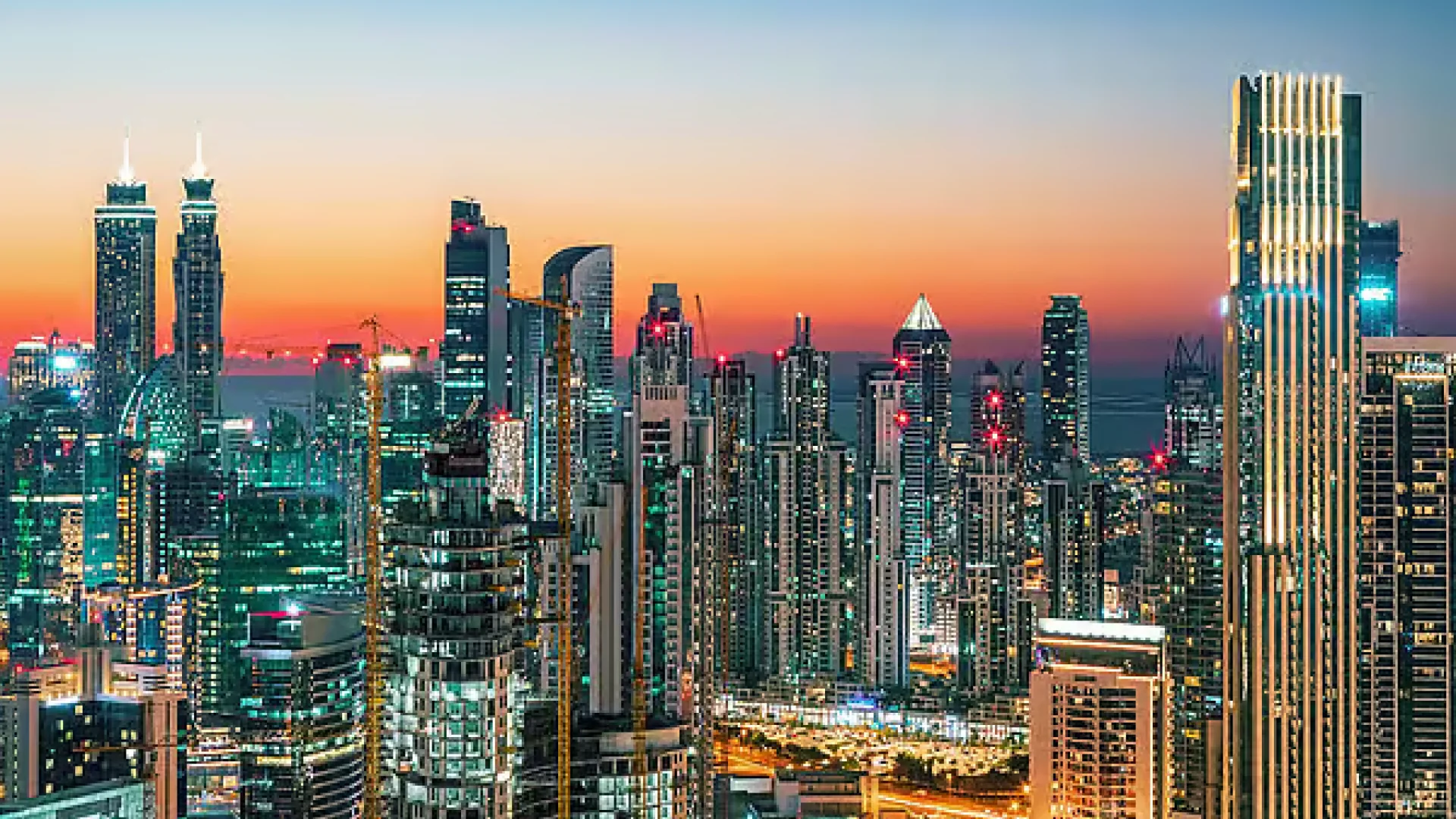

The UAE job market is gearing up for a fresh hiring surge in 2026, with employers eyeing stronger recruitment across several cornerstone sectors. Digital transformation and cybersecurity needs are pushing demand for tech talent, while ongoing infrastructure and construction activity keeps project roles hot. Healthcare continues to expand with population growth and higher service expectations, and tourism-driven hospitality remains a reliable engine for new openings. As hiring accelerates, the ripple effects will be felt far beyond HR—right into commutes, rents, neighbourhoods and investor strategy.
The skyline is still there—glass, steel, sun.
But this morning, the real action is on a screen.
In a Dubai hotel lobby that smells faintly of espresso and new leather, a recruiter sits with a laptop balanced on one knee, thumb flicking through candidate profiles like cards in a fast game. A young engineer in a crisp shirt steps aside to take a call. “Yes,” he says, half-whisper, half-grin. “I can start next month.”
You can feel it in the pace of the room: the UAE’s labour market is tightening and speeding up again. Employers are signalling that 2026 is likely to bring heavier recruitment in multiple sectors—an across-the-board push rather than a single-industry spike. And when hiring turns into a wave, it doesn’t just change payrolls. It changes cities.
Ask different people what’s driving recruitment and you’ll get different entry points—technology, mega-projects, population growth, tourism. The truth is that all of them are pulling at once, like several tides meeting in one channel.
Companies are upgrading systems, moving workloads to the cloud, automating operations, and building digital customer journeys that have to work flawlessly. At the same time, the UAE’s construction and infrastructure pipeline continues to demand engineers, project managers, planners and on-the-ground teams. Healthcare providers expand capacity and services. Hotels, restaurants, entertainment venues and event operators keep staffing to match visitor demand and year-round programming.
The result: employers expect broad hiring momentum—especially where skills are scarce and execution speed matters.
There are cranes you can photograph, and then there are the cranes no one sees—data migrations, security patches, platform rebuilds, new apps quietly replacing old processes.
Step into a modern office in DIFC or a business park off Sheikh Zayed Road and you’ll hear the language of urgency: “rollout,” “sprint,” “incident,” “uptime.” A product manager leans over a screen and says, almost like a confession, “If this goes down, sales goes down with it.”
Hiring in tech and digital roles is expected to remain strong, with particular pull for:
What’s notable: demand isn’t limited to “tech companies.” Retailers, logistics firms, banks, property groups and hospitality brands are all building in-house digital muscle. In the UAE, tech is no longer a sector—it’s a layer across sectors.
Late afternoon in Abu Dhabi, the light goes honey-coloured and the site looks momentarily calm—until you step closer. Then it’s all vibration and precision: the clink of metal, the clipped calls, the steady rhythm of work that has deadlines in its bones.
Employers expect continued recruitment in construction and project-driven roles in 2026, spanning both technical expertise and the management backbone that keeps large developments on track:
These roles don’t exist in isolation. Every major project brings a small economy with it—suppliers, logistics, maintenance, retail demand, housing needs for staff at different income levels. In real estate terms, a project cluster is often a demand cluster in disguise.
In a clinic waiting area, the air-conditioning is a little too cold, the lighting a little too bright. A mother adjusts a child’s mask. A nurse glides past with that calm speed that says: there is always another patient, another task, another minute to save.
Healthcare is expected to remain a hiring-heavy field as the UAE’s population grows and as service expectations rise. Demand typically spans clinical staff, nursing, allied health professionals, and the operational roles that make modern care work—administration, patient experience teams, scheduling, billing, and digital health support.
Healthcare is also a talent magnet issue: cities that want to attract global professionals increasingly compete on quality of life, and quality of life includes accessible, high-quality medical services.
In Dubai, you can tell the season by the hotel elevators. In peak moments, they don’t stop moving—families with beach bags, business travellers with carry-ons, event staff in black uniforms and earpieces, couples dressed for dinner reservations that were booked two weeks ago.
Tourism-linked industries are expected to keep recruiting in 2026: hotels, restaurants, leisure and entertainment, events and venues, plus the service functions behind them—sales, marketing, customer operations, procurement, transport.
In a market that sells experience, staffing is the product. A great concierge, a fast check-in, a spotless room, a perfectly timed meal—these are labour-intensive details. And when visitor volumes and event calendars stay dense, hiring stays constant.
Some of the strongest hiring doesn’t happen on a stage—it happens in the background. Financial services continue to pull talent in risk, compliance and digital operations. Retail and logistics hire to keep supply chains resilient and delivery times competitive, often leaning on data-driven planning and operational efficiency.
As the economy becomes more interconnected, these “support” sectors become growth sectors in their own right.
Across industries, a shared pattern emerges: employers want people who can deliver change, not just document it. Job descriptions read like mini-missions: build, secure, optimise, scale.
And then there’s the unspoken requirement: adaptability. Multinational teams, fast timelines, pragmatic decision-making. In the UAE, speed is a workplace culture—and a survival skill.
More hiring doesn’t stay inside office walls. It spills into the city.
It shows up in the Monday traffic. In the sudden shortage of viewings for well-priced apartments. In the new café that opens because footfall is back at 9am. In the co-working floors that quietly add more desks.
Outside the hotel, the recruiter finally closes his laptop. “Two years ago,” he says, “people asked mostly about salary. Now they ask about housing first. Commute. Schools. Where they can live while they figure everything out.”
That’s the hinge point: when multiple sectors recruit at once, the question becomes less “Who’s hiring?” and more “Where will everyone go?”
A multi-sector hiring upswing in the UAE is a direct demand catalyst for real estate—residential first, but also offices, hospitality-adjacent assets, and neighbourhood retail. The reason is simple: new jobs translate into relocations, household formation, short-term stays, and upgraded living preferences. When hiring is broad (tech + construction + healthcare + services), demand becomes diversified—and diversification tends to stabilise occupancy.
1) Residential rentals: absorption and pricing power
An expanding workforce typically boosts rental absorption, particularly for well-located, mid-market units that suit young professionals and small families. Investors often find the most resilient demand in practical formats: efficiently planned studios and 1–2 bedroom apartments near transit, employment nodes and everyday amenities. A hiring surge can tighten vacancy and support rent growth, especially in communities with limited near-term supply.
2) Micro-markets matter more than headlines
In 2026, the winning strategy is likely to be neighbourhood-specific rather than city-wide. Track where employers are clustering—business districts, tech hubs, healthcare corridors, and major project zones. Locations that minimise commute time tend to outperform, because renters and buyers increasingly price “minutes” as much as they price square metres.
3) Offices: flight to quality and flexibility
More hiring can lift office demand, but it often concentrates in high-quality buildings and flexible formats. Tenants prioritise efficient floorplates, modern MEP, strong connectivity, and service-led buildings. Flex offices and managed workspaces can benefit because they allow companies to scale headcount quickly without long lead times.
4) Hospitality-adjacent living: short stays, project teams
Construction and events create temporary housing needs—project teams, consultants, seasonal staff. Assets positioned between hotels and traditional rentals (serviced apartments, aparthotels) may see stronger utilisation, depending on local regulations, operator capability and competition.
5) Risk lens: supply pipeline, fees, and regulation
A hiring boom can mask oversupply—until handovers peak. Investors should evaluate delivery pipelines, service charges, competing inventory, and rules around short-term letting. Financing conditions and exit liquidity vary by community, so underwriting should be micro-market specific.
Investor takeaway: If 2026 hiring expands across multiple sectors, demand is likely to remain sturdy in well-connected, amenity-rich communities. The best-positioned assets are typically those that match real workforce needs: livable layouts, reliable building quality, and locations that reduce commute friction.