
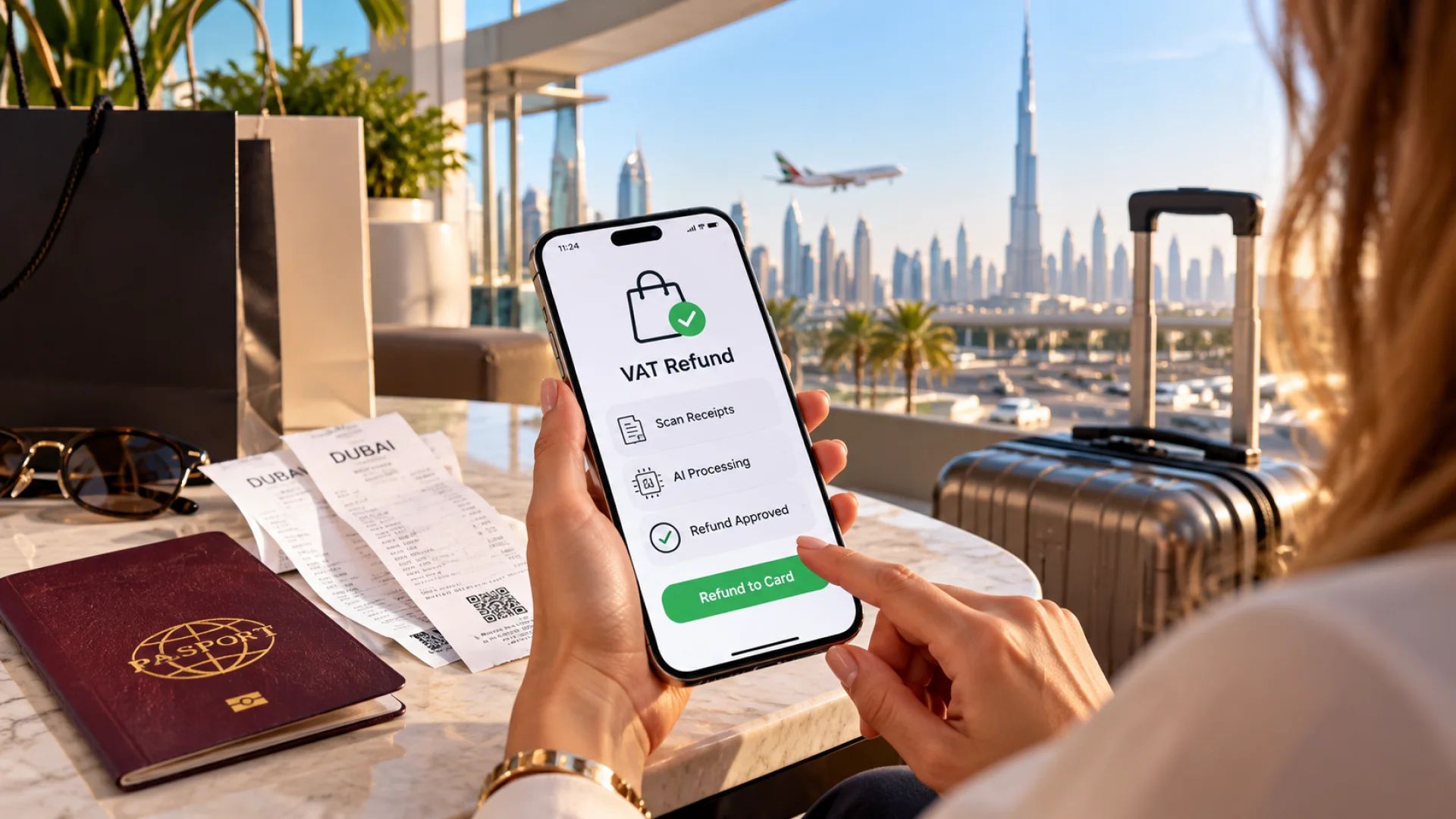

The last airport stop after a shopping trip in the UAE is becoming more digital. A new paperless, AI-powered application is designed to simplify the tourist VAT-refund process by linking purchase data, verification and departure procedures through a smartphone-based experience. The initiative supports the UAE’s wider push for seamless government services and strengthens its appeal as a global shopping and tourism destination.
The suitcase is packed, the boarding pass is ready and the airport lights are already reflecting across the glass. Then comes the familiar question: where are the receipts? In the UAE, that end-of-trip ritual is being redesigned. Tourists can now use a paperless, AI-powered app to manage the process of reclaiming VAT on eligible purchases.
The new digital service is intended to make tax-free shopping easier, faster and more transparent. Instead of relying on a collection of printed invoices and manual steps, visitors can access their transaction information digitally. The application supports the journey from purchase to verification and is designed to reduce friction at the point when travellers are preparing to leave the country.
“Do I still need to stand in line?” The answer depends on the applicable verification requirements and the airport procedure. The app does not remove the rules governing VAT refunds. Goods must still be eligible, purchased through participating retailers and exported from the UAE. But the paperwork surrounding those rules is being replaced by a more connected digital process.
The change is easy to imagine in a busy terminal. A tourist opens the app instead of searching through a wallet. Purchase details are presented electronically. Data supplied by retailers can be checked more efficiently, while artificial intelligence helps process and organise the information behind the scenes.
That matters in a country where shopping is a major part of the visitor experience. Dubai’s malls, luxury boutiques and specialist stores attract travellers from around the world. Abu Dhabi, too, combines retail, culture, hospitality and major international events. For these visitors, the tax-refund journey is part of the final impression of the destination.
A smooth digital process can turn a tedious administrative task into a nearly invisible one. The best technology is often the technology travellers barely notice. A few taps replace a hunt for receipts. A digital record replaces a paper trail that can be lost, damaged or packed into checked luggage.
The system also offers potential benefits for retailers. Stores participating in the tax-free programme can transmit relevant information digitally, reducing the burden on staff and customers. In large shopping centres, where thousands of international visitors may make purchases every day, even small improvements can have a noticeable effect.
Still, the smartphone does not replace responsibility. Travellers may need to present the purchased goods for inspection, and the goods must be taken out of the UAE within the applicable framework. Anyone who buries a watch, camera or designer handbag beneath a mountain of clothes could still face a last-minute scramble at the airport.
The launch reflects the UAE’s broader ambition to deliver government services without paper and with fewer physical steps. Mobile platforms, digital identity tools and automated checks are increasingly becoming part of everyday administration. VAT refunds are a particularly visible area because visitors experience the service directly and often compare it with systems in other countries.
The UAE introduced a five per cent value-added tax. The amount ultimately returned to a tourist may be reduced by service charges and other applicable conditions. Visitors should therefore check the rules before shopping, including eligibility, minimum purchase requirements and the documents needed for verification. The application makes the process more convenient; it does not change the underlying requirements.
What it does change is the rhythm of the experience. The retailer sends information. The traveller follows the status. Verification becomes more structured. The departure lounge feels less like an administrative checkpoint and more like the final scene of a trip.
Tourism competition is no longer based only on beaches, skylines and hotel rooms. It is also shaped by small moments of friction. Can a visitor pay easily? Find a taxi? Access public services? Claim a tax refund without opening every pocket of a suitcase?
These details accumulate. A seamless refund may encourage visitors to shop with greater confidence, particularly in higher-value segments such as luxury fashion, jewellery, electronics and premium lifestyle goods. It can also help position the UAE as a destination where technology is not merely displayed in spectacular buildings but woven into ordinary experiences.
For travellers, the promise is simple: less paper, fewer questions and a clearer route from purchase to refund. For the UAE, the ambition is larger. The digital VAT-refund system is another piece of an ecosystem built around international mobility, retail spending and smart public services.
The initiative is not a property launch, but it carries a message for the UAE’s real estate sector. Better visitor services can support the performance of retail destinations, shopping-centre assets, hotels and mixed-use developments. Investors increasingly assess a location not only by its buildings, but also by the digital infrastructure surrounding them.
Projects that combine retail, hospitality, dining and transport stand to benefit from a stronger visitor economy. A smoother tax-refund experience can support shopper satisfaction and, potentially, spending in flagship malls and tourist-oriented districts. For developers and asset managers, the app is one more sign that the UAE is building an integrated, technology-led environment for visitors, residents and global brands.