
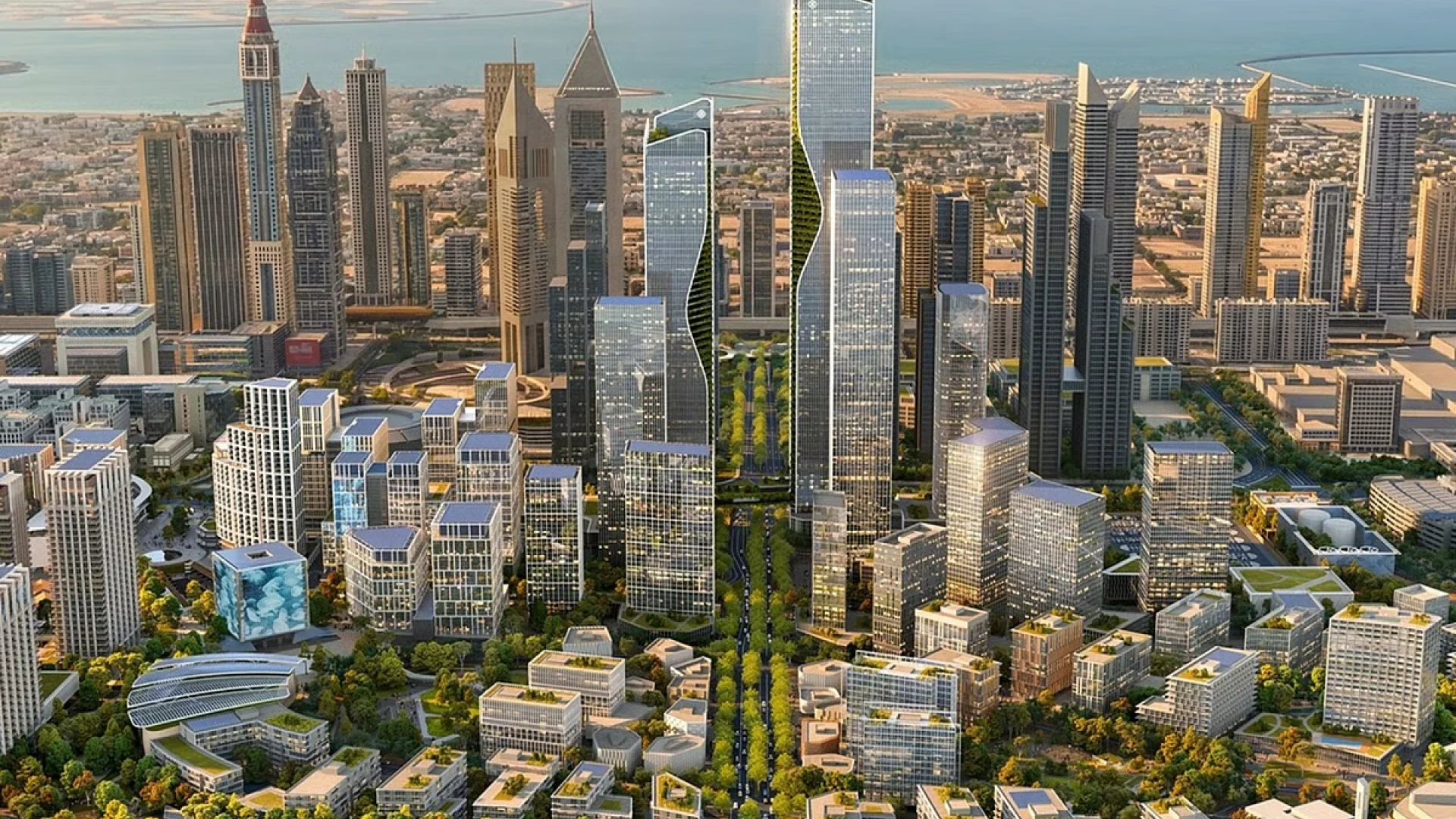

In the UAE, the future rarely arrives as a concept—it shows up as a construction fence, a model lit like a jewelry box, and a new route that suddenly makes your old commute feel outdated. A fresh wave of nine mega-projects is poised to rewire how people move, play, and choose where to live, anchored by headline-grabbers like the Dubai Loop transit concept and a Disney destination planned for Abu Dhabi. Add waterfront districts, resort-scale experiences, and culture-forward landmarks, and the story becomes bigger than spectacle: it’s a deliberate upgrade of convenience and lifestyle. For residents, it means tighter city geography—less time lost, more city gained. For real estate, it’s a new map of demand drawn in infrastructure lines and family-friendly attractions.
The heat has that familiar Dubai shimmer—the kind that makes the horizon look like it’s breathing. Down by the water, a jogger taps his watch, a stroller rolls over warm stone, and a barista leans out of a kiosk window like a ship’s captain. “Two minutes,” she calls. Coffee arrives faster than some commutes.
And that’s the point. In the UAE, time is the most competed-for luxury. Which is why the newest batch of mega-projects—nine of them, stretching from Dubai to Abu Dhabi and beyond—doesn’t read like a list of nice-to-haves. It reads like an attempt to edit the day itself. Cut the dead minutes. Add the memorable ones.
Imagine stepping off a sunlit boulevard and into a cool, engineered corridor that treats distance like a minor inconvenience. The “Dubai Loop” concept has been floated as a high-speed, underground mobility solution—an idea that, if delivered, could change the emotional temperature of getting across the city. Not just faster, but smoother. Less friction, fewer “I’ll leave early just in case.”
A man waiting at a crossing light squints at the traffic and laughs. “If they build it,” he says, “we’ll forget what the road felt like.” In Dubai, that’s not optimism. It’s pattern recognition.
In Abu Dhabi, the mood shifts—more curated, more museum-quiet, even when the ambitions are loud. Then comes the word that changes everything: Disney. A planned Disney destination in Abu Dhabi would be a global-scale magnet, aimed not only at tourists, but at families who decide where to live based on weekends, school holidays, and the promise of easy joy.
You can almost hear the future conversations: “Let’s go again.” “Which hotel this time?” “Can we do the fireworks?” A theme park isn’t just an attraction—it’s a ritual engine. It creates return visits, extended stays, and a halo of restaurants, retail, and short-stay demand.
In a region where shade is strategy and the sea is stage, waterfront development is more than a real estate trend—it’s urban therapy. Several mega-projects lean into islands, marinas, promenades, and resort-linked neighborhoods, building places where the default activity is simply being outside.
In a sales gallery, a couple stands over a scale model. Tiny palm trees. Tiny piers. Tiny boats frozen mid-curve. “That’s our morning walk,” she says, pointing to a ribbon of promenade. It’s a small sentence with a big implication: lifestyle is being master-planned, minute by minute.
For years, the UAE’s cultural push has been steadily turning into muscle memory—museums and creative districts that feel less like field trips and more like part of a normal week. New cultural projects and landmark experiences within this mega-project wave reinforce that trajectory: architecture that draws cameras, yes, but also programming that draws residents back.
The difference is subtle but powerful. A city becomes “liveable” not when it adds one more tower, but when it adds one more place you’d go on a random Tuesday night.
The UAE doesn’t build tourism in single notes—it builds it in chords. Arrival, dining, entertainment, beach, shopping, repeat. Multiple projects in the current pipeline aim to expand that full-stack experience: new resort clusters, leisure worlds, and destination-scale developments designed to lengthen stays and multiply spending across sectors.
In a hotel lobby, a manager speaks with the calm certainty of someone who has watched demand shift in real time. “We don’t sell nights,” he says. “We sell memories.” He isn’t being poetic. He’s describing a business model.
The most life-changing developments are often the least photogenic: new links, new corridors, smarter interchanges, better flow. When a city becomes easier to cross, it becomes psychologically smaller. Neighborhoods that felt “too far” start to feel “perfectly doable.” That’s when housing decisions change—quiet areas become practical, new districts become viable, and rental demand redistributes.
In the UAE, infrastructure isn’t maintenance; it’s a form of urban storytelling. It decides which parts of the city become chapters people want to live in.
Mega-projects used to shout about height. Increasingly, they whisper about shade. Sustainability and climate-responsive design—cooler walkways, smarter energy systems, water efficiency, green corridors—are becoming the difference between a place you visit and a place you linger.
An architect gestures to a canopy casting a clean rectangle of shadow. “You feel it immediately,” he says. “People stop running from the city.” In the Gulf, that’s not a metaphor. It’s a measurable shift in how streets live.
Look at the nine projects as a single move, and a clear strategy appears: keep people here longer—during the day, during the year, during their lives. Faster mobility keeps jobs accessible. Major leisure anchors keep families engaged. Culture keeps the city interesting. Waterfront districts keep evenings alive. Together, they make relocation feel less like a leap and more like an upgrade.
On a weekend night, you see the proof: strollers, scooters, couples sharing a cone of ice cream, tourists filming the same skyline residents have stopped noticing—until a new landmark gives them a reason to look again.
When these mega-projects move from announcement to reality, the impact will show up in ordinary scenes:
That’s the secret of mega-projects: their scale is public, but their payoff is private. They change what you can do with an hour.
For buyers, landlords, and investors, this kind of project cycle isn’t background noise—it’s an early signal. Major mobility concepts like the Dubai Loop can compress travel times and expand what “central” means. Destination anchors like Disney in Abu Dhabi can lift hospitality and short-stay demand, while also boosting long-term appeal for family-oriented communities. Waterfront and mixed-use districts tend to create premium pricing pockets, then ripple effects into adjacent areas that offer similar access at lower entry points.
Practical tip: do a “life test.” Stand where the property is (or will be) and run the routine—school run, grocery, gym, promenade, office. In the UAE, value is often created where time is saved and where the city feels effortless.