
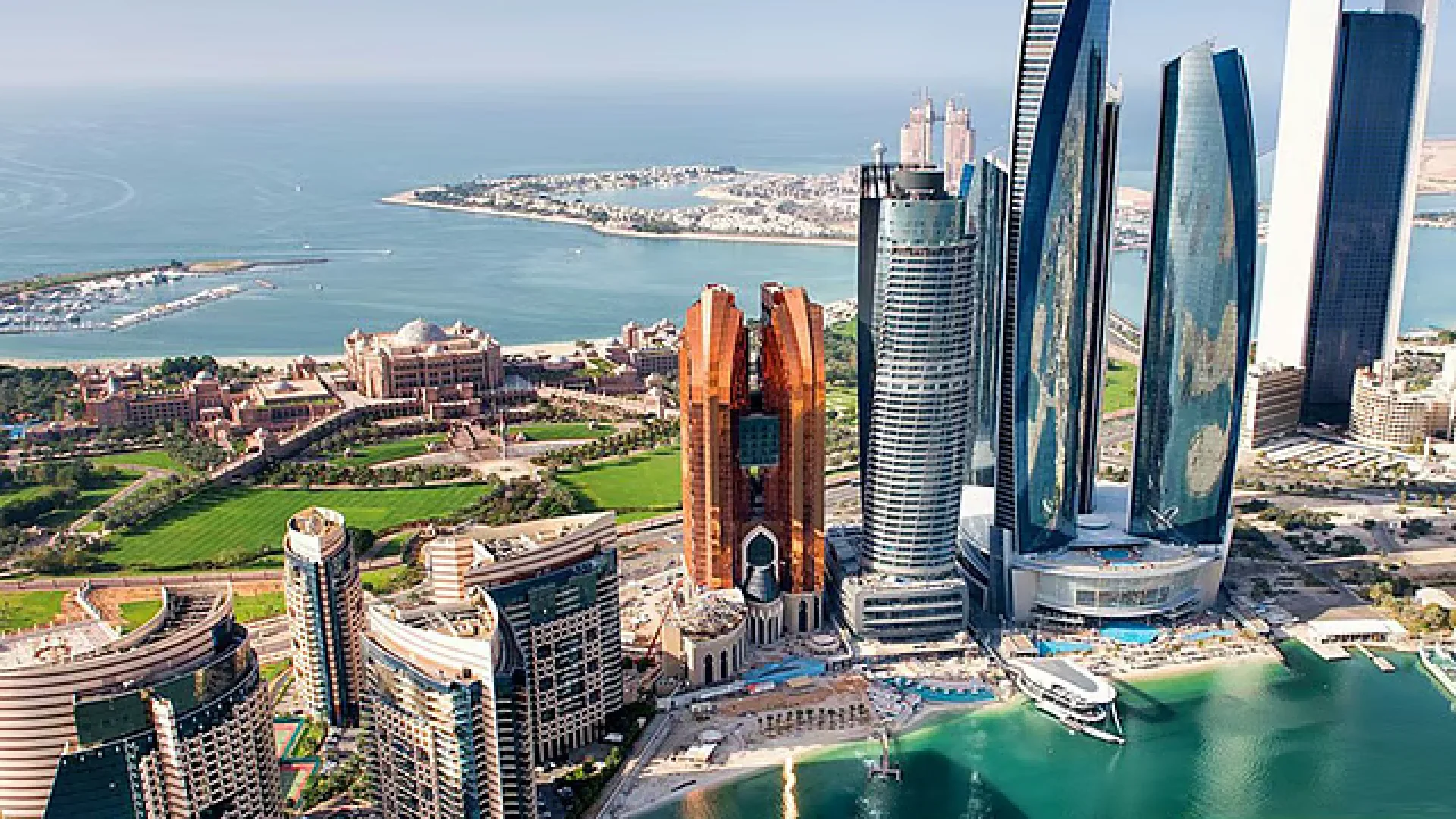

In the latest IMD World Competitiveness Yearbook, the UAE takes the global top spot for economic performance and places 5th overall for competitiveness—an attention-grabbing double result that highlights growth, speed, and execution. The ranking reflects a broader picture: pro-business reforms, strong infrastructure, and an increasingly frictionless environment for investment, talent, and trade. Beyond the numbers sits a lived reality—digital-first processes, fast-moving policy, and a location that sells itself as a bridge between regions and time zones. For companies, investors, and newcomers, the message is simple: the UAE is turning competitiveness into a daily habit.
The lobby is quiet in that brief, shimmering pause before the day starts shouting. Air-conditioning hums like a distant engine. A security gate flashes green. On the polished floor, the reflection of a skyline looks almost liquid—glass, steel, and morning light poured into straight lines.
A man in a crisp shirt leans toward the reception desk. “Just here to finalize the license update,” he says, holding up his phone. A QR code. A quick scan. A nod. The kind of small, forgettable efficiency that becomes unforgettable when you’ve lived in places where the same task eats half a week.
“That’s it?” I ask, more to the moment than to him.
He smiles. “That’s it.”
It’s a tiny scene, but it matches a much bigger headline making its way around global business circles: the United Arab Emirates has been ranked No. 1 in the world for economic performance and 5th overall for competitiveness in the IMD World Competitiveness Yearbook. Rankings can be sterile. This one feels… tangible. Like speed you can hear in the elevator cables.
The IMD table isn’t just a single-number brag. It’s built from a broad set of indicators—how an economy performs, how efficient government and businesses are, and how strong the infrastructure is. In other words, it tries to capture the whole environment a company breathes in: the rules, the roads, the networks, the talent pipelines, the ease of getting things done.
So when the UAE tops the world on economic performance, it signals more than a good quarter or a lucky cycle. It suggests momentum: output, trade energy, investment pull, and a capacity to keep moving. And when it lands 5th overall, it implies the system behind the growth is holding together—government efficiency, business conditions, and infrastructure pushing in the same direction.
Spend a day inside the country’s commercial districts and you’ll hear the same vocabulary repeat—sometimes in English, sometimes in Arabic, often in a mash-up of both: speed, scale, launch, pipeline. The UAE has spent years engineering an environment designed to reduce friction. Less waiting. Less ambiguity. Fewer steps between an idea and a signature.
A logistics executive in Abu Dhabi puts it in a way that sounds almost like a personal philosophy. “Not rush,” he says, holding his hands apart as if balancing two invisible weights. “Speed. There’s a difference.” He glances at the phone lighting up with messages from three time zones. “If you’re a hub, you can’t be slow.”
That hub idea—connecting markets, capital, and people—sits at the center of the UAE’s competitiveness story. Geography helps, sure. But geography alone doesn’t build airports that run like clockwork, ports that feed global supply chains, or free zones that package administration into something closer to a service than a struggle.
IMD’s assessment of competitiveness is, at its heart, a question: does a country create the conditions for businesses to thrive? The UAE’s high placement points to a combination of strengths that business leaders tend to notice quickly when they arrive.
What makes these points feel real is how often they show up in the small moments: the digital ID that unlocks a service; the appointment that takes minutes instead of days; the business district where you can feel how many languages are being spoken within a single coffee queue.
Some places feel like they were designed to preserve tradition. Others feel like they were designed to handle the future. In parts of the UAE, the country behaves almost like a platform—constantly adding new layers: innovation clusters, sector strategies, streamlined visas, updated corporate frameworks. The skyline isn’t just a backdrop; it’s a mood board.
In a bright café with windows so clear the street looks like a moving film set, a founder who relocated recently taps her spoon against the glass—thinking, not stirring. “It’s not just the tax talk or the sunshine,” she says. “It’s the sense that the system wants you to build. That’s rare.”
Competitiveness, of course, is never permanent. It’s a treadmill: stop running and the belt throws you back. But IMD rankings do something powerful—they shape perception. They nudge decisions. A multinational choosing a regional headquarters location looks at tables like this. So does an investor scanning for stable, high-growth ecosystems. So does a specialist deciding where to move a family.
When a country performs at this level in global comparisons, the practical consequences are immediate. More companies test the market. More teams relocate. Competition for skilled workers intensifies—along with competition among employers to offer the kind of lifestyle that convinces people to stay.
And because the UAE sells itself as a bridge, its days run like a relay between continents: a morning call with Mumbai, an afternoon review with London, an evening update with Singapore. That rhythm only works if infrastructure is reliable and governance is predictable. The IMD placement suggests that, at least in this snapshot, the UAE is scoring strongly on both.
Later, along the Corniche, the air softens. The sea turns dark and glossy. Buildings glow like instruments left on standby—ready. A jogger passes with the steady breath of someone who’s trained for this climate. A family pauses for a photo. Somewhere behind the calm, the machinery of the economy keeps turning.
That’s the strange magic of competitiveness when it’s working: it disappears into normal life. Things happen on time. Services function. The city feels ready—like it expected you.
Top-tier competitiveness and a No. 1 economic performance ranking can act like a spotlight for real estate—drawing attention, capital, and new demand. It doesn’t replace due diligence, but it changes the backdrop against which property decisions are made: growth attracts people, and people need space.
In short, the UAE’s IMD result reads like more than an award. For real estate, it’s an indicator of an ecosystem where demand drivers—jobs, trade, investment, infrastructure—are aligned. And in property, alignment is often where the story begins.