
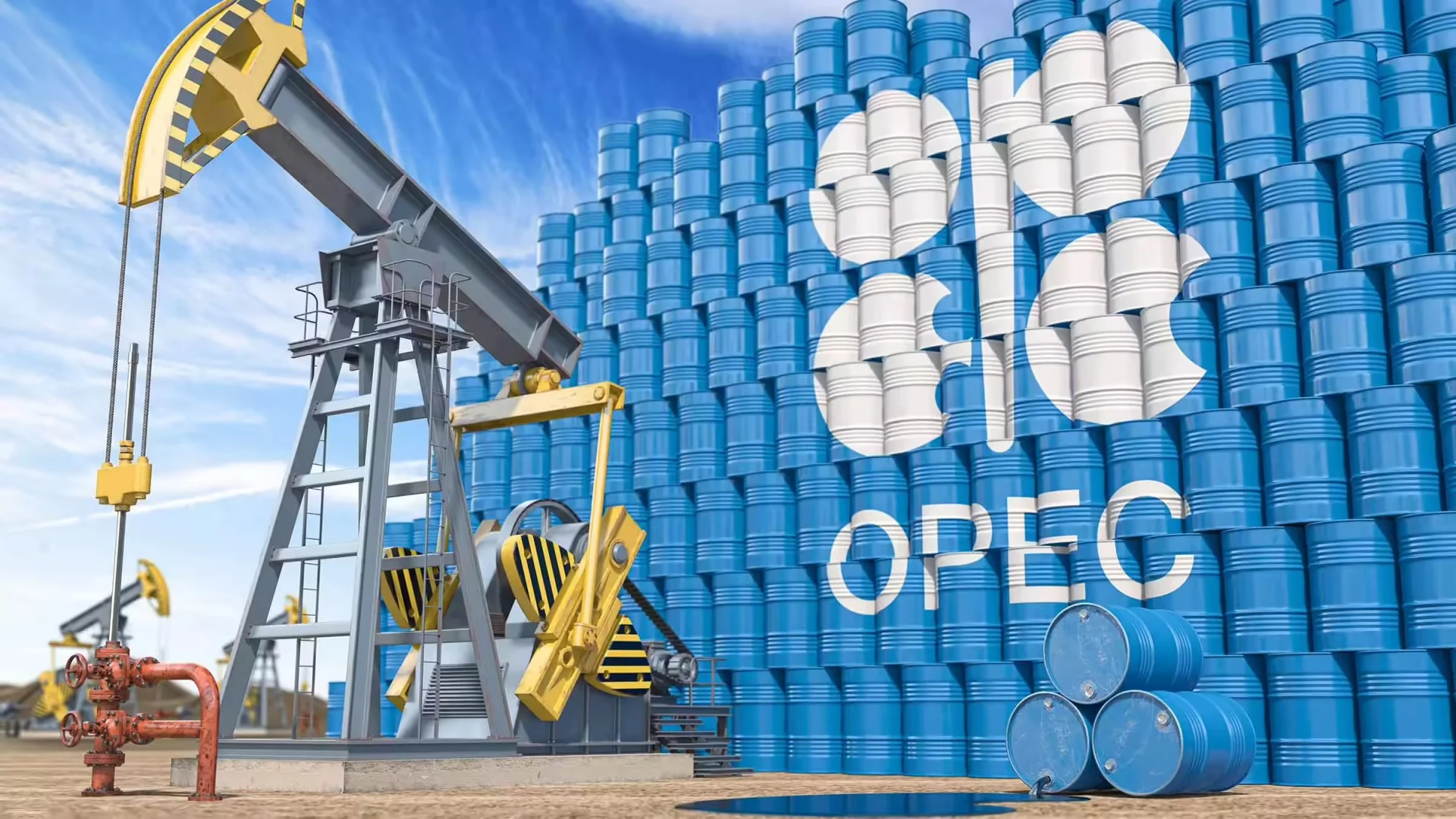

The UAE’s whispered “what if” is turning into a serious market conversation: what if Abu Dhabi walked away from Opec to pump more freely and monetise the capacity it has spent billions building? The upside could be greater oil revenue and strategic autonomy; the downside is volatility, price pressure, and a fresh stress test for Opec+ coordination and GCC cohesion. As the region balances diversification with hydrocarbon cash flow, this debate lands far beyond energy desks—right in the middle of budgets, confidence, and investment cycles. In the Gulf, oil is still the metronome, even when the music is changing.
The first thing you notice is the sound. Not the dramatic kind—no explosions, no alarms—just the steady, intimate noise of an oil terminal waking up: a low mechanical hum, a hiss of compressed air, the metallic click of valves being checked for the hundredth time. In the pale morning light, storage tanks sit like giant, patient moons on the edge of the desert.
“Pressure is everything,” a site engineer tells me, squinting toward the horizon. Then he adds, almost as an aside: “And not only in pipelines.”
In the UAE, oil has never been merely a commodity. It is policy, pace, and posture. It pays for runways and rail lines, schools and sovereign funds. It also shapes relationships—sometimes quietly, sometimes loudly—across Opec, across Opec+, and across the Gulf Cooperation Council. Which is why a question that might sound academic elsewhere lands here like a dropped wrench on concrete: Could the UAE leave Opec?
Not as a sudden headline. Not as tomorrow’s press conference. More like a strategic lever that people have started to talk about again—because the market is changing, capacity is rising, and patience with tight quotas can wear thin.
Opec’s central promise is coordination: producers align output to manage prices and reduce extremes. In its expanded form, Opec+ adds heavyweight partners beyond the original group, creating a larger steering wheel for the global oil market.
But coordination only feels comfortable when members believe the rules reflect reality. The UAE has poured enormous investment into lifting production capacity—building the ability to pump more, faster, and for longer. When your capacity grows but your quota doesn’t move in step, the mismatch starts to sting. The subtext is simple: if we can produce more, why should we leave barrels on the table?
That is where the notion of an Opec exit becomes, at minimum, a negotiating chip—and at maximum, a real option. Leaving would, in theory, give the UAE more freedom to set production according to its own priorities rather than collective targets.
The temptation is easy to frame: pump more, sell more, earn more. Yet every trader will tell you the market doesn’t reward simplicity. Supply is a signal. A sudden increase from a major producer can push prices down, and the math turns slippery: more volume doesn’t always mean more revenue.
A commodities analyst once described Opec to me like an orchestra. “It’s not perfect,” he said, “but it keeps the tempo. If a principal musician walks out mid-performance, the whole hall hears it—even before the next note.”
An Emirati exit would echo beyond barrels. It would become a story investors trade on: independence, fragmentation, a new era, or the beginning of a price fight—depending on who is telling it. Those narratives can move markets almost as powerfully as actual production numbers.
Opec+ is not just an economic tool; it is a geopolitical arrangement. Coordination has helped calm some of the most violent swings in oil prices in recent years. Step outside that framework and you gain autonomy—but you also lose the protective choreography of shared cuts and shared messaging.
For the UAE, the calculation is delicate. A freer hand could help monetise expanded capacity and defend market share in key consuming regions. But it also means the UAE would carry more responsibility for the consequences: if prices fall, if competitors respond, if volatility spikes.
And competitors would respond. The global market is a chessboard: US shale can ramp with different economics and timelines; Asian demand sets the direction of flow; Europe’s energy transition reshapes long-term expectations. The UAE would be playing in that arena with fewer collective guardrails.
Then there is the Gulf question—the one people ask in quieter voices. How would this affect GCC cohesion, especially with Saudi Arabia, the region’s other energy heavyweight?
In a café in Abu Dhabi, a regional business figure stirs his tea slowly and chooses his words like he’s stepping across polished stones. “We cooperate on a lot,” he says. “But cooperation doesn’t mean identical interests.” He pauses. “Stability is a product we export, too.”
The GCC is tied together by trade, investment, security, and shared ambitions for a post-oil future. Yet oil remains the financial engine behind those ambitions. If strategies diverge sharply—if one major producer moves outside the collective pricing and quota framework—others will assess what it means for influence, market share, and the broader diplomatic rhythm of the region.
That does not automatically spell rupture. But it does create a test: can partnerships remain strong while energy policy becomes more independent?
The public imagination treats an Opec exit like flicking a switch. In reality, it would be a chain of practical adjustments: new ways of signalling to the market, heavier bilateral coordination, tighter relationships with large buyers, refiners, and trading hubs, and a recalibration of how the UAE positions itself inside Opec+ conversations even if it stands outside formal membership.
It also matters that the UAE’s strategy is already broader than quotas. The country is investing across the value chain—upstream capability, downstream refining and petrochemicals, trading sophistication—while simultaneously building non-oil engines: logistics, finance, tourism, advanced manufacturing, AI. Oil is still a crucial cash flow, but it is not the entire story.
Which is why the Opec question cuts so deep. Oil revenues don’t just fill state accounts; they fund transformation. When transformation is expensive—and it is—every barrel feels like an argument.
Viewed from a distance, the debate can look like brinkmanship. Up close, it feels more like calibration. The UAE has invested in capacity; it wants that investment recognised in baselines and quotas. Raising the possibility of leaving Opec can be a way of reminding partners that the country has options—and that those options are credible.
Back at the terminal, the sun climbs higher and the tanks throw sharp shadows across the sand. The engineer watches a valve reading and smiles without humor. “You don’t want to keep turning it,” he says. “But you want everyone to know you can.”
For property investors, the Opec-exit conversation is not background noise—it is a macro signal that can shape liquidity, government spending, credit conditions, and confidence across the UAE. In Gulf economies, hydrocarbon policy still acts like a second heartbeat. When it speeds up, construction cranes multiply; when it stutters, sentiment can cool.
1) Fiscal strength and the development pipeline
If a more flexible production stance (or even stronger leverage within Opec+) results in higher hydrocarbon revenues, the knock-on effect often appears in public and quasi-government spending: infrastructure, industrial zones, ports, logistics corridors, energy projects. Real estate benefits through job creation, contractor activity, and population inflows tied to project work—supporting absorption in both residential rentals and hospitality.
2) Financing conditions and bank liquidity
The UAE’s real estate market is highly connected to global capital. Stable oil-linked fiscal metrics can support sovereign and bank balance sheets, sustaining lending appetite. Conversely, if markets interpret an Opec exit as a volatility catalyst—raising the risk of lower prices—risk premiums can widen. Investors should stress-test debt service under higher rates/margins and slower refinancing windows, especially on leveraged acquisitions.
3) Inflation, construction costs, and pricing power
Oil revenue strength can fuel domestic demand and wage growth, but it can also push up construction input costs via higher activity levels and supply-chain strain. Developers may face tighter margins unless pricing power keeps up; owners of existing income-producing assets may benefit from rental uplifts in undersupplied segments.
4) Sector winners: logistics, industrial, mid-market housing
Even as the UAE diversifies, energy cash flows often accelerate that diversification—funding industrial policy, free-zone expansion, and transport upgrades. That tends to favor:
5) International buyer sentiment
Dubai and Abu Dhabi draw global buyers who respond quickly to narratives of stability and growth. A story of stronger fiscal capacity and strategic autonomy can buoy sentiment—particularly in prime segments—while a story of regional friction or price uncertainty can trigger a temporary “wait-and-see” dip in transaction velocity.
Investor takeaway: Treat the Opec debate as a scenario tool. Model oil-price volatility and fiscal momentum, but also track micro-level signals—new industrial clusters, infrastructure awards, visa-driven population growth, and leasing absorption. Portfolios aligned with diversification corridors and financed conservatively are best positioned to benefit if the UAE’s bargaining power (or production flexibility) translates into stronger spending and sustained demand.