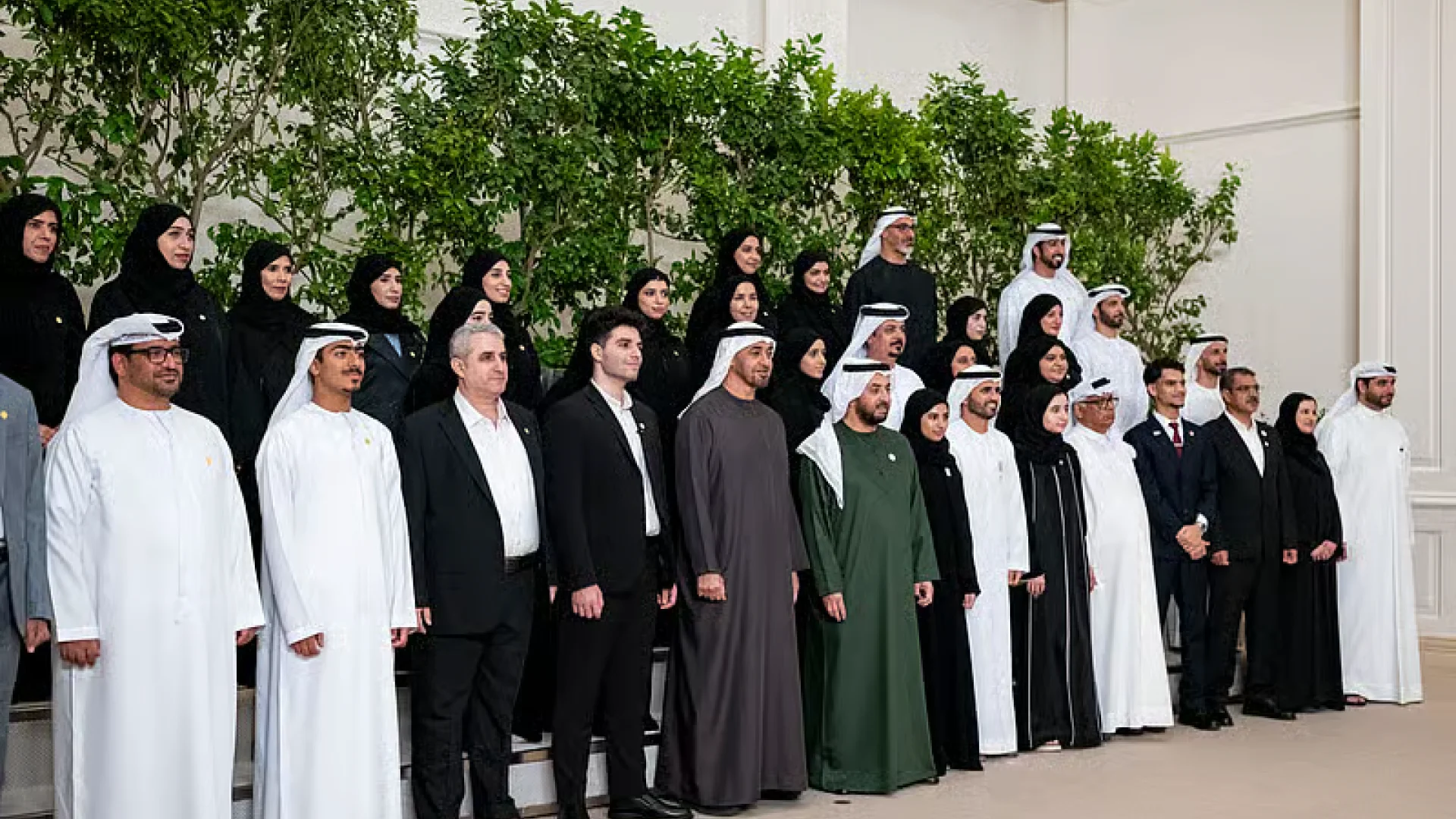
In Abu Dhabi, a line of young high achievers steps into a rare kind of spotlight: a presidential reception for outstanding graduates of the 2025/2026 academic year. The meeting blends ceremony with intimacy—smiles held steady for the cameras, nerves tucked behind perfect posture, pride catching in the throat. Photographs capture the moment as the UAE President congratulates the graduates and underscores a familiar national message: talent matters, education builds the future, and the country wants its brightest to lead what comes next. For the students, it’s more than a photo-op—it’s a signal that their long nights and harder choices have been seen.
The room is quiet in the way big moments often are. Not silent—just softened. Footsteps lose their echo on polished floors. A sleeve is smoothed. A scarf is adjusted. Someone whispers, “You’ve got this,” like a secret handed from one nervous smile to another.
They stand in a neat line in Abu Dhabi: outstanding graduates of the 2025/2026 academic year, invited to meet the UAE President. For a second, they look exactly like what they are—young people who have spent years chasing deadlines, grades, lab results, and approval emails. And then the doors open wider, cameras lift, and suddenly they look like something else too: a promise.
From the outside, a presidential reception can seem like a single snapshot: a handshake, a smile, a few words for the record. But from inside the moment, it’s a mosaic of tiny, human scenes.
A graduate inhales and counts to three. Another glances down at their shoes, then up again, as if the floor might offer last-minute advice. A parent’s voice isn’t here, but it’s present anyway—woven into every straightened shoulder. You can almost hear the invisible chorus: Don’t forget to thank him. Don’t speak too fast. Stand tall.
And then it happens. The UAE President receives the graduates—congratulating them, recognising their excellence, and highlighting education as a national priority. Photographs from the event freeze those seconds: a calm smile, a respectful greeting, the kind of composure you learn only after hundreds of presentations and sleepless nights.
Behind every “outstanding graduate” label is a private archive. Not just achievements, but sacrifices.
There’s the student who studied while commuting, reading notes on a phone screen between stops. The one who balanced family responsibilities and coursework, turning the kitchen table into a midnight desk. The one who failed an early exam and rebuilt their confidence brick by brick. When you stand in front of a head of state, those memories don’t disappear. They press gently against your ribs, like a reminder of the road you’ve walked.
“My mother will cry when she sees this,” one graduate murmurs, half laughing, half bracing for impact. Another nods without words. In a room full of official protocol, these micro-dialogues are the real soundtrack.
The UAE has been vocal for years about the importance of education, skills, and talent—especially as the country strengthens its knowledge economy and invests in future-facing sectors. A reception like this turns that strategy into a face-to-face moment.
It tells students across the country that academic excellence isn’t only a personal victory—it’s a recognised contribution. It tells families that the years of support, fees, and patience mattered. It tells universities and educators that their work is part of a bigger arc.
Most of all, it tells these graduates: you are expected—gently, powerfully—to carry something forward.
There’s a particular kind of suspense just before you’re introduced. Your name is called. The air tightens. The world narrows to a few steps.
One graduate later describes it with surprising simplicity: “It felt like walking into my future.” Not because the reception guarantees a job or a scholarship, but because it reframes the effort. All those long nights become visible. All the quiet discipline becomes public.
The handshake itself is brief. That’s the point. Symbols don’t need long minutes. They need clarity.
When the formal part ends, the room loosens. People laugh a little louder. Phones appear, discreetly at first, then confidently—because how do you not capture this? Someone takes a photo of the photo being taken. A friend sends it instantly to a family group chat where exclamation marks multiply like fireworks.
“So what’s next?” is the question that circles fastest.
Master’s programmes. First jobs. Research placements. Government roles. Private-sector graduate schemes. Entrepreneurship. International opportunities. The answers vary, but the energy is similar: forward motion.
And outside the building, Abu Dhabi continues—sun bright on glass, traffic sliding past, the sea somewhere beyond the city’s edges. Yet for the graduates, time has split into two parts: before this day, and after it.
Moments like these are cultural infrastructure. They help shape what a society publicly celebrates. When academic success is elevated and photographed, it becomes aspirational in a new way—visible, shareable, repeatable.
That has ripple effects. It influences how students choose their paths. It influences how employers think about talent pipelines. It influences how families prioritise learning. And over time, it influences the kind of city you build—one designed for research, work, and a life that values progress.
In the UAE, education policy and talent development often translate into real-world demand for housing and commercial space. When a country celebrates high achievers—and backs that celebration with long-term investment in universities, research, and innovation—neighbourhoods and asset classes around those ecosystems tend to benefit.
For investors and homebuyers, the takeaway is practical: track where talent is being nurtured and celebrated, and you often track where cities will invest next—transport links, amenities, and new districts. A presidential reception may look like a single elegant event, but it also signals a long-term direction: the UAE is building its future around people—and real estate demand tends to follow people with momentum.