
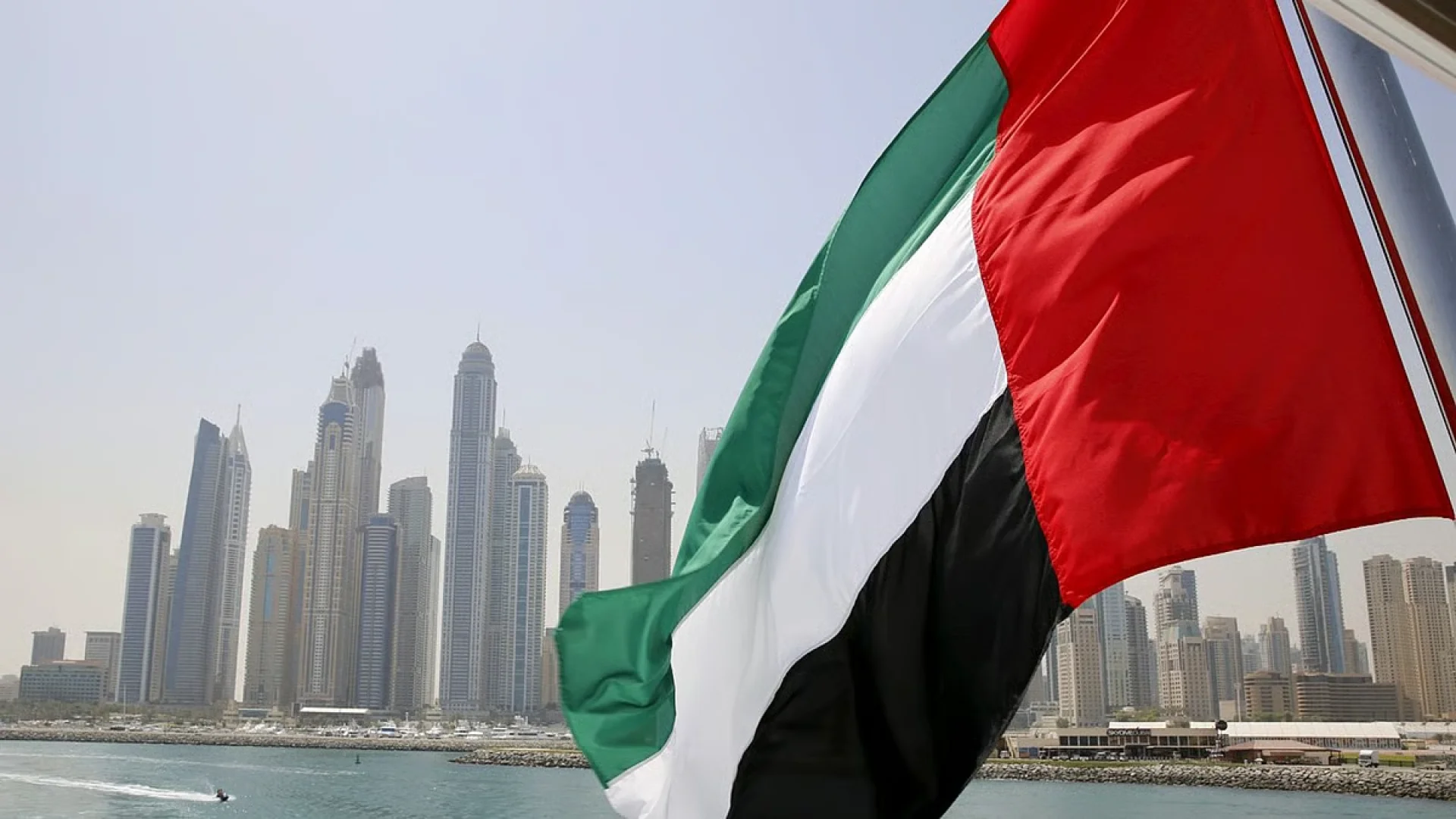

When the region’s headlines grow heavy, the UAE’s streets often sound quieter—but the human signals get louder. Residents across Dubai and Abu Dhabi are sharing the same unexpected detail: Emirati citizens checking in, offering reassurance, and turning worry into something manageable with simple, steady words. From office corridors to building lobbies, people describe a country that keeps its routines—and, in moments of anxiety, leans into community. The result is not a dramatic show of unity, but a lived, practical kind of comfort that many expats say they feel in their bones.
The café door sighs open and the heat follows you in like a second shadow. Ice clinks. Espresso hisses. A television mounted above the counter runs a familiar loop—maps, alerts, quick-cut studio faces speaking fast. You can feel the room trying not to stare.
At the corner table, a woman scrolls with her thumb and stops. Her shoulders lift the way they do when bad news lands. Then, from behind the counter, a man in a crisp kandura leans forward—not nosy, not theatrical, just present.
“You okay?” he asks, softly, as if the question is a cup you can hold.
She looks up, surprised by the intimacy of it. “Just… the news,” she says.
He nods once. “Here, you’re safe. If you need anything—anything—tell us.”
It’s a small exchange. No hashtags. No grand speech. Yet in recent days, residents across the UAE have been describing moments exactly like this—brief, personal, and oddly powerful—as regional tensions ripple through people’s phones and into their sleep.
The UAE is built on movement: flights arriving at all hours, languages crossing in elevators, new faces in lobbies every week. But when the wider region feels uncertain, that motion changes tempo. People still go to work. Kids still climb onto school buses. Malls still glow. And yet, between the normal beats, there’s a pause—an extra glance at a notification, an extra call to a parent back home, an extra moment standing still in a hallway.
What’s striking, residents say, is how often Emirati citizens seem to notice that pause.
In an office in Business Bay, a manager stops at the doorway after a meeting. He doesn’t ask about deadlines. He asks about people.
“If anyone’s family is worried, if you need help with travel, paperwork—tell me,” he says. “We’ll sort it.”
No one claps. No one records it. But later, in private chats, employees repeat the line the way you repeat something that steadies you.
Support, in these stories, rarely arrives as a big event. It’s practical. It’s conversational. It’s the kind of kindness that doesn’t demand attention.
A resident in Abu Dhabi describes receiving a message from an Emirati neighbor: “Just checking—everything fine with you and the kids?” Another remembers a colleague quietly offering to drive them home because they seemed unsettled. Someone else talks about a building security guard who, for the first time in months, didn’t just nod—he asked, “All good?” and waited for the answer.
These are the moments that turn a city of strangers into a neighborhood, even if only for a week.
One resident laughs, a little embarrassed by their own reaction. “I didn’t realize how tense I was,” they say, “until someone asked if I was okay. Then I almost cried.”
In global business talk, stability is a metric—an index, a ranking, a slide in a deck. In real life, stability is more sensory: streetlights that work, systems that run, queues that move, institutions that communicate clearly. It’s the feeling that the city will wake up tomorrow and still know how to be itself.
Residents say the UAE’s steadiness shows up in both the visible and the invisible. Visible: the routine continues. Invisible: the emotional temperature is managed, not ignored. People are reminded—often by Emiratis themselves—that the country’s core promise is safety and continuity, and that promise isn’t just printed on brochures. It’s practiced.
At an international school pickup, a father waits near the gate, watching children spill out in noisy waves. A little boy asks a question that makes adults stiffen: “Is it coming here?”
The father, Emirati, bends slightly so he’s eye-level. “No,” he says, simple as that. “You’re home. You’re safe.”
The boy runs off. The sentence stays.
Many expats came to the UAE for work, but stayed for life: a first apartment, a marriage, a child born under desert sky, a friend group that no longer fits neatly into national labels. When regional tension spikes, the question that surfaces is painfully basic: Is my life here as secure as I believe it is?
The recent wave of resident stories suggests that for many people, the answer is reinforced not only by infrastructure and policy, but by human proximity. Being seen—being asked—changes the shape of anxiety. Fear becomes a conversation instead of a private echo chamber.
“My mother called me three times in one morning,” a resident says. “She was panicking. And then my Emirati friend called and said, ‘Tell her you’re in the safest place.’ He stayed on the line while I called her back.”
It’s hard to quantify that kind of support. But it’s easy to remember.
Unity is often portrayed as a crowd, a flag, a chant. What residents describe is quieter: a series of ordinary people deciding to be slightly more attentive than usual. It’s a neighbor choosing to knock. A colleague choosing to ask. A stranger choosing to offer a sentence that lands like a handrail.
And maybe that’s why it resonates. In a country as diverse as the UAE, where communities can sometimes run parallel, these small crossovers matter. They remind people that the social fabric isn’t theoretical—it’s stitched, day by day, through gestures that look minor until the day you need them.
Outside the café, the heat still shimmers. The news still updates. But inside, someone refills water without being asked. Someone holds a door a second longer. Someone says, again, with calm conviction: “You’re okay. We’re here.”
For real estate investors, the story residents are telling has a direct translation: social resilience supports market resilience. In a region where geopolitical headlines can influence sentiment quickly, the UAE’s ability to preserve a lived sense of safety—through institutions and community behavior—helps limit demand shocks, stabilizes occupancy, and reinforces the country’s positioning as a long-term hub.
1) Occupancy stability and tenant stickiness
When expat households feel secure, they are less likely to trigger sudden exits, early lease breaks, or abrupt relocations. That reduces vacancy volatility and supports steadier rental cashflows—particularly in mid- to upper-tier communities with strong property management and amenities.
2) Flight-to-quality within residential assets
In uncertain periods, demand often concentrates in well-managed buildings and master-planned communities where residents value:
Investors holding assets with these characteristics may see relative outperformance versus secondary stock, even if the overall market slows temporarily.
3) Office market implications: talent, retention, and “duty of care”
Corporate occupiers increasingly tie location decisions to employee wellbeing. A city that maintains calm operations and a supportive social environment helps firms attract and retain international talent. That can underpin demand for Grade A offices in prime districts and mixed-use environments that shorten commutes and raise livability.
4) Retail and hospitality: sentiment drives footfall
Consumer spending is sensitive to mood. When residents feel grounded, everyday retail and neighborhood F&B tend to remain resilient. Investors should watch for preference shifts toward convenience-led centers and community-based destinations—places that feel familiar, close, and easy.
5) Capital markets and risk perception
International capital distinguishes between regional risk and local execution. Evidence of effective governance plus social cohesion can soften risk premia and support liquidity, particularly for stabilized assets with strong operators and diversified tenant bases. In practical terms: resilient sentiment helps protect pricing, reduces forced selling pressure, and supports a longer-term investment horizon.
Investor takeaway: Beyond yields, evaluate “resilience features” in UAE assets—operator quality, tenant retention, community amenities, security standards, and access to essentials. In markets like Dubai and Abu Dhabi, the quiet durability of daily life is not just a social story; it’s part of the investment case.