
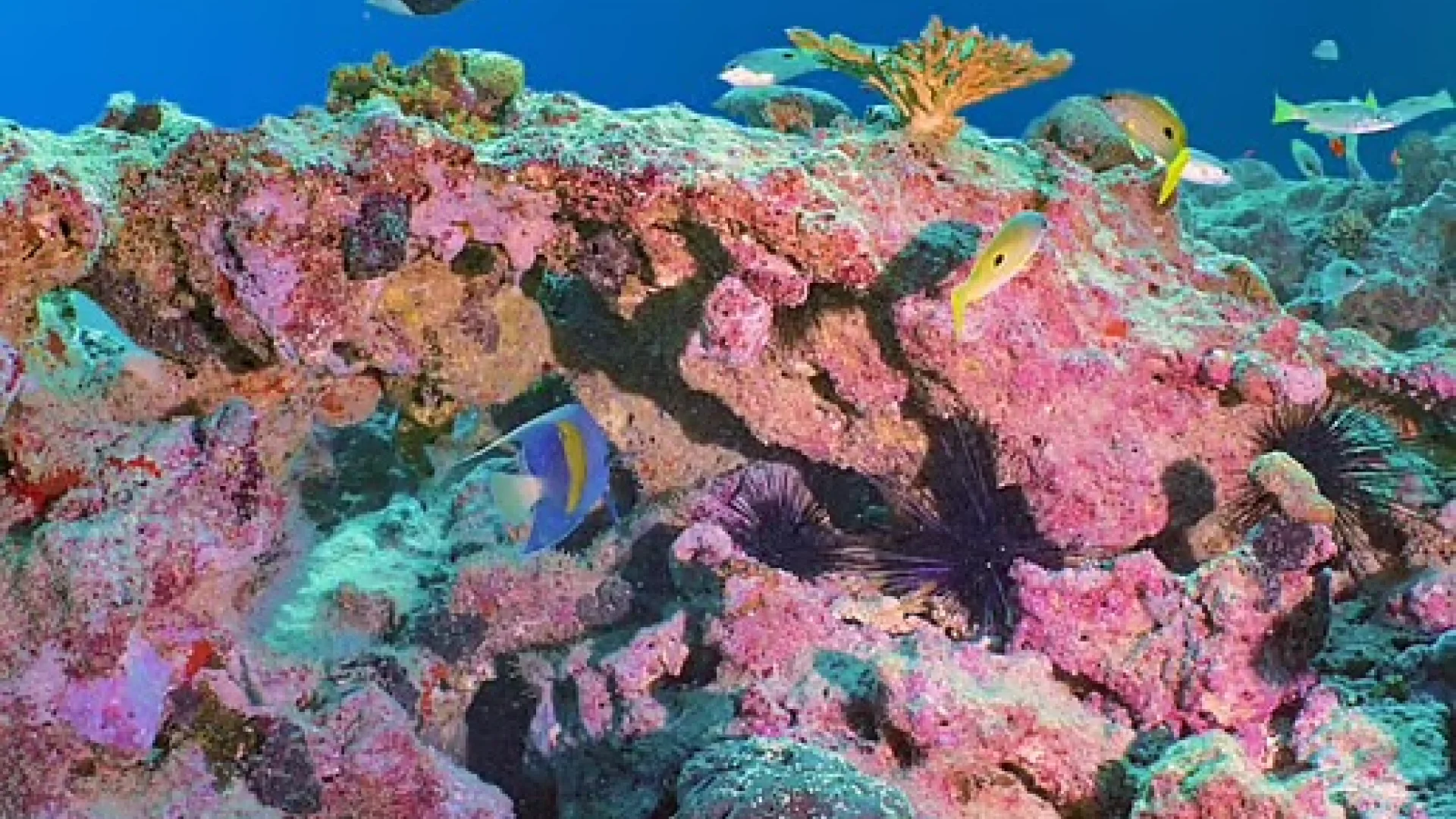

Across the planet, coral reefs are turning pale under record marine heat—an eerie whitening that often ends in collapse. Yet in the UAE’s own warm, salty waters, pockets of coral persist where many would expect them to fail. The reported findings spotlight these unusually tolerant corals, why scientists are paying close attention, and how local monitoring and restoration efforts aim to protect what remains. It’s not a miracle cure for global reef loss—but it is a fragile, valuable foothold in the fight for coral survival.
The sea looks innocent from above. A smooth sheet of light, a polite shimmer, the kind of calm that makes you believe nothing down there could be in trouble.
Then the diver surfaces and says, almost casually, “Some of it’s gone white.”
White. Not sand. Not foam. Coral—bleached, drained of its color like a photograph left too long in the sun.
That single word has become a global warning signal. From the Great Barrier Reef to the Caribbean, heat has been pressing reefs past their limits, turning vibrant underwater neighborhoods into ghostly silhouettes. And yet, in a twist that feels almost unfairly hopeful, corals in parts of the United Arab Emirates are still surviving in waters that run hot and salty—conditions many reefs elsewhere would find unbearable. The article this story is based on follows that contradiction: corals dying worldwide, while some in UAE waters persist.
Corals look like rock, but they’re animals—tiny architects building calcium skeletons, colony by colony, year by year. Their color comes from a partnership: microscopic algae living inside their tissues, feeding them energy through sunlight. When the water gets too warm, that relationship breaks down. The coral expels the algae. The reef turns pale.
Bleaching isn’t automatically a death sentence. If temperatures drop quickly enough, corals can recover and regain their color. But heat waves now arrive like repeated punches, not isolated storms. Stay too hot for too long, and the coral starves. Disease follows. Whole reef systems can unravel.
Stand on a UAE shoreline in summer and you can feel the heat pushing off the water as if the sea itself is exhaling. In the shallow Gulf, temperatures climb high, and salinity can be intense. These are not the classic “tropical paradise” parameters you see in glossy documentaries. They are stress tests.
And that’s precisely why scientists are so interested. The corals that persist here may have developed higher tolerance to heat and salinity—an adaptation born not from comfort, but from constant pressure. The reporting highlights that while global reefs are suffering, the UAE still hosts surviving corals that could help researchers understand resilience in extreme environments.
It’s tempting to call them “super corals.” But watch closely and you’ll see the more accurate story: survival is uneven. A reef can look fine from a distance and still show patches of bleaching up close—an underwater map of winners and losers drawn by temperature, water quality, and sheer chance.
Lower your face into the water and the reef doesn’t announce itself with fanfare. It reveals details in fragments: a plate coral like a ruffled skirt, a small branching cluster with tips the color of tea, a fish that darts in, stops, stares, then vanishes again as if you’ve interrupted a private conversation.
Some corals are bright, stubbornly alive. Others look as though someone turned down the saturation. And every pale patch raises the same question: is this temporary, or is it the beginning of an ending?
Because even here—especially here—nothing is guaranteed. Heat keeps rising globally. Local pressures can stack up: coastal activity, sediment, pollution, careless anchoring, overuse. The very coastlines people love to build and visit can smother the habitats that make them special.
The importance of UAE coral survival isn’t just national pride or a nice environmental headline. It’s strategic. If corals can persist in naturally extreme conditions, they offer scientists a living laboratory for the future ocean—warmer, more volatile, less forgiving.
Understanding what helps these corals cope could inform conservation elsewhere: which species or genotypes are more tolerant, how micro-habitats buffer heat, what restoration methods work best, and how to reduce local stressors so corals can spend their limited energy on recovery rather than mere endurance.
Still, there’s a hard edge to the hope. Tolerance is not invincibility. If heat continues to climb, even the strongest corals can fail. The UAE’s reefs are not a replacement for global climate action; they’re a reason to accelerate it, and a chance to learn while there’s still time.
The reporting points to growing efforts in the UAE to monitor, protect, and restore coral habitats—work that often happens quietly, away from the camera-friendly skyline. It includes tracking bleaching events, mapping reef health, and exploring restoration approaches such as coral gardening and re-seeding where conditions allow.
It’s patient work. Reef time is slow time. You don’t “fix” a coral system in a season. You create conditions where recovery becomes possible—and you keep the next heat wave from tipping the balance.
There’s another reason reefs matter that has nothing to do with snorkeling photos. Reefs blunt waves. They reduce coastal erosion. They stabilize shorelines and support fisheries—quiet services that become painfully obvious only after they’re gone.
In a region where coastal development, tourism, and waterfront living are central to the economy and identity, that matters. A healthy reef is not just biodiversity; it’s a layer of protection and an engine of marine life that makes the coast feel alive.
1) Waterfront value and nature-based protection: Coral reefs function as natural breakwaters, reducing wave energy and helping limit erosion. For owners and investors in beachfront villas, resort assets, marinas, and mixed-use coastal districts, reef health increasingly connects to long-term maintenance costs and resilience planning. Where reefs degrade, engineered coastal defenses may need upgrades—often capital-intensive and visually disruptive.
2) Climate-risk pricing and insurance dynamics: As marine heat and sea-level risks intensify, lenders, insurers, and institutional investors are sharpening their climate-risk assessments. Projects that can demonstrate integration with coastal resilience measures—potentially including reef protection and broader marine habitat programs—may be better positioned in underwriting conversations, especially for long-hold strategies.
3) Permitting, ESG, and development timelines: Coastal projects near sensitive habitats face rising scrutiny. Strong environmental baselines, sediment-control plans, boating/anchoring management, and post-construction monitoring can reduce regulatory delays and reputational risk. In competitive markets, “biodiversity-positive” components can become a differentiator rather than a burden.
4) Tourism performance and place-making: Reefs support marine tourism and the broader lifestyle narrative that powers premium hospitality. Healthy nearshore ecosystems can lift destination appeal, occupancy, and pricing power—provided access is managed responsibly. For developers, aligning placemaking with conservation (mooring buoys, guided zones, education) can protect the very asset that sells the location.
5) Blue finance and partnership opportunities: Coral monitoring, restoration, and marine-protection initiatives can be structured through public-private partnerships and impact-oriented funding. Developers and asset managers may find opportunities to tie measurable marine KPIs to green/blue bond frameworks or sustainability-linked financing—turning conservation into a governance-strengthening, capital-access story.
Investor takeaway: The UAE’s surviving corals are more than an environmental curiosity—they’re a signal that coastal resilience and biodiversity are becoming material to waterfront real estate. Treat reef health and local marine-management capacity as part of site selection, due diligence, and long-term value protection.