
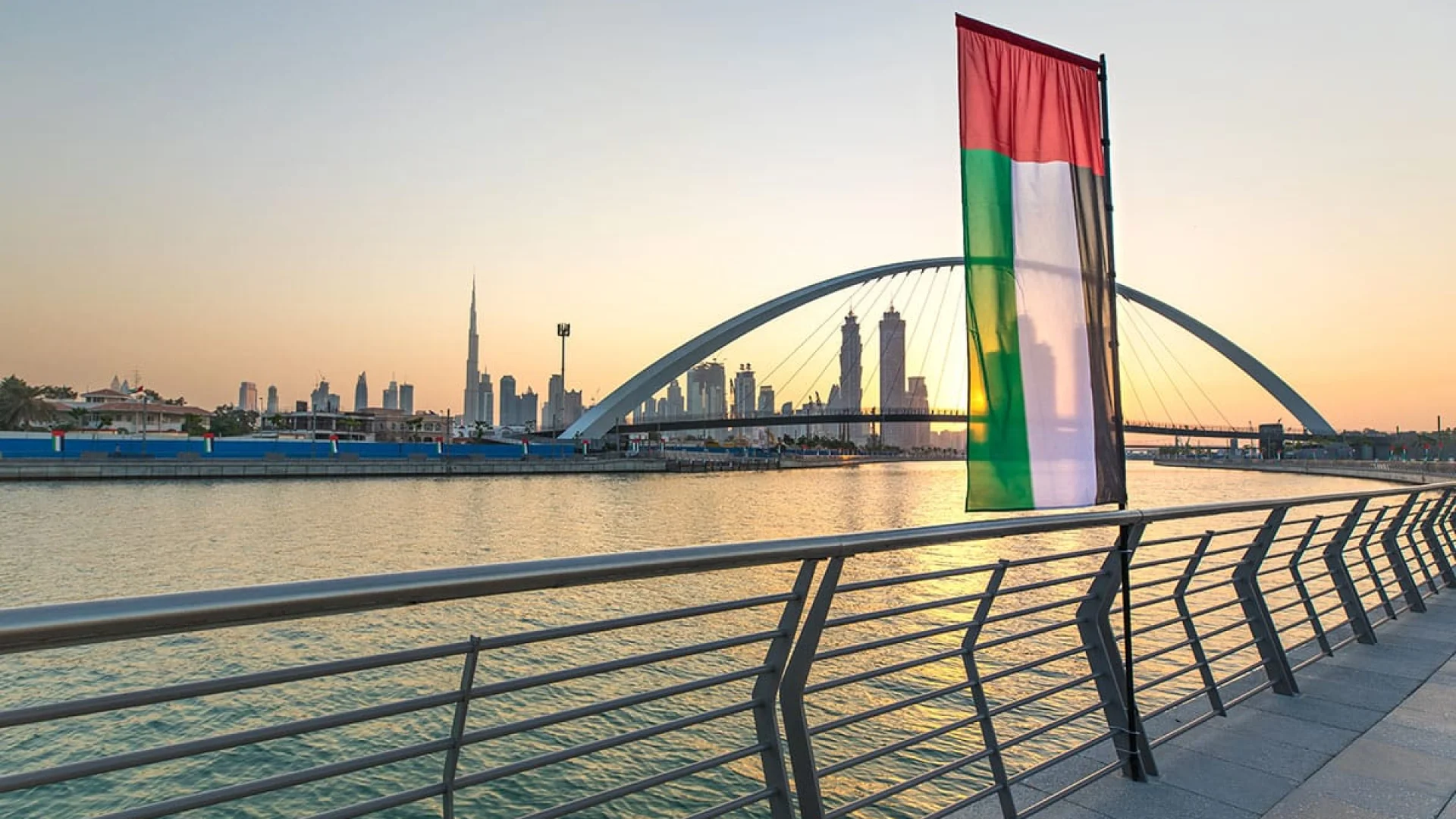

The United Arab Emirates enters 2026 as one of the world’s most attractive places to live. According to the ranking reported by Arabian Business, the country is placed third overall and ranks first in the tax category. Behind the headline is a vivid mix of international careers, high-speed infrastructure, family services and real-estate opportunity – set against a demanding climate and a fast-moving cost of living.
Before the heat settles over Dubai, the city is already awake. Headlights stream along Sheikh Zayed Road. Towers catch the first orange light. In a taxi, a passenger checks a phone, answers a message and says, “The office, please.” Outside, the skyline rises in layers: glass, steel, cranes and the unmistakable outline of a city built for movement.
That sense of momentum sits at the heart of the UAE’s latest international ranking. As reported by Arabian Business, the United Arab Emirates is named the world’s third-best place to live in 2026. It also ranks first for taxation.
The figures matter because the UAE is competing for more than tourists. It is competing for engineers, founders, investors, doctors, designers, executives and families looking for a new base. Some arrive for a two-year contract. Others open a company, rent a villa, buy an apartment or discover that a temporary move has become a long-term life.
A global quality-of-life ranking is not simply a beauty contest between sunny destinations. It reflects the practical questions that shape a move: Can people find work? Is the infrastructure dependable? Are international schools available? Is administration manageable? How much income remains after tax? And can a newcomer build a social and professional life without starting from zero?
The UAE performs strongly because its major cities are designed around international residents. English is widely used in business and daily services. Dubai and Abu Dhabi offer global airports, modern highways, digital government services, private healthcare and extensive retail and leisure infrastructure. International schools and multicultural communities make the transition easier for families.
“You can arrive on Monday and feel operational by Friday,” a typical newcomer might say. The apartment search begins online. A viewing takes place after work. A lease is signed. A bank account and mobile connection follow. The efficiency is part of the appeal. So is the feeling that the next opportunity is always nearby.
But speed comes with pressure. Housing costs can vary sharply by neighbourhood. School fees can reshape a family budget. Summer temperatures move daily life indoors. Residency is often connected to employment, business activity or investment. The UAE’s high ranking therefore captures a powerful opportunity, not a promise that every experience will be effortless.
The UAE’s first-place tax ranking is likely to be its most striking feature for international professionals. The country is widely known for having no traditional personal income tax for most employees. That can create a substantial difference between gross and take-home pay, particularly for workers moving from countries with high personal tax rates.
Still, the picture is more sophisticated than the phrase “tax-free country” suggests. Businesses must comply with applicable regulations, and the UAE introduced a federal corporate tax regime in 2023 under relevant conditions. Value-added tax and other charges also affect daily spending and commercial transactions. The competitive advantage lies in the overall structure: relatively low personal taxation combined with a business-friendly environment and a highly international economy.
For a dual-income household, the difference can be significant. Additional disposable income may fund better housing, private education, insurance, travel or savings. For a business owner, the tax environment can influence where a regional headquarters is established. For an investor, it is one line in a wider calculation that also includes financing, service charges, rental demand, regulations and exit options.
The UAE can feel like several places at once. In the morning, desert light washes across an empty stretch of road. By lunchtime, a financial district hums beneath mirrored towers. After sunset, families gather on waterfront promenades, while restaurants fill with conversations in Arabic, English, French, Hindi, Russian and dozens of other languages.
Dubai is famously fast and experimental. Abu Dhabi often feels more spacious and measured. Other emirates add beaches, mountains, quieter neighbourhoods and different price points. Together, they offer a wide range of lifestyles within a relatively compact country.
The urban experience is deliberately convenient. Residents can find gyms, clinics, supermarkets, cultural venues, sports clubs and restaurants serving food from almost every corner of the world. Metro lines and major roads connect key districts. Airports make regional and long-haul travel straightforward. For globally mobile professionals, that connectivity is not a luxury. It is part of the job.
There are trade-offs. A car remains essential in many areas. Outdoor life becomes difficult in the hottest months. The cost of premium services can be high. And while a large expatriate population makes it easy to meet people, building a deeper sense of permanence may take longer. The ranking highlights the UAE’s international appeal; the lived experience still depends on income, visa status, family needs and neighbourhood choice.
Third place sends a clear message to the global talent market. Salary alone no longer decides where people move. Professionals compare the whole package: taxation, security, transport, schooling, healthcare, professional networks and the possibility of building a comfortable home.
The UAE has positioned itself at exactly that intersection. It offers a globally connected labour market, ambitious infrastructure and a tax framework that can be highly attractive to individuals. That combination helps explain the continued construction of offices, residential towers, gated communities, waterfront districts and mixed-use neighbourhoods.
It also explains why the country remains visible in conversations about relocation. A new resident does not simply rent a room. They enter an ecosystem of housing, schools, employers, banks, retailers, healthcare providers and leisure operators. Every new arrival adds another thread to that ecosystem.
For property markets, the ranking is more than positive publicity. A country that is recognised as an attractive place to live can generate stronger underlying demand for rental homes and owner-occupied property. Dubai’s established districts, waterfront developments, transit-connected communities and branded residences all compete for different buyer profiles. Abu Dhabi offers its own appeal through stability, space, high-quality neighbourhoods and a growing investment landscape.
The tax advantage may improve an investor’s net calculation, but it does not replace due diligence. Before buying, investors should examine location, completion date, developer track record, service charges, financing, maintenance, tenant profile and potential vacancy. A home near a metro station, international school, beach or business district will often attract a different demand profile from a unit in a distant emerging area.
The UAE’s third-place ranking strengthens its identity as a residential and investment destination. It suggests that the market is being supported not only by speculation, but also by people who need somewhere to live, work and raise families. That distinction matters.
Later, when the heat fades, the skyline begins its second shift. Office lights remain on. A delivery rider crosses a busy junction. In a tower lobby, someone collects a new set of keys. One person has arrived for a career. Another has purchased a home. A third is testing a business idea.
All three are responding to the same promise: a place where global access, professional ambition and financial efficiency meet. The ranking gives that promise a number. The city gives it texture, sound and light. In 2026, the UAE is not merely selling a lifestyle. It is presenting itself as one of the world’s most compelling places to build one.