
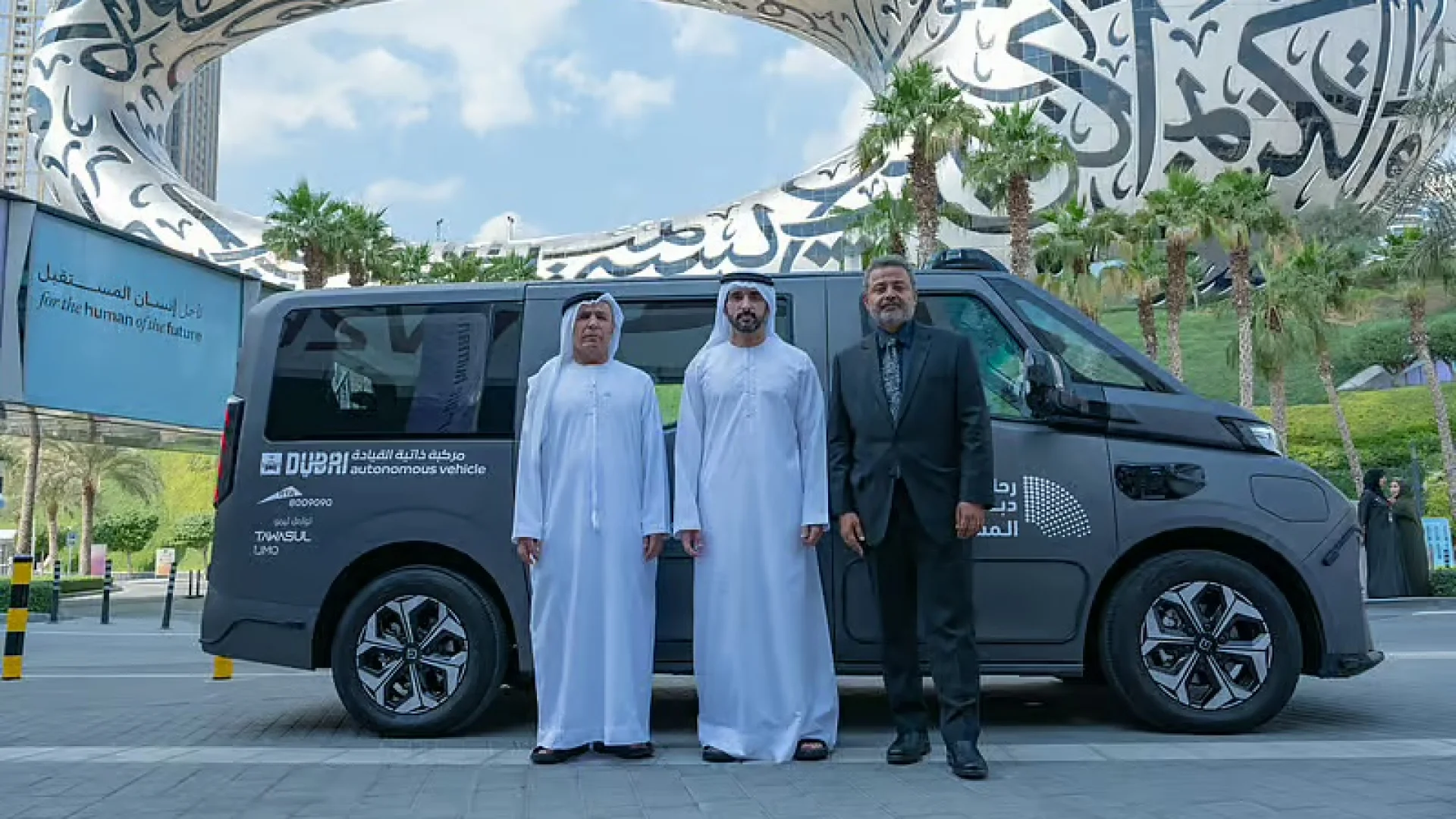

Dubai’s roads are becoming a testing ground for the next generation of urban transport. Uber plans to invest Dh184 million in expanding autonomous mobility services across the emirate, linking self-driving technology with its established digital platform. For passengers, the future may look familiar at first: the same app, the same destination box, but increasingly no driver behind the wheel.
The heat rises from the pavement. Glass towers flash in the afternoon sun. A taxi slips past a hotel entrance, and somewhere nearby a passenger taps a destination into a phone. In Dubai, movement has always been part of the city’s identity. Now the city is preparing for a journey in which the driver may gradually disappear.
Uber plans to invest Dh184 million in expanding autonomous mobility services in Dubai. The figure is significant, but the larger story is about direction. Dubai is positioning itself as a place where self-driving vehicles, artificial intelligence and connected transport can move from demonstration projects into everyday life.
“Is the car here yet?” a traveller might ask while standing beneath a hotel canopy. Soon, the answer could be yes – even if there is no one in the front seat.
Uber is no longer simply a way to match passengers with drivers. Its broader ambition is to become a platform for several forms of mobility. Conventional rides, delivery services and autonomous vehicles can all be connected through one digital interface.
That is where the Dubai investment matters. The aim is to expand autonomous mobility services and fit them into the city’s existing transport network. For passengers, the process may remain reassuringly familiar: enter a destination, confirm a pick-up point and wait for the vehicle. The dramatic change happens beneath the surface, inside the vehicle’s sensors, software and decision-making systems.
Cameras, radar and other sensors read the road. Software identifies lanes, intersections, pedestrians and surrounding traffic. The vehicle calculates its next move in a fraction of a second. It slows, stops, turns and continues without a human driver making every decision.
To a passenger, the first autonomous ride may feel surprisingly ordinary. The door opens. The route appears on a screen. The cabin is quiet. Then the vehicle moves away from the kerb, and the city begins to slide past the window.
Dubai has spent years building a reputation for ambitious infrastructure and rapid technology adoption. Its roads are modern, its population is international and its government has set clear goals for smarter and more automated transport. These conditions make the emirate an attractive environment for autonomous mobility.
The city also offers variety. A self-driving system may have to navigate wide arterial roads, dense urban districts, hotel entrances, airports, construction zones and sprawling new communities. Each setting presents a different challenge. Together, they create a demanding real-world laboratory.
The investment suggests that autonomous mobility is being considered as more than a short-lived technology showcase. The ambition is to develop services that can operate at meaningful scale and serve real passengers. That means confronting the details that rarely appear in promotional videos: sudden lane changes, roadworks, delivery vehicles, pedestrians and unfamiliar pick-up locations.
Autonomous transport will not necessarily arrive with a spectacular announcement. It may begin with a routine journey to work. A vehicle approaches. The passenger checks the licence or ride details, opens the door and sits down. There is no quick exchange with a driver. Instead, a screen confirms the route and the car sets off.
Such services could improve availability at certain times and support passengers who cannot or do not want to drive. They could also help operators manage fleets more precisely. Vehicles could be dispatched according to demand, repositioned between busy areas and integrated with other forms of urban transport.
But convenience alone will not create trust. Passengers will want clear answers. What happens if a sensor fails? How does the vehicle respond to an emergency? Who is responsible when something goes wrong? Will the price of a ride change when human driving is no longer part of the service?
Uber’s platform gives it an important role in answering those questions. The company brings an established booking system and a large user base to the autonomous mobility market. The app becomes the meeting point between passengers, vehicles and the city’s transport infrastructure.
No single company can build the autonomous mobility ecosystem alone. Vehicle manufacturers, software specialists, sensor developers, regulators, infrastructure providers and mobility platforms all have a part to play.
Uber can organise demand and digital access. Technology partners can provide autonomous driving systems. Public authorities can define testing areas, safety requirements and operating rules. Infrastructure operators can prepare charging, parking and maintenance facilities. The result is less a single product than a network of interdependent services.
That network must also address less visible issues. Autonomous vehicles generate vast amounts of data about roads, traffic and journeys. Cybersecurity and privacy therefore become central to the experience. Passengers need to know that a convenient ride does not come at the cost of losing control over their personal information.
The autonomous vehicle debate often focuses on whether a car can steer itself. The more important question may be what happens to the city around it.
If vehicles communicate with infrastructure and one another, traffic flows could become more coordinated. If shared rides are managed efficiently, fewer vehicles might transport more people. If fleets are electric, streets could become quieter and produce fewer local emissions.
None of these benefits is automatic. Easy, inexpensive rides can generate additional demand. An empty autonomous vehicle travelling to collect its next passenger may add traffic rather than reduce it. The outcome will depend on how services are regulated, priced and integrated with public transport.
Dubai has an opportunity to shape that outcome early. Autonomous rides could be used to connect residential communities with metro stations, serve business districts and improve access to large developments. They could complement buses, trains and conventional taxis rather than operate as a separate transport universe.
The Dh184 million plan is also an economic statement. Cities around the world are searching for answers to congestion, rising mobility costs and limited road space. Dubai wants to be more than a customer for new technology. It wants to be a place where that technology is deployed, observed and refined.
For Uber, the emirate offers an international and digitally confident market. Business travellers, residents and tourists are already accustomed to booking services through their phones. A successful autonomous offering in Dubai could therefore attract attention far beyond the city.
Still, the decisive test will be ordinary. Can the vehicle arrive on time? Can it find the correct hotel entrance? Can it handle a sudden diversion? Does the passenger feel safe when the road becomes complicated?
If the answer is yes, the transformation may feel almost invisible. A passenger gets in. The door closes. The towers move across the window. And somewhere between the skyline and the desert edge, the city takes another step toward driving itself.
Autonomous mobility could reshape the way property locations are valued in Dubai. Today, proximity to a metro station, a major road or a business district often defines accessibility. In the future, autonomous shuttles and on-demand vehicles could make emerging communities easier to reach and reduce the disadvantage of being farther from established transport hubs.
For developers, mobility may become an even stronger part of the property proposition. Residential projects could include dedicated autonomous pick-up areas, charging facilities and digital transport subscriptions. Hotels might coordinate vehicle arrivals through smart forecourts. Office parks and mixed-use developments could connect directly to metro stations, airports and neighbouring districts.
The investment opportunity extends beyond the vehicles themselves. Charging networks, fleet depots, maintenance facilities, mobility software, data infrastructure and redesigned parking structures may all become part of a growing urban ecosystem. Traditional parking demand could change, while new requirements for loading, charging and short-term vehicle access emerge.
Investors should therefore watch the connection between transport policy and development plans. The most attractive locations may not simply be those with the highest traffic today, but those positioned along future autonomous routes and near the infrastructure required to support them.
Uber’s investment underlines a broader shift: mobility and real estate can no longer be considered separate sectors. A property’s location will increasingly be measured not only by kilometres and minutes, but also by the quality of its digital and autonomous connections.