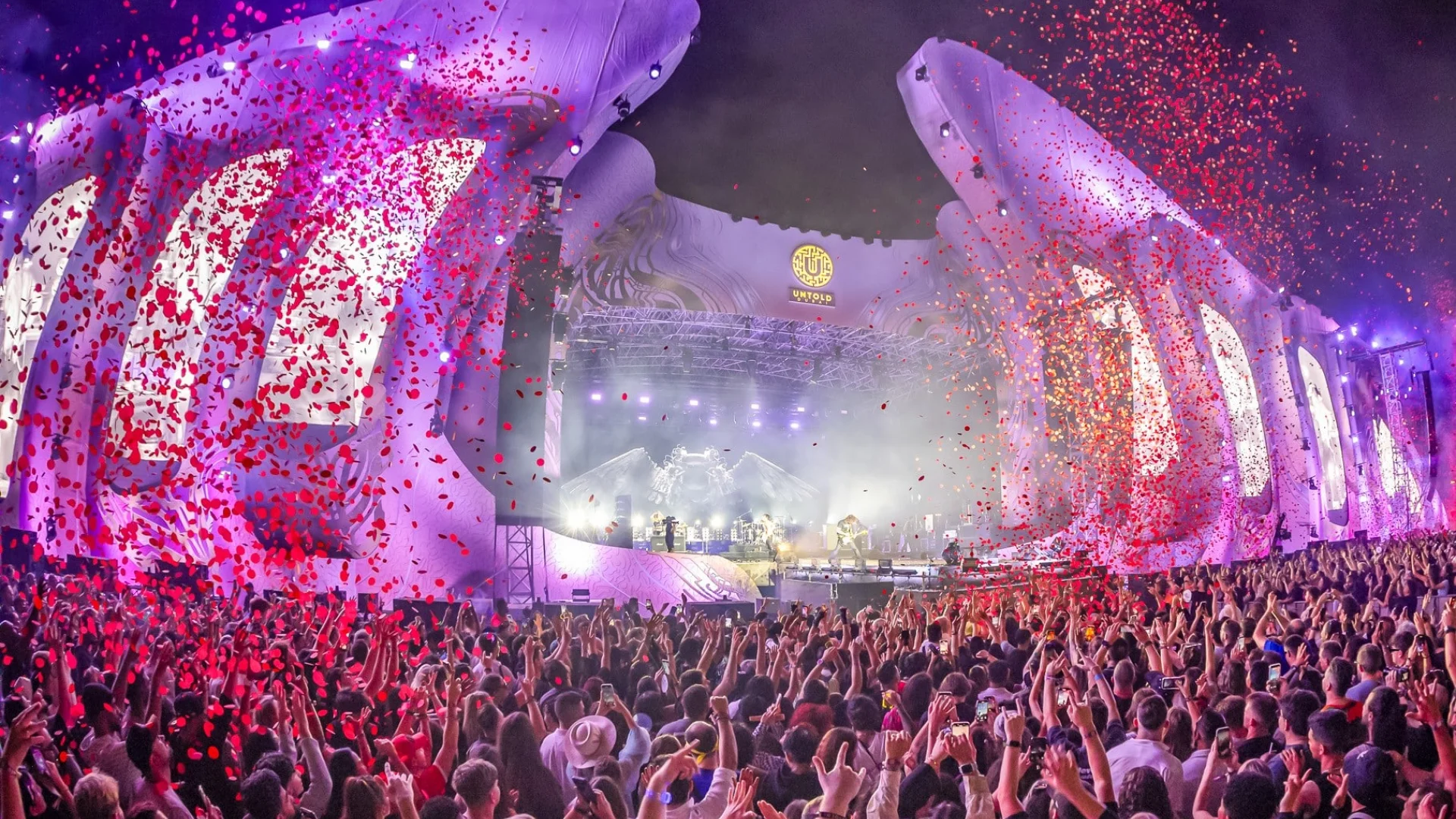
The desert is lining up for a comeback: UNTOLD Dubai has confirmed its 2026 edition and tickets are officially on sale. The festival, spun from the huge UNTOLD brand, is again promising a multi-day spectacle of sound, stage design and big-name energy in Dubai’s signature, high-gloss style. Early ticket phases reward fast movers with lower prices, while VIP tiers cater to anyone who wants the drop—without the crush. In other words: the planning season starts now, long before the first laser hits the night.
You feel it before you find it.
A low, chest-thudding pulse that seems to travel through the ground first—then up your ribs. The air is warm. A little dusty. Somewhere ahead, lights flicker like a mirage being assembled in real time. Someone in your group leans in, voice half-lost in the noise: “We’re doing this next year, right?”
That’s the moment a festival becomes more than a date. It becomes a decision.
UNTOLD Dubai is returning in 2026, and the biggest immediate news is simple and urgent: tickets are now on sale. Not “soon”. Not “register interest”. On sale. The kind of announcement that triggers a chain reaction—calendar checks, flight alerts, hotel group chats, the inevitable debate about whether it’s finally time to go VIP.
The 2026 edition has opened its ticketing, typically led by early-release pricing (often called Early Bird/First Release) before moving through higher-priced phases as allocations sell out. For festival-goers, it’s a familiar rhythm: the earlier you commit, the better the value—and the easier it is to build the rest of the trip around it.
Alongside standard passes, the event is also selling VIP options and upgrades, aimed at those who want a more elevated way to experience the weekend: faster entry, better sightlines, lounge-style comfort, and a little breathing space when the crowd surges forward for a headline moment.
Dubai has a way of turning big events into something cinematic. You don’t just walk into a festival here—you arrive into a production. The paths feel wide. The signage feels polished. The staging doesn’t merely sit on the horizon; it commands it.
Picture the scene: a sea of people, phones up, the sound briefly dipping into that delicious pre-drop suspense. Then—boom. Flames. Confetti. A roar that rises like a wave. A stranger beside you laughs, shakes their head as if they can’t quite believe what they’re seeing. “This is insane,” they mouth, and you nod, because there’s nothing else to say.
That’s what UNTOLD is chasing in Dubai: not just a line-up, but an atmosphere. A multi-day world you step into and don’t want to leave until your voice is gone and your shoes are finished.
If you’ve done this dance before, you know the rules. Ticketing is staged. Prices move in steps. And the first few phases tend to disappear fast—especially when an event has momentum and an international audience.
In practical terms, the ticket launch is a starting gun. It doesn’t just sell entry—it starts travel behaviour. Early buyers lock in flights. Then accommodation follows. Then restaurants and nightlife bookings. The city begins to feel the event long before the first stage light switches on.
There’s a reason global festivals keep circling back to Dubai. The city sits at a crossroads—geographically and culturally. It’s easy to reach from Europe, Asia and Africa. It’s built for high-volume weekends. And it has the infrastructure to turn a music event into a full lifestyle itinerary: beach clubs, after-parties, brunches, late-night bites, sunrise drives.
For residents, it’s a headline on the social calendar. For visitors, it’s a ready-made excuse to do a long weekend with maximum impact. And for the festival itself, Dubai offers something priceless: a backdrop that already feels like a stage.
There’s a funny thing about clicking “buy” on a festival pass. You’re purchasing a QR code, yes. But in your head, it instantly becomes a scene.
You imagine the first walk in—when the bass is still distant and the night is full of possibility. You picture the moment your favourite track hits and everyone around you moves like a single organism. You can almost hear the micro-dialogue you’ll repeat all weekend:
“One more set?”
“One more set.”
UNTOLD Dubai 2026 is selling that future. A multi-day rush. A glittering, loud, beautifully exhausting escape. And it starts, for now, with a decision made in the quiet: do you lock it in early, or gamble on what’s left later?
Major music festivals in Dubai don’t just move crowds—they move booking curves. For real estate investors, UNTOLD Dubai’s 2026 ticket launch is an early indicator of when demand will concentrate, how pricing power may shift in short-stay markets, and which asset types stand to benefit most from recurring event tourism.
1) Short-stay upside: serviced living and holiday rentals
When tickets go on sale early, travel planning starts early. That matters because it often translates into:
Investors with permitted short-term letting setups (or hospitality-managed units) can use event calendars to forecast peak pricing windows and optimise operational readiness—cleaning schedules, key handovers, guest experience, noise policies, and building rules.
2) Medium-term value: Dubai’s lifestyle narrative
Recurring global events strengthen Dubai’s brand as an entertainment and culture hub, which indirectly supports residential demand—especially among internationally mobile professionals who factor lifestyle into relocation decisions. Neighbourhoods positioned around dining, nightlife, and connectivity typically capture the halo effect.
3) Retail and mixed-use beneficiaries
Festival visitors don’t just attend shows; they eat, shop, and extend stays. Mixed-use developments with strong F&B, late trading hours, and experiential retail are well placed to capture incremental spend before and after festival nights.
4) Investor checklist for event-driven demand
Bottom line: a ticket on-sale announcement is more than entertainment news—it’s a forward signal for tourism-linked occupancy and pricing. Investors who track Dubai’s recurring mega-events can sharpen acquisition, furnishing, and leasing strategies to better capture high-demand windows while maintaining stable year-round performance.