
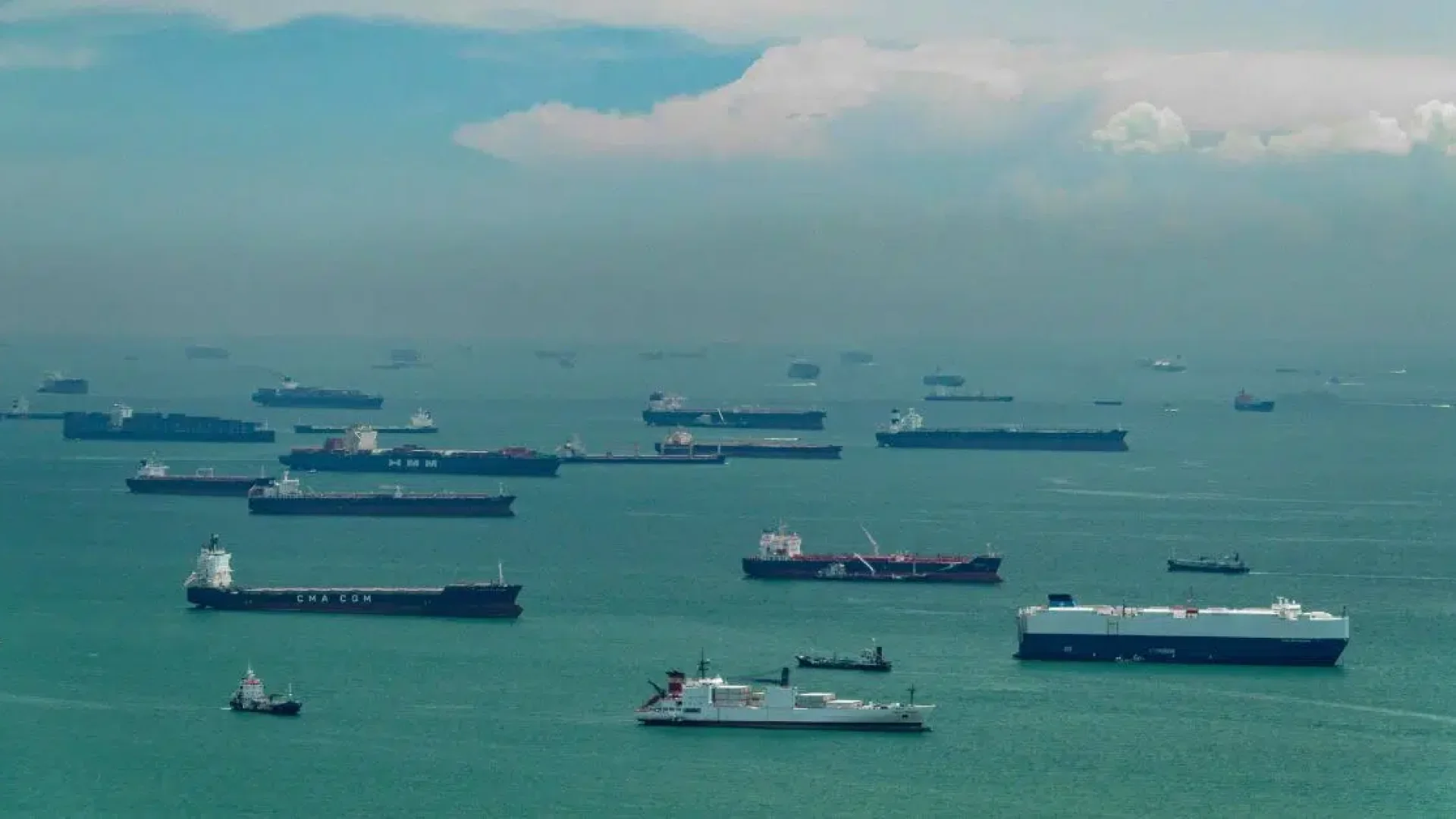

In the days after the ceasefire, the Strait of Hormuz looks deceptively ordinary: tankers file through in long, patient lines, pilots step onto bridges, and radios crackle with clipped instructions. Yet the normal rhythm has a new undertone—reports of attacks and disruptions, heightened security procedures, and chatter about possible “tolls” that would put a price tag on one of the world’s most consequential sea lanes. For shipping firms, insurers, and energy traders, the question isn’t only whether the strait is open, but how expensive—and how risky—each passage has become. What we know so far: flows continue, but confidence is fragile, and the market is reacting to every signal.
At first light, the sea looks calm enough to fool you.
A pilot boat skims across the water, bouncing lightly over the chop, then slows beside a tanker whose hull rises like a dark cliff. A rope ladder drops. Boots climb. Up on the bridge, the pilot’s first glance is not at the horizon, but at the screens—AIS targets, radar returns, the tight geometry of a corridor that the world’s energy supply has to squeeze through. Someone offers coffee. Someone else says, almost to no one, “Keep it clean. Keep it steady.”
This is the Strait of Hormuz after a ceasefire: moving again, breathing again, but not relaxing. The traffic is there—steel giants inching forward in disciplined spacing—yet the atmosphere is different, as if the air itself is listening for bad news.
On a map, Hormuz is a narrow link between the Gulf and the open sea. In real life, it behaves like a heartbeat in the global economy: steady when it’s steady, panic-inducing when it skips. Even a brief disruption here can ripple outward—into freight rates, insurance premiums, oil prices, and ultimately the cost of living far from the Gulf.
Since the ceasefire, reporting has pointed to continued passage and signs of traffic picking up. But nobody in the shipping world mistakes movement for certainty. A strait can be “open” and still feel, to the people who navigate it, like a door that might swing shut without warning.
There’s a particular kind of silence on a ship’s bridge when a crew is concentrating. The engine hum is constant. The radar beeps are small, regular. The conversations are short.
“Target on the starboard bow,” an officer says.
“Distance?”
“Closing.”
Sometimes it’s a fishing dhow. Sometimes it’s an escort. Sometimes it’s simply a contact that forces everyone to double-check assumptions. In a region where tensions can turn quickly, ambiguity is its own hazard.
Post-ceasefire, that ambiguity has not disappeared. Reports of attacks, attempted attacks, or disruptive incidents have kept alert levels high. Not every report carries the same weight, and not every incident is publicly verified in identical detail—but markets don’t wait for perfect clarity. They price fear in real time.
In industry conversations, one word has a way of changing posture in the room: tolls. Transit fees. Charges. The idea that passage through Hormuz could come with a new, explicit price tag has circulated in reporting and commentary, adding another layer to an already complex risk equation.
Shipping is a business of margins measured in days and dollars per day. A small delay can snowball. An extra security measure becomes a line item. A higher insurance premium becomes a negotiation. A hint of a new fee becomes a scenario model.
And once scenario models exist, behavior changes. Some operators slow down decisions. Some reroute when feasible, even if the detour costs more, because predictability can be worth paying for. Others push through—because the alternative is worse. Hormuz doesn’t just carry cargo. It carries choices that don’t feel like choices.
What’s been most striking since the ceasefire is not a single headline, but the accumulation of tension: attack reports, warnings, security bulletins, and an industry-wide sense of “watch this space.” The immediate impact shows up in the places outsiders rarely see:
There’s a human layer too. A captain may have sailed the strait dozens of times, but each passage is different when the news cycle turns hostile. A crew feels it in the tightened procedures: additional lookouts, stricter comms discipline, extra drills. “It’s the same water,” a seafarer says, “but it’s not the same day.”
The post-ceasefire picture, based on ongoing reporting, is a mix of continuation and caution. Traffic is not frozen. The strait is not universally treated as closed. Yet the operating environment has shifted—toward higher vigilance and potentially higher costs.
So far, the key takeaways are these:
When people talk about Hormuz, they often picture geopolitics—flags, statements, confrontations. But there is also a quieter story unfolding beneath the surface: logistics trying to stay smooth.
Terminals run on slots. Refineries run on timing. Power grids run on fuel deliveries. A tanker that arrives late doesn’t just arrive late; it forces adjustments across a chain. And when a chain becomes brittle, companies rediscover old-fashioned strategies—more inventory, more buffer time, more redundancy. Those decisions can be expensive. They can also be unavoidable.
In that sense, the ceasefire has not ended the Hormuz story. It has simply changed its tempo—from crisis sprint to tense marathon.
For real estate investors, the Strait of Hormuz matters because it is a transmission channel for energy prices, inflation expectations, and business confidence—three forces that can reshape property cashflows and valuations. When the strait’s risk premium rises, shipping and insurance costs often follow, feeding into the price of imported materials and, in many markets, into broader inflation.
1) Construction costs and delivery risk: Higher fuel and freight costs can lift prices for steel, glass, aluminum, fixtures, and even food and labor logistics. Developers may face tighter contingencies, longer lead times, and more variability in contractor pricing. Investors evaluating off-plan or build-to-hold strategies should stress-test budgets and timelines under scenarios of elevated transport and insurance costs.
2) Inflation, interest rates, and cap rates: Energy-driven inflation can influence interest-rate expectations. Higher financing costs can pressure leveraged projects and cool speculative demand, while favoring stabilized, income-producing assets with strong tenants and inflation-linked rent structures. In underwriting, modest changes in discount rates can meaningfully move valuations—making risk assessment more important than headline growth stories.
3) Gulf markets: two-way effects: In parts of the Gulf, elevated energy revenues can support public investment, infrastructure programs, and private liquidity—potentially boosting demand for prime residential, hospitality, and Grade-A office stock. At the same time, heightened regional risk can widen required returns for some international capital. The result is differentiation: best-in-class assets in transparent submarkets may hold up well, while fringe locations and highly leveraged plays can reprice quickly.
4) Logistics and industrial real estate: Supply-chain uncertainty tends to increase demand for warehousing, cold storage, and last-mile logistics as companies build buffers and diversify routes. Well-connected zones near ports, airports, and free-trade hubs can benefit from this “resilience premium,” particularly when leases are long and tenants are creditworthy.
5) Practical investor checklist: Model scenarios (short spike vs. sustained risk premium). Review tenant exposure to energy and import costs. Prioritize energy-efficient buildings to manage operating expenses. Assess insurance and business-interruption considerations for assets tied to trade and tourism. In volatile periods, the most valuable real estate attribute is often not glamour—but durability of cashflow.