
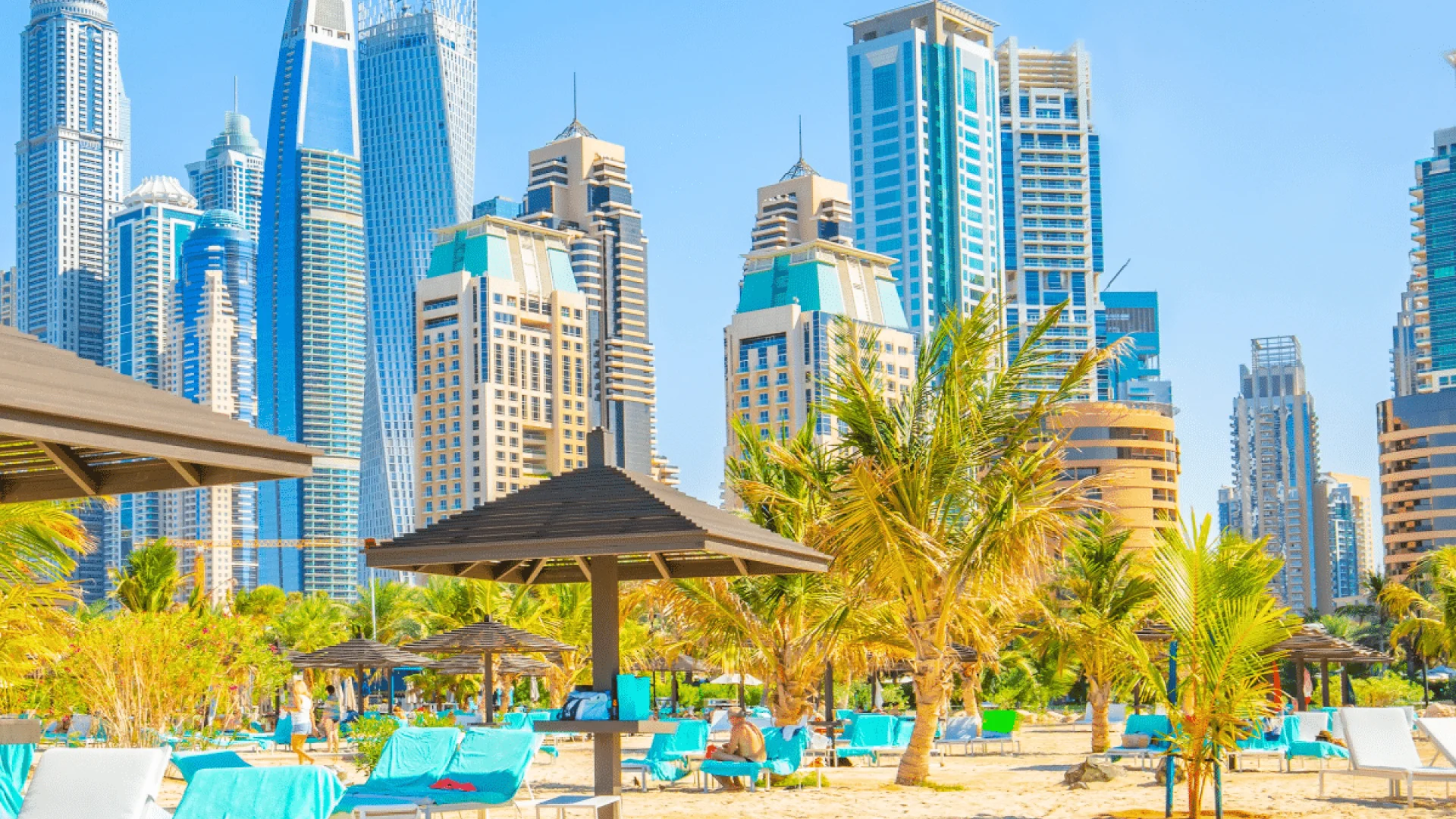

Dubai doesn’t flip from “pleasant” to “scorching” overnight—it ramps up, day by day, until the city is living to a new tempo. March often still feels comfortably warm, but April is when the rise becomes unmistakable and May turns the dial toward full summer. The most intense stretch usually runs from June through September, when humidity can make the heat feel heavier and nights stay warm. Knowing that curve matters: it shapes everything from beach plans and outdoor hours to cooling costs and rental demand.
The door swings shut behind you—cool air sealed inside like a secret—and the street hits back.
Not wind. Not sunshine. Heat, dense and immediate, like stepping into a pre-warmed room you didn’t agree to enter. Someone beside you laughs, half in disbelief. “It’s starting, isn’t it?” A delivery rider pauses at the shade line of a building, checks his phone, then the sky, as if the forecast might apologize. A taxi inches forward with the windows up, the cabin glowing blue with AC. Dubai hasn’t shouted anything. But the message is clear: the season has changed.
So—when does it start getting hot in Dubai? Not “nice and warm,” not “summer vibes,” but the kind of heat that rewrites your daily routine. The answer is less a date on a calendar and more a rhythm. Still, the city follows a familiar pattern most years, and once you’ve lived it, you can almost hear the dial clicking upward.
March often feels like Dubai’s final, generous offer of outdoor comfort. Days can be bright and warm, evenings still sociable. People linger on terraces without scanning for the nearest fan. You’ll see runners at all hours, not just the early-morning faithful. The sea looks inviting instead of intimidating. It’s the month that convinces newcomers they’ve figured Dubai out.
Then, quietly, the balance shifts.
April is usually where the heat becomes noticeable. Not necessarily unbearable—just undeniable. The sun feels sharper. The walk from the metro to the office feels longer than it did last week. Midday errands start to come with an unspoken question: “Do we really need to go now?”
You watch habits update in real time. Sunglasses stop being an accessory and become equipment. Water bottles appear everywhere—car cup holders, desk corners, gym bags. Outdoor tables are still in demand, but people choose them like strategists: closest to the misting fan, deepest under shade, quickest route back indoors.
May is often when Dubai’s “getting hot” becomes “it is hot.” Days regularly feel summer-strong, and heat lingers into the evening. You can still do plenty outside—but timing becomes everything. A beach morning works beautifully. A late-afternoon stroll can feel like walking through a hairdryer.
By May, the city starts moving like it knows what’s coming. Fitness schedules shift earlier. Weekend plans get built around indoor cool zones—malls, museums, cinemas, long lunches that stretch into the afternoon. Dubai doesn’t slow down. It just relocates.
If you’re looking for the months that most reliably deliver Dubai’s full summer intensity, it’s usually June, July, August and September. This is the stretch where “hot” becomes a headline, and the outdoors can feel theatrical—sunlight bouncing off glass towers, pavements radiating stored heat long after sunset.
And then there’s humidity, the second character in Dubai’s summer story. Some days, the heat isn’t just high—it’s thick. Humidity changes everything. It makes the air feel heavier, makes short walks feel longer, and makes you understand why people sprint from car to lobby like they’re crossing a stage.
“Two minutes,” a friend says, stepping out to grab something from the shop downstairs. He comes back with a grin and damp hair, as if he’s returned from a mini-adventure. Dubai summer does that: it turns the ordinary into something you prepare for.
Dubai in peak heat is a city of choreography. People learn the timings, the shortcuts, the shaded edges of streets. The lifestyle becomes a series of cool-to-cool transitions.
There’s a strange beauty to it, too. The way the sky stays a hard, polished blue. The way hotel lobbies smell faintly of sunscreen and chilled citrus. The way the city glows at night, as if it’s decided darkness should be decorative. Summer in Dubai is intense—but it’s also its own atmosphere, its own cinematic season.
September often remains firmly in the hot zone, but it can carry hints of transition. A morning that feels marginally less heavy. An evening breeze that lasts a few extra minutes. The city doesn’t cool down all at once—but it starts to loosen its grip.
And as October approaches, Dubai changes mood. Outdoor dining surges back. Event calendars fill. Parks and promenades get busy again. It feels, almost emotionally, like the city is exhaling after months of holding its breath.
If you want a quick mental map that matches how many residents experience the year, keep this handy:
Weather varies year to year, but as a practical guide for planning—travel, routines, even what time you book that desert tour—this pattern is the one Dubai keeps coming back to.
In Dubai, heat is not just background—it’s an economic variable. The April-to-September ramp influences tenant preferences, operating costs, and even how properties should be marketed and upgraded. For investors, understanding the “hot season curve” can sharpen both acquisition decisions and asset management.
1) Summer comfort sells (and rents): During peak months, demand tends to favor homes that feel effortless in the heat: reliable, efficient AC; good insulation and glazing; well-managed buildings; and convenient access to cooled infrastructure (parking, lobbies, elevators, retail). Communities with strong indoor amenities—gyms, shaded pools, kids’ areas, coworking lounges—often hold appeal when outdoor time gets compressed.
2) Cooling efficiency = yield protection: AC is a major cost driver. Buildings with modern chillers, solid maintenance, smart thermostats, and better envelopes can reduce electricity strain and improve resident satisfaction. From an investment angle, that can translate into stronger retention, fewer vacancy gaps, and a more resilient rental profile—especially in mid-to-upper segments where tenants compare comfort details closely.
3) Microclimate and orientation matter: Two units in the same neighborhood can live very differently in summer. Investors should assess solar exposure (west-facing heat load), shading from adjacent towers, balcony usability, and the practical “cool path” from car/metro to front door. These factors can impact both livability and long-term desirability.
4) Positioning for leasing: Landlords can market summer-proofing as a feature, not a footnote: recently serviced AC, blackout curtains, high-speed internet for home-working, and amenity access become decisive in the hot months. Listing photos that highlight cool interiors, bright-but-shaded balconies, and premium communal facilities can outperform generic views.
5) Timing strategies: Because Dubai’s outdoor renaissance typically builds toward October and beyond, many owners aim to complete refurbishments ahead of that demand surge. Conversely, parts of summer can be an efficient window for works if tenant turnover is expected or if short-term demand softens in specific submarkets.
Investor takeaway: Dubai’s heat season is predictable enough to plan around—and powerful enough to influence performance. Assets that deliver measurable summer comfort and operational efficiency are often better positioned for stable occupancy, tenant satisfaction, and long-term value.