
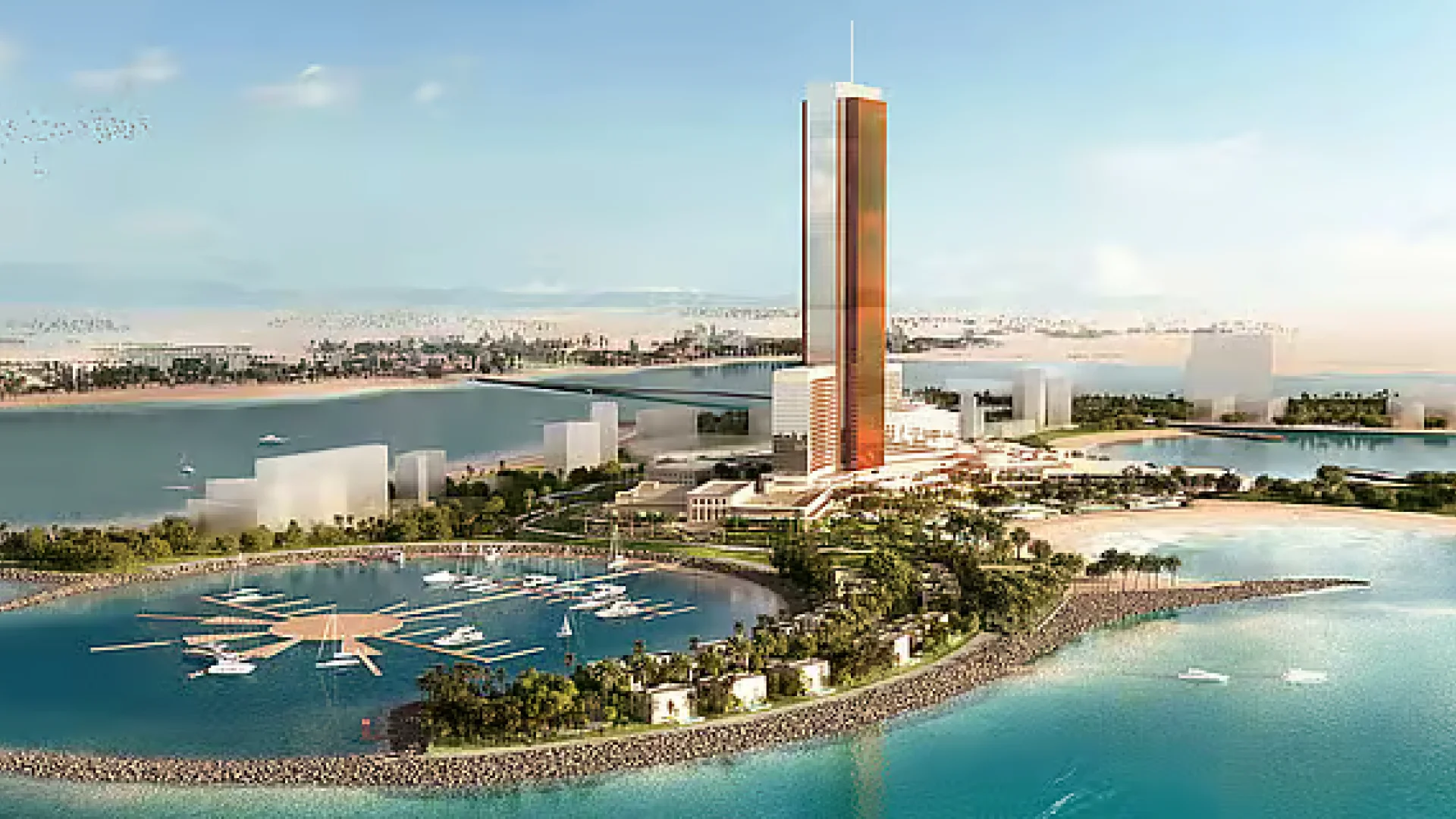
On the shoreline of Ras Al Khaimah, Wynn Al Marjan Island is rising with a clear countdown to 2026—and a recruitment drive to match. The resort is expected to hire at scale across hotel operations, food and beverage, entertainment, engineering, and behind-the-scenes support, with hiring accelerating through 2025. For the northern emirate, this is more than a hospitality headline: it signals new migration patterns, a sharper competition for talent, and a tangible surge in housing demand near Al Marjan and surrounding communities. In other words, the building site is already changing the city—one job offer at a time.
The first thing you notice is the sound. Not the sea—though it’s there, breathing in and out like a metronome—but the metallic rhythm of a construction site that refuses to sleep. A crane groans. A forklift beeps in reverse. Boots scrape on temporary boards. And in the salt air over Al Marjan Island, a future headline seems to float: “Opening 2026.”
In Ras Al Khaimah, time has started to feel measurable. Not in months or seasons, but in milestones. Foundation. Structure. Fit-out. Pre-opening. And then, the part that rarely makes it into glossy renderings: people. Thousands of them, moving into roles so the building can become a living resort.
Wynn Al Marjan Island is expected to open in 2026, and the recruitment effort is already taking shape—set to intensify through 2025 as the project moves from hard hats to hospitality. If you’ve ever watched a grand hotel come to life, you know the truth: the lobby is the last thing that opens. The workforce is the first thing that must exist.
Luxury doesn’t run on marble. It runs on choreography. The silent handoff between bell staff and concierge. The room attendant who notices a child’s stuffed toy and places it on the pillow like a tiny VIP. The engineer who keeps the air-conditioning perfectly invisible—always there, never noisy, never late.
That’s why the roles Wynn will need are not a neat list, but an ecosystem. Front-of-house warmth. Back-of-house precision. Entertainment that lands on time, every time. Food and beverage teams who can turn a busy dinner rush into something that feels effortless.
Hiring at this scale typically comes in waves—early leadership and technical operators first, then department heads, then the larger crews who will carry day-to-day operations. The most intense period often arrives in the months before opening, when training rooms are full, uniforms are being fitted, and everyone is learning the same brand language. Not just what to do—but how it should feel.
For years, the UAE’s employment gravity has been easy to describe: Dubai pulls, Abu Dhabi anchors, and the rest orbit. But Ras Al Khaimah has been quietly building a different story—one that leans on coastline, mountains, and a tourism strategy that doesn’t try to mimic Dubai’s tempo.
Wynn changes the volume of that story. A globally recognized luxury name acts like a beacon for talent: experienced hoteliers looking for a pre-opening fast track, young graduates chasing a brand on their CV, specialists in culinary, events, and revenue management who would once have ignored the northern emirates.
In a café not far from Al Hamra, a barista overhears a conversation about jobs—front desk, kitchens, security—and leans in with a quick, matter-of-fact comment: “More staff means more apartments.” It lands like a small joke, but nobody laughs, because everyone knows it’s not a joke. It’s the local economic equation.
Big resorts don’t hire quietly. They hire like touring productions. Campaigns. Open days. Digital application portals. Assessment centers. Sometimes even roadshows that treat talent like an audience: here’s the brand, here’s the promise, here’s the career ladder if you can keep up.
And make no mistake—luxury is demanding. It’s not just smiling. It’s stamina. Detail. The ability to stay calm while the lobby fills, the phones ring, and a VIP arrival changes the entire rhythm of the evening.
That’s why training matters as much as hiring. Pre-opening programs usually cover brand standards, service rituals, safety protocols, and the invisible systems guests never see: inventory flows, kitchen hygiene, emergency drills, IT access, cash handling. The goal is simple and brutal: on day one, the resort must behave as if it has always existed.
Every major hospitality project creates a second project beside it—housing demand. Not theoretical demand, but immediate, practical questions: Where will staff live? How long will the commute be? Will a family accept a location if schools are far away? Where does a night-shift team eat at 2 a.m. when everything is closed?
As hiring accelerates, Ras Al Khaimah can expect a familiar pattern seen in other growth markets:
A taxi driver heading toward the island glances at the shoreline and says, almost casually, “This place will be busy.” Then he adds the line that has become the unofficial slogan of every boomtown: “Everybody will need somewhere to live.”
Ras Al Khaimah’s tourism pitch has been evolving: beaches, yes, but also nature, hiking, and a slower, more spacious experience. Wynn introduces a different layer—ultra-luxury, large-scale entertainment, and the kind of destination branding that pulls international attention in a single stroke.
That has a workforce implication too. As the market upgrades, the talent profile upgrades with it: more specialized F&B roles, more event production expertise, stronger revenue and distribution teams, more multilingual guest relations. And as one employer raises standards, others must follow to compete—on salary, on training, on career progression.
In that sense, Wynn doesn’t just create jobs. It changes what “a good hospitality job” looks like in the emirate.
For real estate investors, the most actionable signal in this story isn’t the opening date—it’s the hiring curve. Large-scale recruitment ahead of 2026 implies sustained population inflow and a broader ecosystem of suppliers, contractors, and service providers, all of whom need housing.
Pricing and volatility: Signature projects can compress perceived risk in a market, lifting prices in prime micro-locations. But investors should separate hype from absorption: the best-performing assets are those that match the real tenant base—operations staff, mid-management, and the supplier network—not just weekend tourists.
Micro-location matters: Proximity to Al Marjan/Al Hamra is only part of the equation. Commute time, parking, maintenance quality, and access to supermarkets and clinics strongly influence rentability. Units that look identical on a brochure can perform very differently once the daily routine begins.
Investor takeaway: The recruitment push around Wynn is a leading indicator of durable housing demand. Where jobs arrive in volume, neighborhoods mature quickly—and investors who prioritize livability, transport links, and building operations are best positioned to capture that growth.