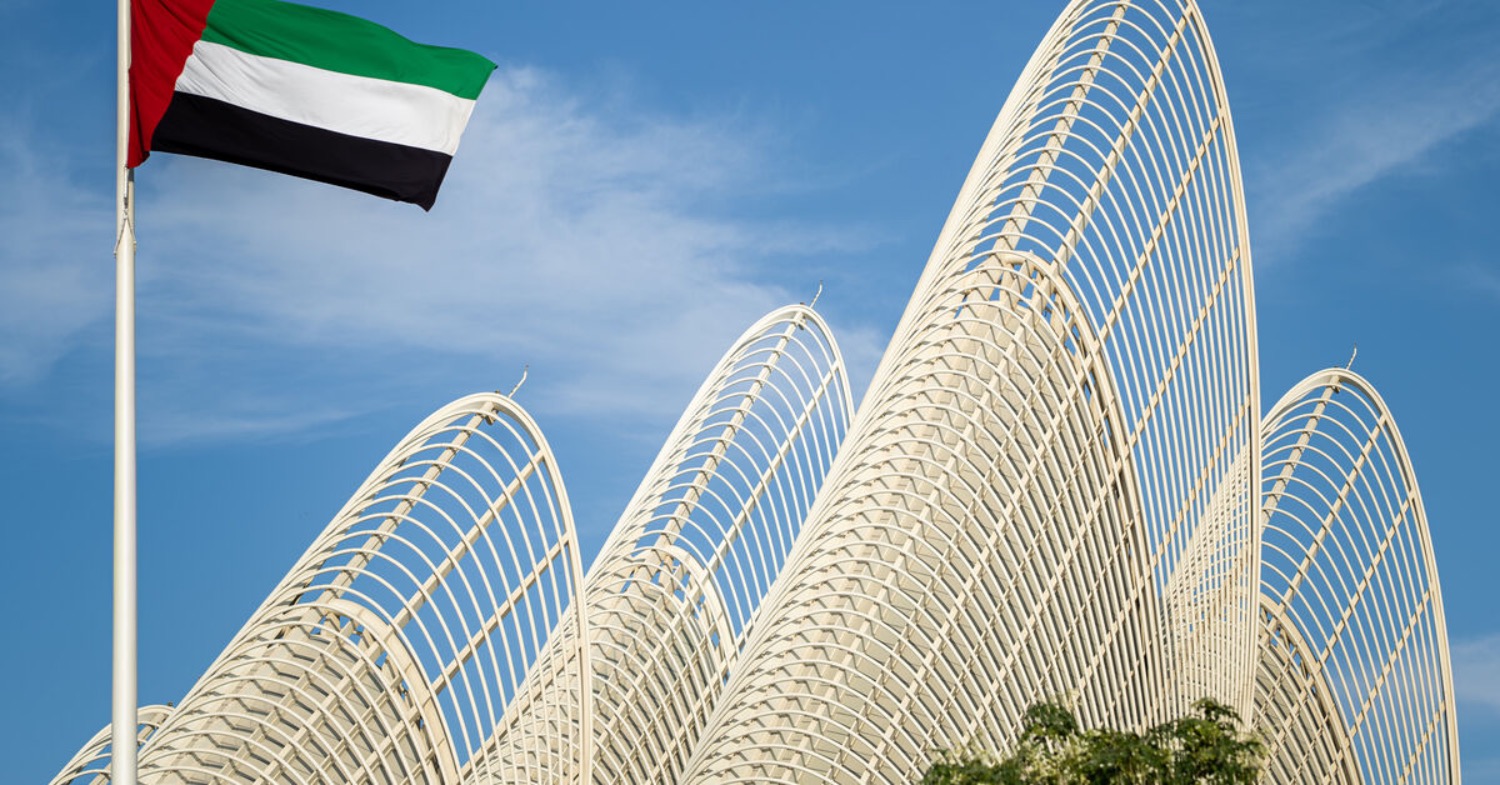
On 3 December 2025, a building that already looks like a flock of rising falcons will finally open its doors: the Zayed National Museum in Abu Dhabi’s Saadiyat Cultural District. As the first national museum of the United Arab Emirates, it is dedicated to the life and legacy of Sheikh Zayed bin Sultan Al Nahyan and to the transformation of a desert federation into a globally connected nation. Behind its striking, falcon-wing architecture by Foster + Partners lie immersive galleries on the country’s history, nature, culture and future, surrounded by some of the world’s most ambitious museums. The museum is the emotional core of a cultural vision that positions Abu Dhabi as a global meeting point for art, knowledge and dialogue – and is quietly reshaping Saadiyat Island.
The light is still soft when five tall steel forms cut through the morning haze. From a distance they look like wings, stretched mid-flight. In front of the entrance, people slow down, phones go up, small debates break out: “Falcon feathers? Sails? Sculptures?” A father leans down to his son. “That’s the new national museum,” he says. “This is where they’ll tell our story.”
That is exactly the promise of the Zayed National Museum, due to open to the public on 3 December 2025. It rises at the heart of Abu Dhabi’s Saadiyat Cultural District, the emerging neighbourhood that already hosts Louvre Abu Dhabi and will soon welcome other world-class museums. More than just another landmark, this is the country’s first national museum of the United Arab Emirates, dedicated to the life and legacy of Sheikh Zayed bin Sultan Al Nahyan, the UAE’s Founding Father.
As you walk closer, the architecture starts to tell its own story. Designed by Foster + Partners, the museum’s signature towers echo the shape of falcon wings – a direct nod to Sheikh Zayed’s lifelong passion for falconry. Between these wing-like forms, a bright entrance hall opens up, where glass, stone and steel reflect each other in sharp lines and soft curves. Daylight falls in slender shafts from above, as if the desert itself were pouring inside.
From here, pathways fan out into a series of galleries, arranged like chapters in a living history book. There is no heavy hush, no dusty gloom. Instead you hear a low murmur of voices, see moving images flicker on curved walls, and encounter artefacts staged as if they are about to speak.
At the centre of it all stands one man: Sheikh Zayed. A major gallery is devoted to his life and times. There are photographs of him with Bedouins in the desert, planting trees in the sand, greeting heads of state in new-built palaces. Nearby, film clips show him talking about education, tolerance and the environment. A group of students gathers around a guide who explains how Zayed insisted on unity and learning. “He wanted us to study the world – without losing our roots,” the guide says. Phones come out, notes are taken.
Other rooms carry visitors through the history of the Emirates: from pearl divers along the coast and the trading routes of the Gulf to the oil discoveries and today’s push into culture, innovation and knowledge. Old maps hang next to interactive screens where you can watch tiny coastal settlements grow, decade by decade, into the cities of today.
One of the most atmospheric spaces focuses on falconry and conservation. A lifelike falcon seems to burst out of the wall, while a floating digital model projects every feather, every motion into the air. Between historic falcon hoods and modern breeding and protection programmes, it becomes clear: this is not just about heritage, but about responsibility.
In other galleries, land and water take centre stage. Samples of desert sand, ancient irrigation systems, immersive projections of mangroves, oases and dunes all tell stories of a fragile landscape that has always been both shelter and challenge. Visitors see how people have adapted to this environment over centuries and how technology, climate action and environmental care are now being woven into the next chapter.
A thread runs through the entire museum: the way the Emirates connect to the wider world. In the global perspectives sections, historic trade routes, cultural exchanges and modern partnerships unfold. A piece of old silk sits next to a contemporary installation; a pearl bracelet is paired with a satellite image of shipping lanes and air routes. The message is subtle but powerful: the UAE has long been part of something larger.
Education, research and community programmes are built into the museum’s DNA. Workshops, lectures, school visits and collaborations with international institutions are designed to keep the building buzzing, not frozen in time. Step outside and you realise that the Saadiyat Cultural District is slowly becoming an open-air campus, with the Zayed National Museum as its emotional and narrative anchor.
Beyond the museum doors, the district tells its own story. A short walk leads to Louvre Abu Dhabi, with future neighbours including Guggenheim Abu Dhabi and the Natural History Museum Abu Dhabi. Between them, new parks, plazas, cafés and promenades are taking shape. School groups mix with tourists, artists sketch on tablets, families pause in the shade to look out at the sea.
With this constellation, Abu Dhabi is deliberately positioning itself as a global cultural hub. The Zayed National Museum is key to that strategy: it explains the local story yet keeps its doors and narratives open to visitors from every continent. Walking through the galleries, you don’t just learn how a nation was built; you feel how culture can bridge very different ways of life.
The cultural wave washing over Saadiyat Island is also shaping its skyline. New boulevards, high-quality residential communities, hotels, schools and leisure facilities are emerging in the shadow of the museums. Where buses unload visitors by day, residents stroll home with shopping bags in the evening; café terraces fill with conversations in half a dozen languages.
For investors, homeowners and developers, this translates into long-term value and rental potential. Major cultural institutions tend to transform a location’s image for decades: they attract stable visitor numbers, boost international visibility and support a high quality of life. Living next to museums, parks and the beach becomes a lifestyle proposition in its own right, appealing to global citizens who look beyond traditional holiday homes.
Walk across Saadiyat Island today and you can already sense that shift between cranes and palm trees. Once the Zayed National Museum opens, the vision of a vibrant cultural quarter will take a decisive leap forward – turning the island into one of the Gulf’s most intriguing addresses for anyone who believes in the combined power of art, liveability and long-term real estate value.