
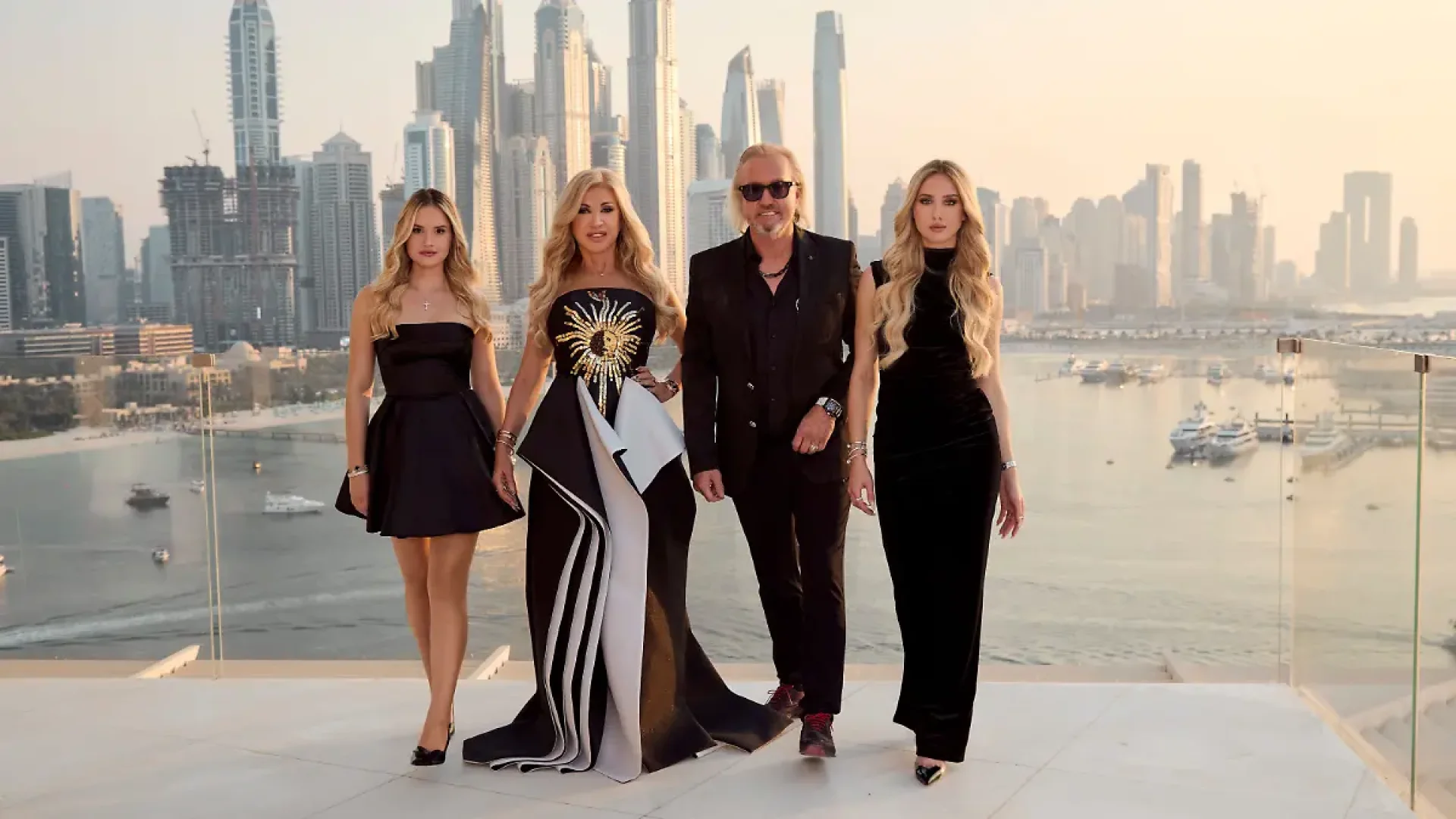

On 03 January 2011, RTLZWEI launched “Die Geissens – Eine schrecklich glamouröse Familie” as a bold, eyebrow-raising experiment. What began under a cloud of skepticism matured into one of German TV’s most recognizable and long-running reality formats—powered by family loyalty, sharp self-irony, and an unmistakable sense of momentum. Over 15 years, viewers didn’t just watch luxury; they watched a family evolve in public without sanding down its edges. This anniversary is therefore more than a date on the calendar—it is a thank-you to everyone who watched, argued, laughed, and stayed for the next chapter.
There are moments when television doesn’t feel like television. It feels like salt on your skin. Like sun-warmed teak beneath bare feet. Like the soft clink of ice in a glass somewhere off-camera, and the low, satisfied hum of an engine that promises movement. The lens catches something that shouldn’t be dramatic—and yet it is: a glance over the railing, a quick remark, a laugh that lands because it isn’t polished. “Come on,” someone says, half-command, half-joke, “we’re doing this now.” And just like that, the scene snaps into place. That tone—decisive, playful, slightly exaggerated by design—has become a signature over time. Suddenly, the number is there, impossible to ignore: 15 years.
On 03 January 2011, RTLZWEI put a new title on air: “Die Geissens – Eine schrecklich glamouröse Familie”. At the time, it felt like a gamble. A family willing not merely to share life, but to display it—glitter included, friction included, intimacy included. The skepticism was real and, in hindsight, understandable. Did German television need this? Would it be too much? Too light? Too loud? But those who kept watching noticed something else beneath the sparkle: not a parade of possessions, but a portrait of a family negotiating itself in public, with a kind of fearless clarity.
Perhaps longevity comes down to a rare triad: authenticity, cohesion, self-irony. The Geissens never tried to be a polished idea. They were a presence. They argued, made up, moved on. They leaned into caricature, then punctured it with a look that said, we know exactly what you think—and we’re still here. Over time, you could see the work of years in small, quiet ways: children turning into young women, roles shifting, spontaneity learning the contours of responsibility. And still, the core stayed intact—loud in the way only close families can be loud, warm in the way only familiarity makes possible.
Reality TV is easy to reduce to editing rhythms and producer beats, to debates about wealth and taste and the ethics of spectacle. Yet one truth about this format resists reduction: they never pretended to be someone else. That is not a minor detail; it is the currency that buys endurance. In a media landscape built on replacement—new faces, new formats, new scandals—consistency becomes its own kind of luxury. But only if it doesn’t harden into repetition. The trick, and the achievement, is to stay recognizably yourself while allowing time to leave a mark. The Geissens stayed. And they didn’t stand still.
Across 15 years, viewers didn’t just watch episodes; they watched an ongoing narrative. One that dared to treat itself with humor—then earned the right to be taken seriously because it refused to pretend. Self-irony here isn’t just a punchline. It’s a posture. A shield and an invitation at once. It tells the audience: we see the comments, we hear the criticism, and we’re not hiding. That kind of calm confidence can’t be manufactured. It accumulates, season after season, through lived experience and the choice to remain visible.
And then there is the audience—the people who turned this from a broadcast into a bond. The ones who came back, who argued in comment sections, who laughed, rolled their eyes, defended, criticized, and still stayed. A television anniversary is never only about a show. It’s about the relationship between those on screen and those watching from the quiet intimacy of their own lives: on sofas, on trains, on phones, in that familiar “just one more episode” spiral. It lasts only if it doesn’t insist on perfection—only if it allows edges, contradictions, real texture.
That is the point where “The Geissens” becomes more than reality TV. Because it’s not just the settings that shimmer; it’s the bonds that hold. Between designer labels and sunsets, there is a scene that repeats in endless variations and still feels universal: a family speaking its own language. Teasing and protecting, challenging and choosing each other again. Even when the format enjoys exaggeration—and it does—something human persists beneath it: loyalty. You can laugh at it, question it, dislike it. But it’s hard to deny it.
Today, 15 years after the beginning, the original leap can look inevitable, as if it was always destined to become familiar. But endurance is never automatic. It is built through reinvention: the willingness to find new stories without betraying your own signature. So the look ahead doesn’t feel like a marketing line. It feels like a promise: there’s more coming. New season, new episodes, new places—yes. But also new shades of the same long story, continuing because it refuses to sand itself smooth.
We should celebrate this anniversary not as an ending, but as a chapter break. A moment to turn the engine down slightly, to listen to what these years actually mean: a bold experiment turned into a piece of pop culture; skepticism turned into ritual; ritual kept alive by the need to prove itself again and again. Fifteen years is an eternity in television. And sometimes it’s the formats people underestimate first that endure the longest—because they tap into something that never goes out of style: curiosity about real dynamics. About family. About people who don’t hide.
Thank you to everyone who made this journey possible—on and off camera, in production, in editing rooms, in newsrooms, and most of all: at home, where attention is always a choice. Thank you for your time, your loyalty, your criticism, your laughter. And now—curtain up for what comes next. If these 15 years have proven anything, it’s this: glamour isn’t only a look. It’s stamina.
The 15-year anniversary of “Die Geissens” is more than a media milestone—it also illustrates how personal brands, lifestyle narratives, and sustained visibility can shape real markets. For real estate investors, the connection is straightforward: in the premium segment, value is no longer communicated through square meters and finishes alone. It is increasingly framed through story, identity, and reach. Reality formats and social platforms amplify destination imagery—and destination imagery influences demand, pricing psychology, and marketing effectiveness.
1) Attention as an intangible value driver
In luxury real estate, visuals function as a parallel currency. When coastal enclaves, resort corridors, and global cities repeatedly appear in emotionally charged storytelling, they become more than locations—they become symbols of a life people want to step into. Demand at the top end is heavily sentiment-driven; it follows status cues and lifestyle alignment. Investors in internationally liquid markets benefit when the broader cultural narrative around those markets remains aspirational and stable.
2) Luxury is shifting from product to experience
High-end buyers increasingly purchase an experience: privacy, security, service density, and a sense of belonging. This is reflected in development trends—more emphasis on concierge ecosystems, wellness infrastructure, smart building operations, and architectural distinctiveness built for visual communication. Projects that integrate lifestyle credibly—without becoming theatrical—tend to outperform on differentiation, especially when supply is ample and buyers are selective.
3) Family branding, generational change, and wealth planning
Fifteen years of public evolution mirrors a familiar investor reality: assets must adapt across life stages. Many private portfolios are navigating generational transfer, governance, and repositioning—choosing between personal use and income strategies, rebalancing across jurisdictions, or modernizing to meet energy and regulatory standards. The underlying lesson is durable: portfolios remain resilient when they are managed as living systems—supported by maintenance discipline, clear ownership structures, and forward-looking capex planning.
4) Reputation and exit liquidity
In the luxury segment, reputation can widen the buyer funnel and support liquidity at exit—especially for distinctive properties competing globally. Still, media glamour does not replace fundamentals. Micro-location, build quality, legal clarity, operating costs, and long-term market depth remain decisive. But investors who present assets as curated experiences—high-caliber visuals, narrative-driven marketing, and international distribution—often strengthen negotiating leverage and shorten time-to-sale.
5) Practical takeaway for investors
The core lesson of long-term cultural relevance is simple: consistency wins when it evolves. In real estate, that translates to active asset management—technical upgrades (energy performance and building systems), commercial optimization (lease structures and use concepts), and strategic communication (branding and trust). In a landscape shaped by interest-rate shifts, higher construction costs, and more demanding buyers, resilience will favor owners who keep properties modern, distinctive, and professionally positioned.